Section of Islet Cell Biology and Regenerative Medicine, Joslin Diabetes Center and Harvard Medical School, Boston, MA 02115, USA.
Cell Rep. 2013 Feb 21;3(2):401-10. doi: 10.1016/j.celrep.2013.01.007. Epub 2013 Jan 31.
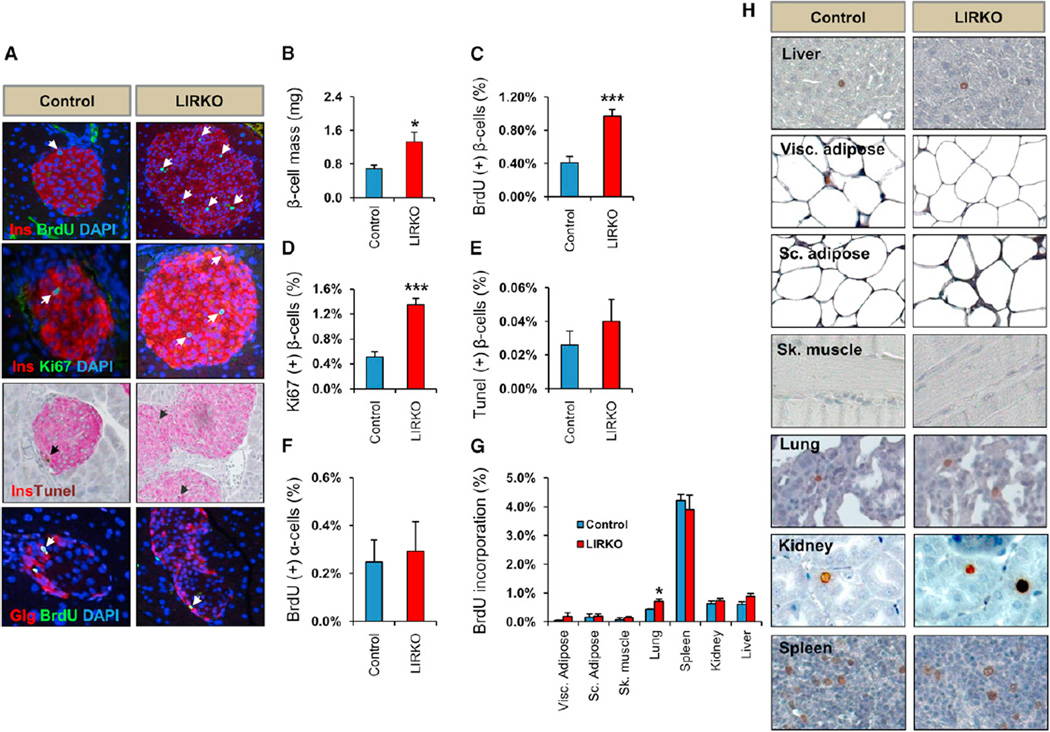
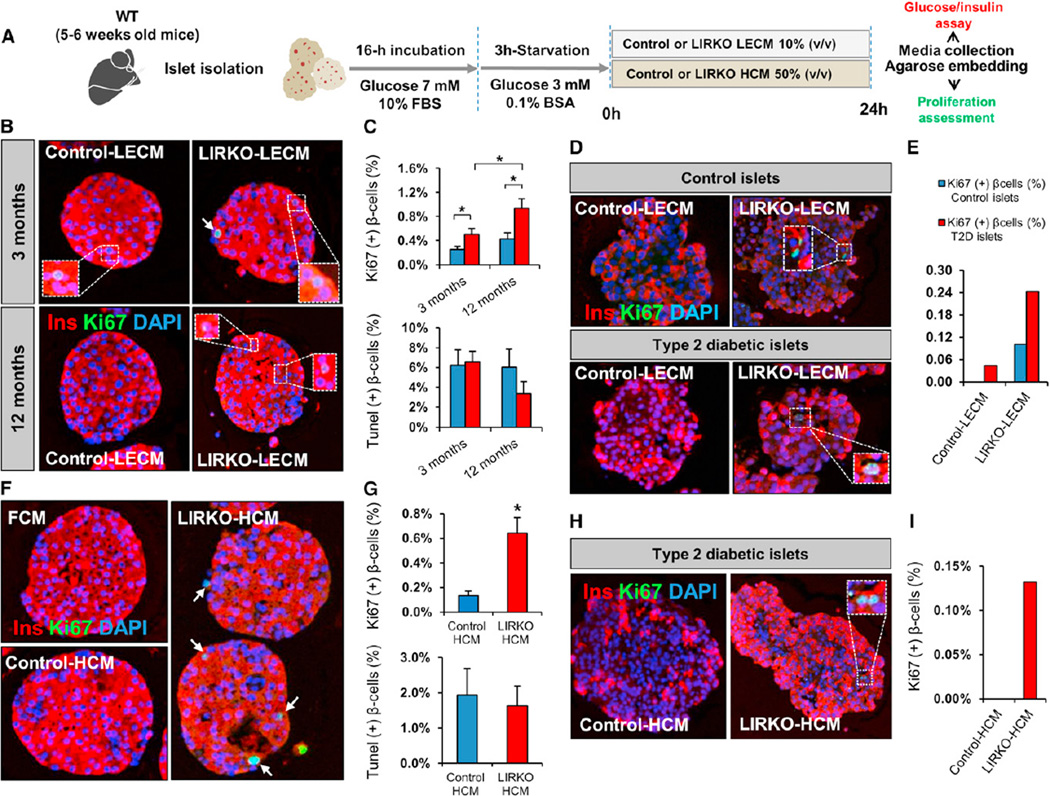
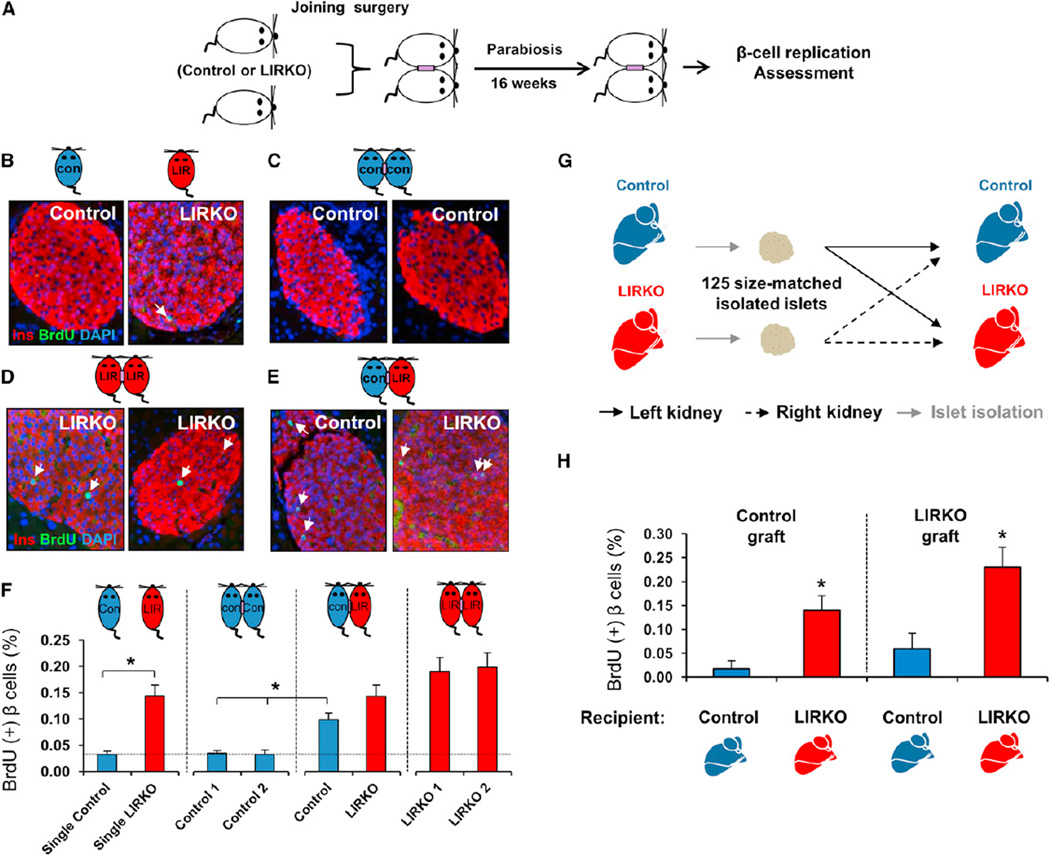
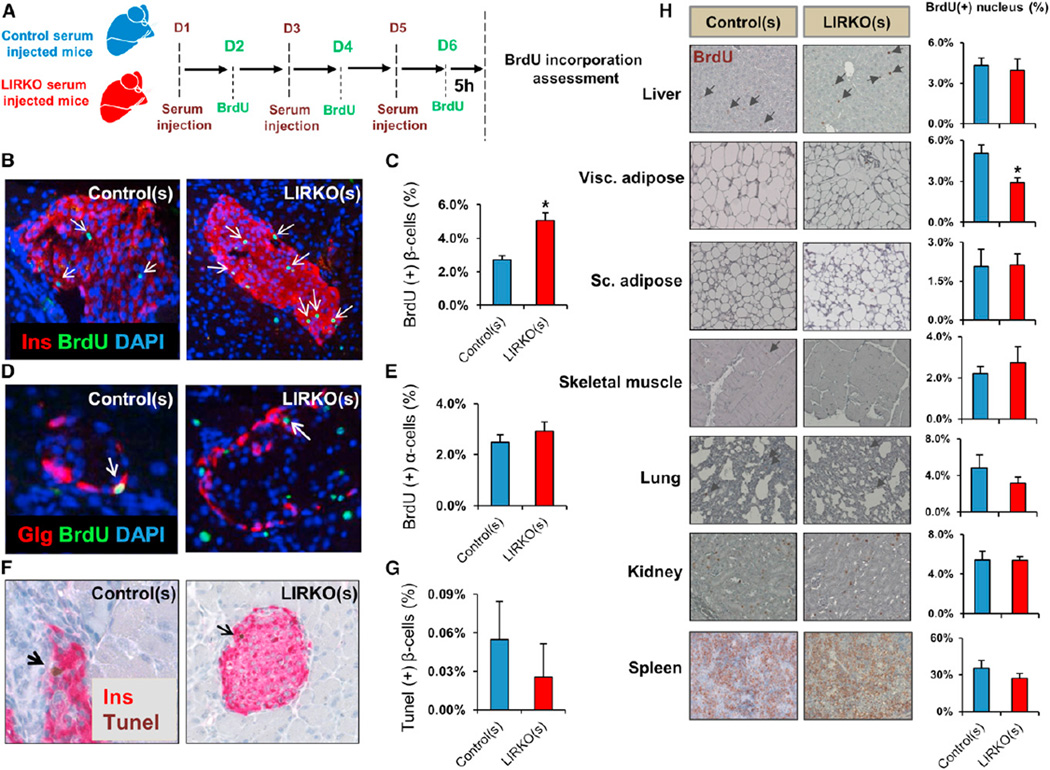
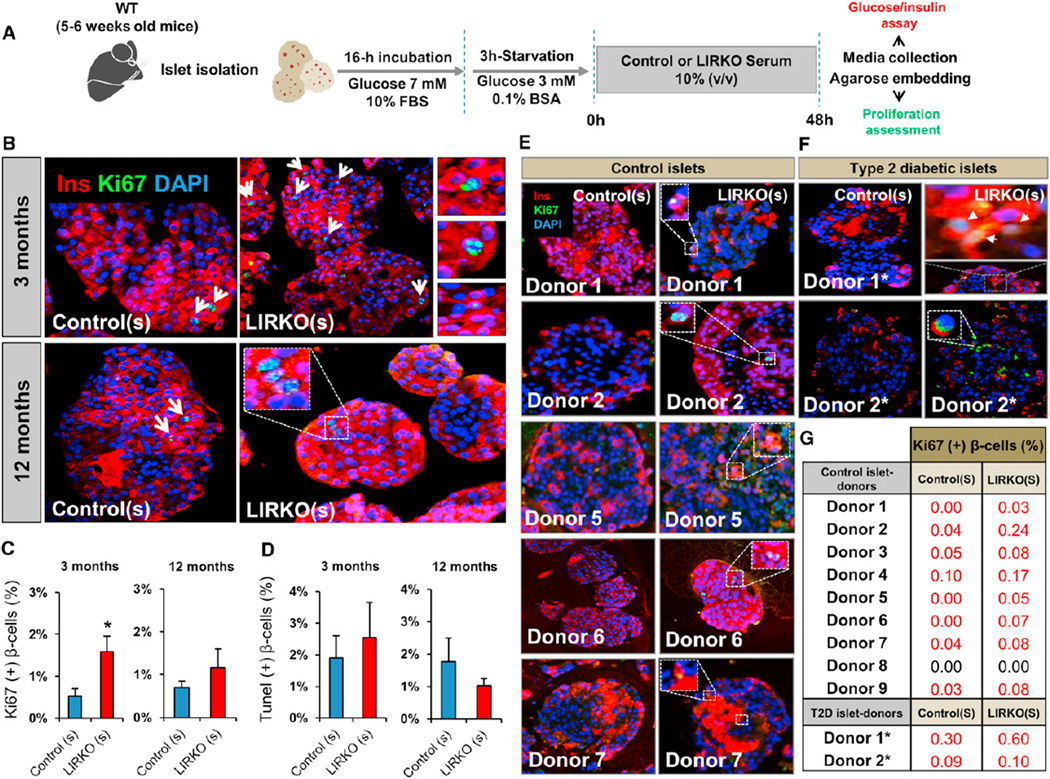
Integrative organ crosstalk regulates key aspects of energy homeostasis, and its dysregulation may underlie metabolic disorders such as obesity and diabetes. To test the hypothesis that crosstalk between the liver and pancreatic islets modulates β cell growth in response to insulin resistance, we used the liver-specific insulin receptor knockout (LIRKO) mouse, a unique model that exhibits dramatic islet hyperplasia. Using complementary in vivo parabiosis and transplantation assays, as well as in vitro islet culture approaches, we demonstrate that humoral, nonneural, non-cell-autonomous factor(s) induces β cell proliferation in LIRKO mice. Furthermore, we report that a hepatocyte-derived factor(s) stimulates mouse and human β cell proliferation in ex vivo assays, independent of ambient glucose and insulin levels. These data implicate the liver as a critical source of β cell growth factor(s) in insulin-resistant states.
整体器官串扰调节能量稳态的关键方面,其失调可能是肥胖和糖尿病等代谢紊乱的基础。为了验证肝脏和胰岛之间串扰调节β细胞生长以应对胰岛素抵抗的假说,我们使用了肝脏特异性胰岛素受体敲除(LIRKO)小鼠,这是一种独特的模型,表现出明显的胰岛增生。使用互补的体内联体和移植实验以及体外胰岛培养方法,我们证明了体液、非神经、非细胞自主因子(s)在 LIRKO 小鼠中诱导β细胞增殖。此外,我们报告说,肝细胞衍生的因子(s)在体外实验中刺激小鼠和人β细胞增殖,独立于环境葡萄糖和胰岛素水平。这些数据表明肝脏在胰岛素抵抗状态下是β细胞生长因子(s)的关键来源。