Center for Neurodegenerative Disease Research and Institute on Aging, Department of Pathology and Laboratory Medicine, University of Pennsylvania School of Medicine, Philadelphia, PA 19104, USA.
JAMA Neurol. 2013 Apr;70(4):462-8. doi: 10.1001/jamaneurol.2013.1933.
Growing evidence of cell-to-cell transmission of neurodegenerative disease (ND)-associated proteins (NDAPs) (ie, tau, Aβ, and α-synuclein) suggests possible similarities to the infectious prion protein (PrPsc) in spongiform encephalopathies. There are limited data on the potential human-to-human transmission of NDAPs associated with Alzheimer disease (AD) and other non-PrPsc ND.
To examine evidence for human-to-human transmission of AD, Parkinson disease (PD), and related NDAPs in cadaveric human growth hormone (c-hGH) recipients.
We conducted a detailed immunohistochemical analysis of pathological NDAPs other than PrPsc in human pituitary glands. We also searched for ND in recipients of pituitary-derived c-hGH by reviewing the National Hormone and Pituitary Program (NHPP) cohort database and medical literature.
University-based academic center and agencies of the US Department of Health and Human Services.
Thirty-four routine autopsy subjects (10 non-ND controls and 24 patients with ND) and a US cohort of c-hGH recipients in the NHPP.
Detectable NDAPs in human pituitary sections and death certificate reports of non-PrPsc ND in the NHPP database.
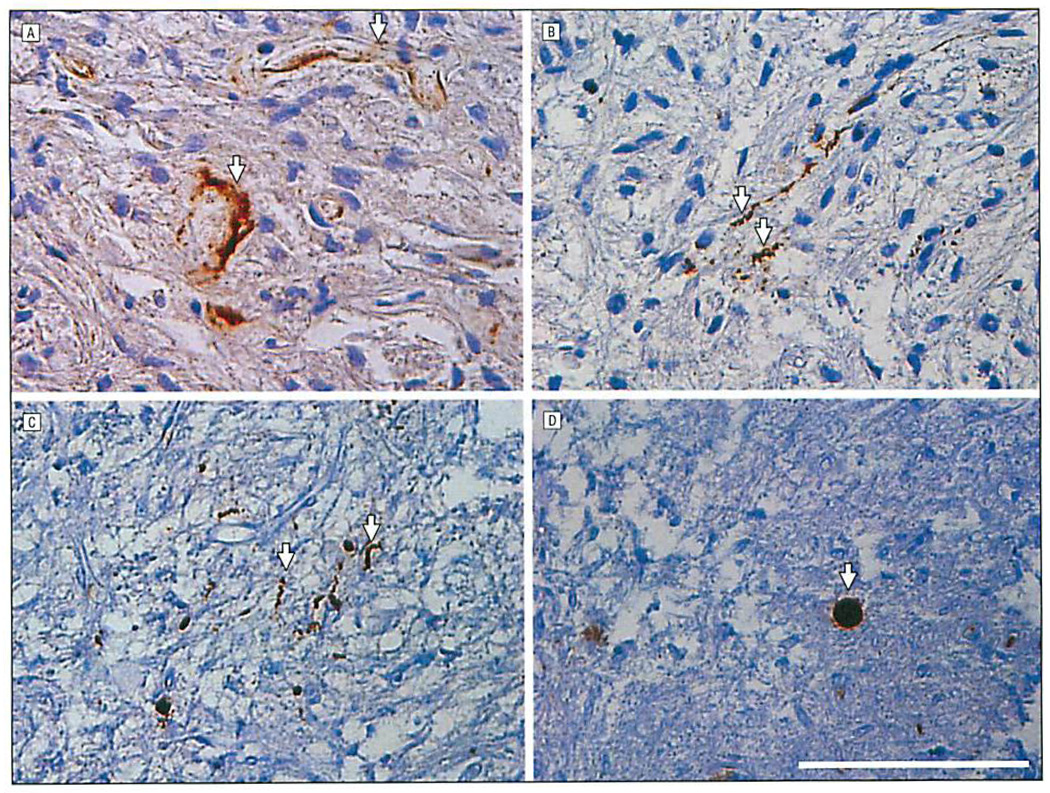
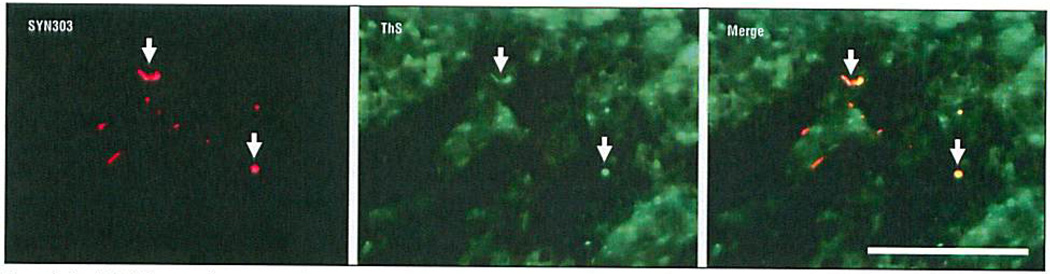
We found mild amounts of pathological tau, Aβ, and α-synuclein deposits in the adeno/neurohypophysis of patients with ND and control patients. No cases of AD or PD were identified, and 3 deaths attributed to amyotrophic lateral sclerosis (ALS) were found among US NHPP c-hGH recipients, including 2 of the 796 decedents in the originally confirmed NHPP c-hGH cohort database.
Despite the likely frequent exposure of c-hGH recipients to NDAPs, and their markedly elevated risk of PrPsc-related disease, this population of NHPP c-hGH recipients does not appear to be at increased risk of AD or PD. We discovered 3 ALS cases of unclear significance among US c-hGH recipients despite the absence of pathological deposits of ALS-associated proteins (TDP-43, FUS, and ubiquilin) in human pituitary glands. In this unique in vivo model of human-to-human transmission, we found no evidence to support concerns that NDAPs underlying AD and PD transmit disease in humans despite evidence of their cell-to-cell transmission in model systems of these disorders. Further monitoring is required to confirm these conclusions.
越来越多的证据表明,神经退行性疾病(ND)相关蛋白(NDAPs)(即 tau、Aβ 和 α-突触核蛋白)在细胞间传播,这表明与海绵状脑病中的传染性朊病毒蛋白(PrPsc)可能存在相似之处。关于与阿尔茨海默病(AD)和其他非 PrPsc ND 相关的 NDAPs 在人与人之间传播的潜在可能性,数据有限。
研究尸检人体生长激素(c-hGH)受者中 AD、帕金森病(PD)和相关 NDAPs 的人与人之间传播的证据。
我们对人类垂体中除 PrPsc 以外的病理性 NDAPs 进行了详细的免疫组织化学分析。我们还通过审查美国国立激素和垂体计划(NHPP)队列数据库和医学文献,在垂体源性 c-hGH 受者中寻找 ND。
大学学术中心和美国卫生与公众服务部的机构。
34 名常规尸检受试者(10 名非 ND 对照和 24 名 ND 患者)和 NHPP 中的美国 c-hGH 受者队列。
在 NHPP 数据库中,人垂体切片中可检测到的 NDAPs 和非 PrPsc ND 的死亡证明报告。
我们在 ND 患者和对照患者的腺/神经垂体中发现了少量病理性 tau、Aβ 和 α-突触核蛋白沉积。未发现 AD 或 PD 病例,在美国 NHPP c-hGH 受者中发现 3 例死于肌萎缩侧索硬化症(ALS),其中包括在最初确认的 NHPP c-hGH 队列数据库中 796 名死者中的 2 名。
尽管 c-hGH 受者可能经常接触 NDAPs,并且他们患 PrPsc 相关疾病的风险明显升高,但 NHPP c-hGH 受者人群似乎没有增加患 AD 或 PD 的风险。尽管在人类垂体中未发现与 ALS 相关的蛋白(TDP-43、FUS 和泛素)的病理性沉积,但我们在 US c-hGH 受者中发现了 3 例意义不明的 ALS 病例。在这种独特的人与人之间传播的体内模型中,我们没有发现任何证据支持 AD 和 PD 相关的 NDAPs 在人类中传播疾病的担忧,尽管有证据表明这些 NDAPs 在这些疾病的模型系统中在细胞间传播。需要进一步监测以确认这些结论。