The Skaggs Institute for Chemical Biology and Department of Chemical Physiology, The Scripps Research Institute, La Jolla, California, USA.
Nat Methods. 2013 Mar;10(3):259-64. doi: 10.1038/nmeth.2368. Epub 2013 Feb 10.
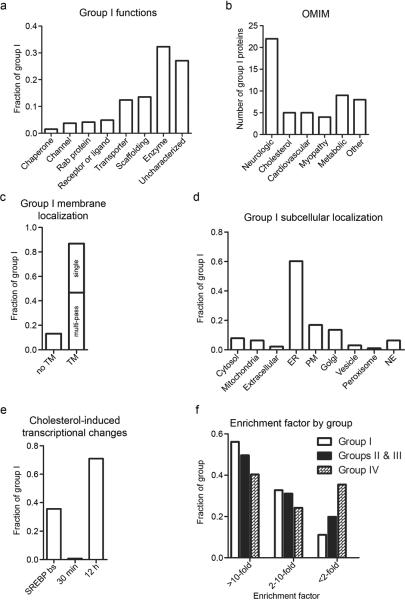
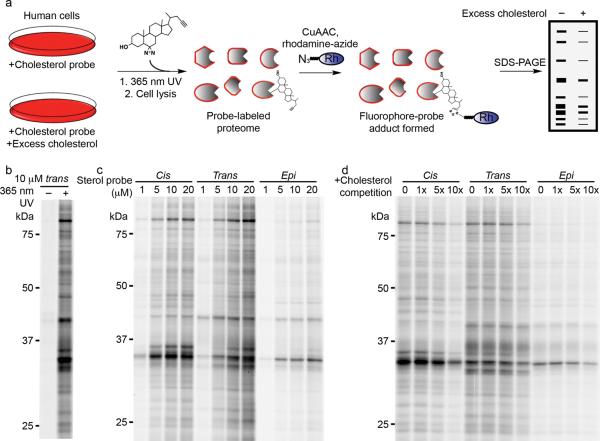
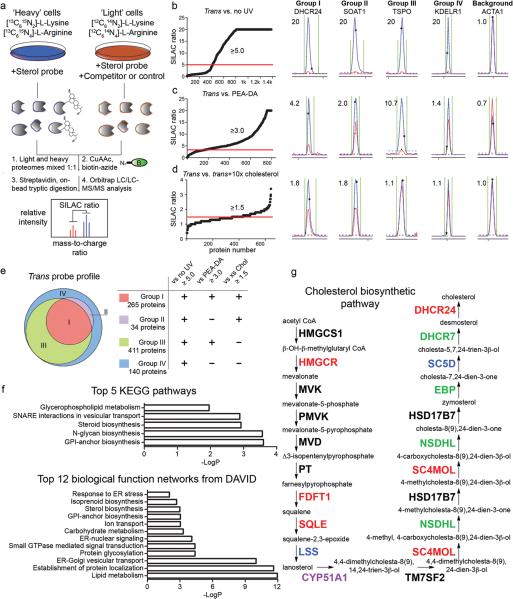
Cholesterol is an essential structural component of cellular membranes and serves as a precursor for several classes of signaling molecules. Cholesterol exerts its effects and is, itself, regulated in large part by engagement in specific interactions with proteins. The full complement of sterol-binding proteins that exist in mammalian cells, however, remains unknown. Here we describe a chemoproteomic strategy that uses clickable, photoreactive sterol probes in combination with quantitative mass spectrometry to globally map cholesterol-protein interactions directly in living cells. We identified over 250 cholesterol-binding proteins, including receptors, channels and enzymes involved in many established and previously unreported interactions. Prominent among the newly identified interacting proteins were enzymes that regulate sugars, glycerolipids and cholesterol itself as well as proteins involved in vesicular transport and protein glycosylation and degradation, pointing to key nodes in biochemical pathways that may couple sterol concentrations to the control of other metabolites and protein localization and modification.
胆固醇是细胞膜的重要结构组成部分,也是几种信号分子的前体。胆固醇通过与蛋白质的特定相互作用发挥作用,并在很大程度上受到其调节。然而,哺乳动物细胞中存在的完整固醇结合蛋白组仍然未知。在这里,我们描述了一种化学蛋白质组学策略,该策略使用可点击的光反应性固醇探针,结合定量质谱法,直接在活细胞中全局绘制胆固醇-蛋白质相互作用图。我们鉴定了超过 250 种胆固醇结合蛋白,包括参与许多已建立和以前未报道的相互作用的受体、通道和酶。在新鉴定的相互作用蛋白中,突出的是调节糖、甘油酯和胆固醇本身的酶,以及参与囊泡运输以及蛋白质糖基化和降解的蛋白,这指向了可能将胆固醇浓度与其他代谢物以及蛋白质定位和修饰的控制相耦合的生化途径中的关键节点。