Brown Center for the Study of Children at Risk, Women & Infants Hospital, Providence, Rhode Island, USA.
JAMA Pediatr. 2013 Apr;167(4):348-54. doi: 10.1001/jamapediatrics.2013.550.
Animal studies have suggested that prenatal cocaine exposure (PCE) deleteriously influences the developing nervous system, in part attributable to its site of action in blocking the function of monoamine reuptake transporters, increasing synaptic levels of serotonin and dopamine.
To examine the brain morphologic features and associated impulsive behaviors in adolescents following prenatal exposure to cocaine and/or tobacco.
Magnetic resonance imaging data and behavioral measures were collected from adolescents followed up longitudinally in the Maternal Lifestyle Study.
A hospital-based research center.
A total of 40 adolescent participants aged 13 to 15 years were recruited, 20 without PCE and 20 with PCE; a subset of each group additionally had tobacco exposure. Participants were selected and matched based on head circumference at birth, gestational age, maternal alcohol use, age, sex, race/ethnicity, IQ, family poverty, and socioeconomic status.
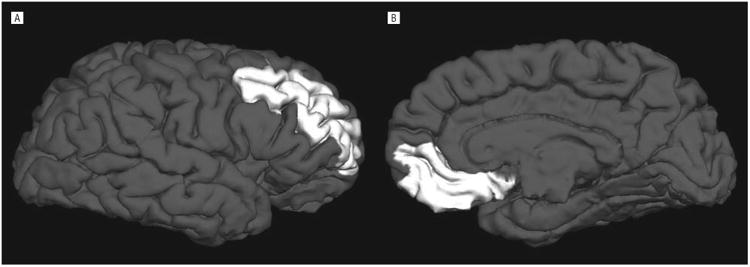
Subcortical volumetric measures of the thalamus, caudate, putamen, pallidum, hippocampus, amygdala, and nucleus accumbens; cortical thickness measures of the dorsolateral prefrontal cortex and ventral medial prefrontal cortex; and impulsivity assessed by Conners' Continuous Performance Test and the Sensation Seeking Scale for Children.
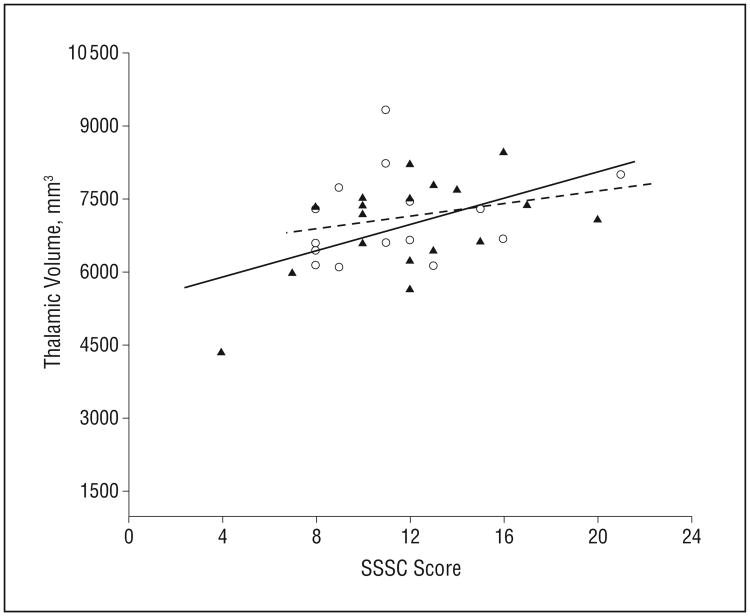
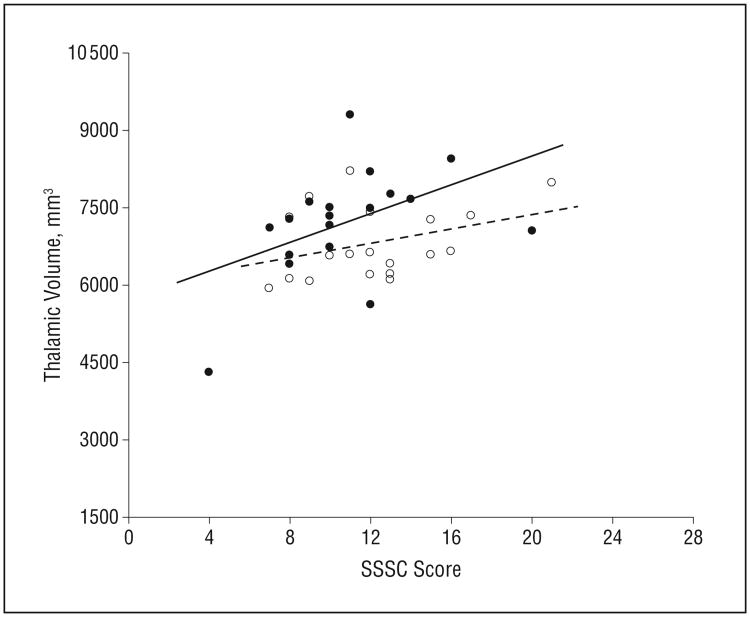
After controlling for covariates, cortical thickness of the right dorsolateral prefrontal cortex was significantly thinner in adolescents following PCE (P = .03), whereas the pallidum volume was smaller in adolescents following prenatal tobacco exposure (P = .03). Impulsivity was correlated with thalamic volume following either PCE (P = .05) or prenatal tobacco exposure (P = .04).
Prenatal cocaine or tobacco exposure can differentially affect structural brain maturation during adolescence and underlie enhanced susceptibility to impulsivity. Additional studies with larger sample sizes are warranted.
动物研究表明,产前可卡因暴露(PCE)会对发育中的神经系统造成有害影响,部分原因是其作用部位在于阻断单胺再摄取转运体的功能,增加了血清素和多巴胺的突触水平。
检查青少年在产前暴露于可卡因和/或烟草后大脑形态特征和相关冲动行为。
从纵向跟踪的母体生活方式研究中的青少年那里收集磁共振成像数据和行为测量值。
医院为基础的研究中心。
共招募了 40 名年龄在 13 至 15 岁的青少年参与者,其中 20 名没有 PCE,20 名有 PCE;每个组的一部分还暴露于烟草。根据出生时的头围、胎龄、母亲饮酒、年龄、性别、种族/族裔、智商、家庭贫困和社会经济地位,参与者被选择并匹配。
丘脑、尾状核、壳核、苍白球、海马、杏仁核和伏隔核的皮质下容积测量;背外侧前额叶皮质和腹内侧前额叶皮质的皮质厚度测量;以及康纳斯连续绩效测试和儿童感觉寻求量表评估的冲动性。
在控制了协变量后,PCE 后的青少年右背外侧前额叶皮质的皮质厚度明显变薄(P =.03),而产前烟草暴露后的青少年苍白球体积较小(P =.03)。冲动性与任何一种 PCE(P =.05)或产前烟草暴露(P =.04)后的丘脑体积相关。
产前可卡因或烟草暴露会在青春期期间以不同的方式影响大脑结构的成熟,并导致易感性增加。需要进行更大规模样本的进一步研究。