School of Medical Sciences, University of New South Wales, Kensington, Australia.
Diabetes Care. 2013 May;36(5):1272-7. doi: 10.2337/dc12-1310. Epub 2013 Feb 12.
Pharmacological agents for diabetic peripheral neuropathy (DN) target a number of mechanisms, including sodium channel function and γ-aminobutyric acid-minergic processes. At present, prescription is undertaken on a trial-and-error basis, leading to prolonged medication trials and greater healthcare costs. Nerve-excitability techniques are a novel method of assessing axonal ion channel function in the clinical setting. The aim of this study was to determine the effects of axonal ion channel dysfunction on neuropathy-specific quality-of-life (QoL) measures in DN.
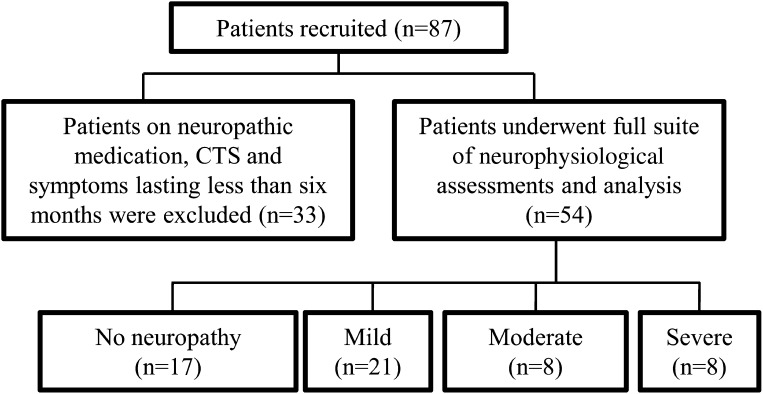
Fifty-four patients with type 2 diabetes mellitus underwent comprehensive neurologic assessment, nerve-conduction studies, and nerve-excitability assessment. Neuropathy severity was assessed using the Total Neuropathy Score. Neuropathy-specific QoL was assessed using a DN-specific QoL questionnaire (Neuropathy-Specific Quality of Life Questionnaire [NeuroQoL]). Glycosylated hemoglobin and BMI were recorded in all patients.
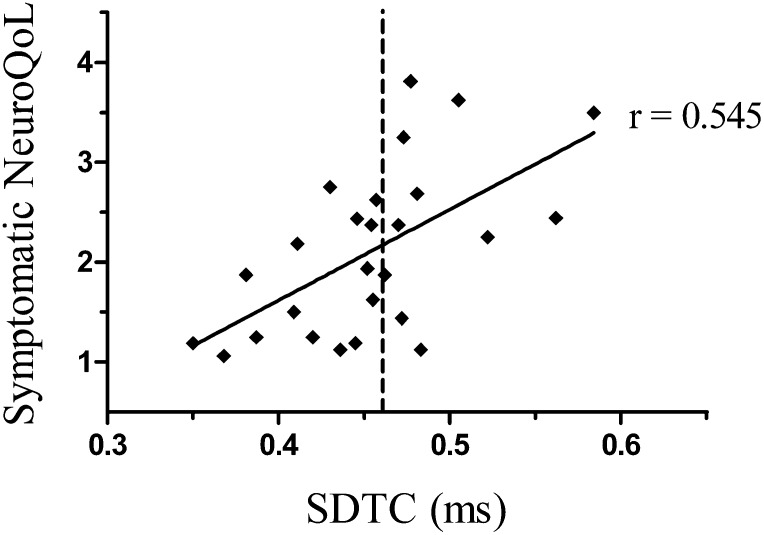
NeuroQoL scores indicated significant QoL impairment (mean 9.08 ± 5.93). Strength-duration time constant (SDTC), an excitability parameter reflecting sodium channel function, was strongly correlated with QoL scores (r = 0.545; P < 0.005). SDTC was prolonged in 48.6% of patients who experienced neuropathic symptoms. A significant correlation was also noted between SDTC and neuropathy severity (r = 0.29; P < 0.05). This relationship was strengthened when looking specifically at patients with clinically graded neuropathy (r = 0.366; P < 0.05).
The current study has demonstrated an association between markers of sodium channel function and QoL in DN. The study demonstrates that excitability techniques may identify patients in whom altered sodium channel function may be the dominant abnormality. The findings suggest that excitability techniques may have a role in clinical decision making regarding neuropathic treatment prescription.
治疗糖尿病周围神经病变(DN)的药物作用于多种机制,包括钠通道功能和γ-氨基丁酸能过程。目前,药物处方是基于尝试和错误的基础,导致更长的药物试验和更高的医疗保健成本。神经兴奋性技术是一种在临床环境中评估轴突离子通道功能的新方法。本研究旨在确定轴突离子通道功能障碍对 DN 中特定于神经病的生活质量(QoL)测量的影响。
54 例 2 型糖尿病患者接受了全面的神经评估、神经传导研究和神经兴奋性评估。使用总神经病变评分评估神经病变严重程度。使用特定于神经病的生活质量问卷(神经病特异性生活质量问卷[NeuroQoL])评估神经病特异性 QoL。所有患者均记录糖化血红蛋白和 BMI。
NeuroQoL 评分表明存在显著的 QoL 损害(平均 9.08±5.93)。强度-持续时间时间常数(SDTC),反映钠通道功能的兴奋性参数,与 QoL 评分呈强相关(r=0.545;P<0.005)。48.6%有神经病变症状的患者 SDTC 延长。SDTC 与神经病变严重程度之间也存在显著相关性(r=0.29;P<0.05)。当专门观察有临床分级神经病变的患者时,这种关系得到了加强(r=0.366;P<0.05)。
本研究表明,DN 中钠通道功能标志物与 QoL 之间存在关联。该研究表明,兴奋性技术可以识别可能存在改变的钠通道功能的患者,这种功能可能是主要异常。研究结果表明,兴奋性技术在神经病治疗处方的临床决策中可能具有作用。