Wildlife Conservation Research Unit, Recanati-Kaplan Centre, Department of Zoology, Oxford University, Tubney House, Abingdon, United Kingdom.
PLoS One. 2013;8(2):e55182. doi: 10.1371/journal.pone.0055182. Epub 2013 Feb 6.
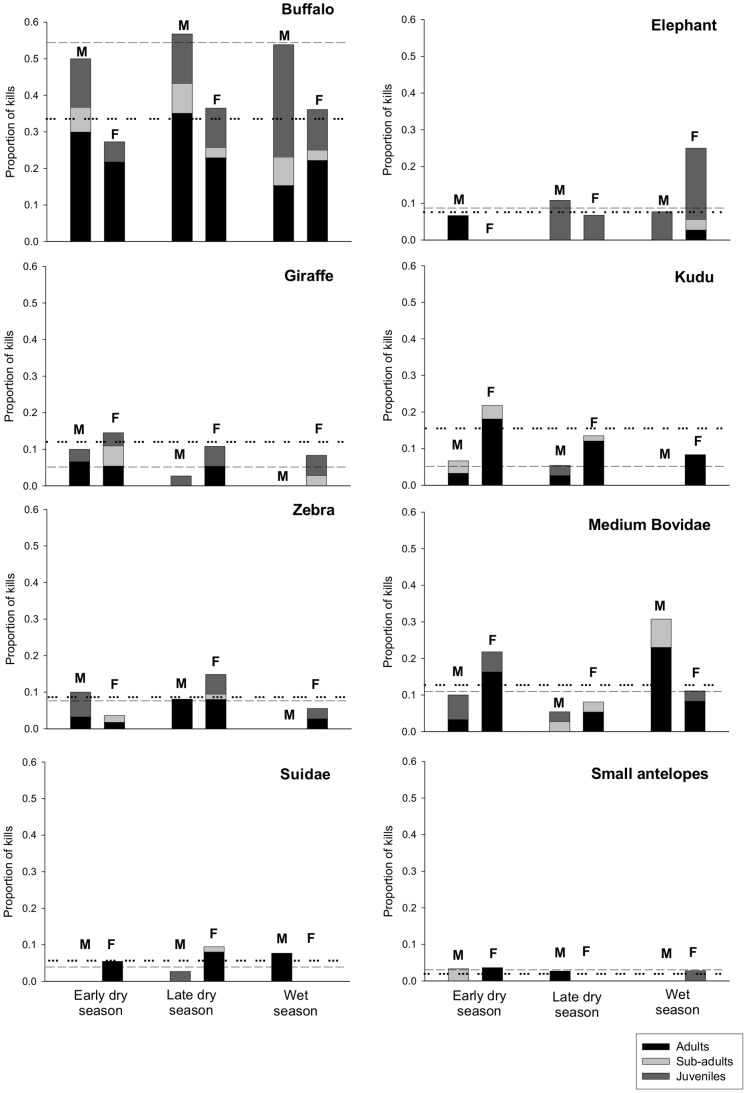
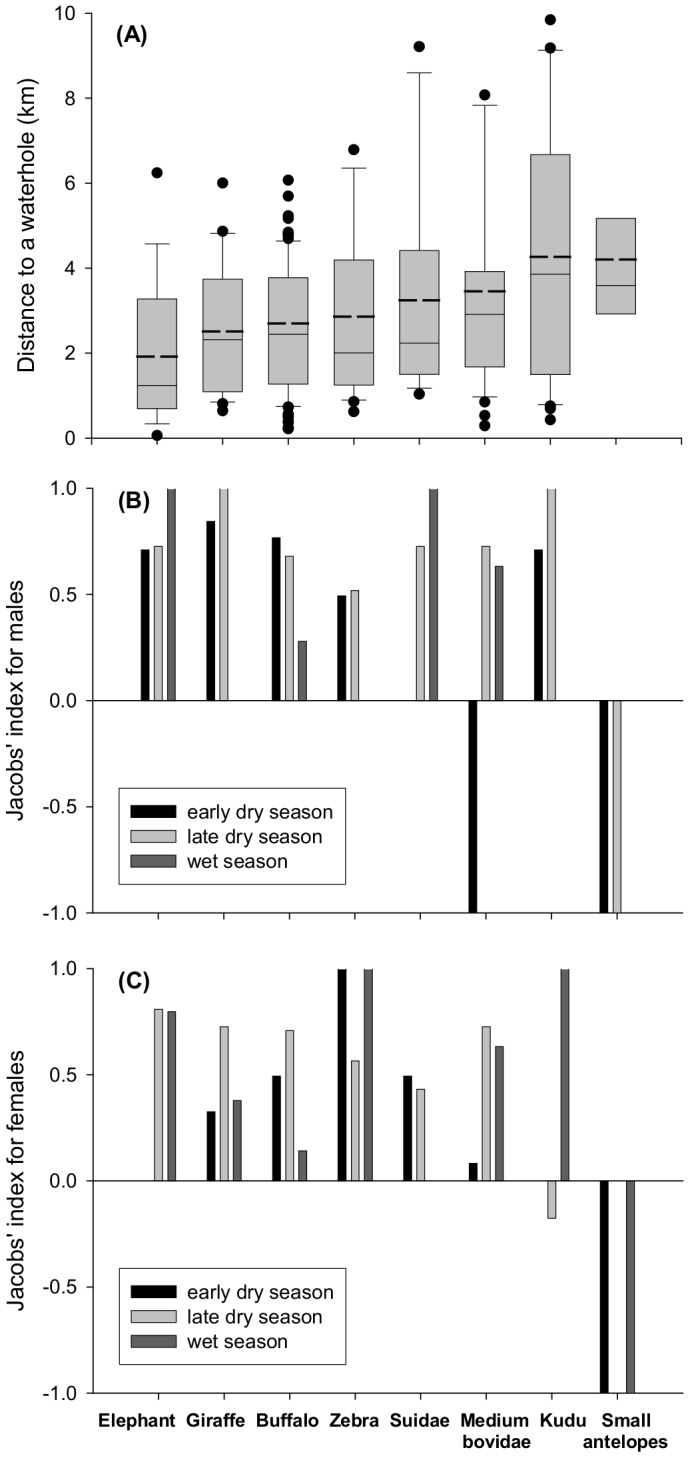
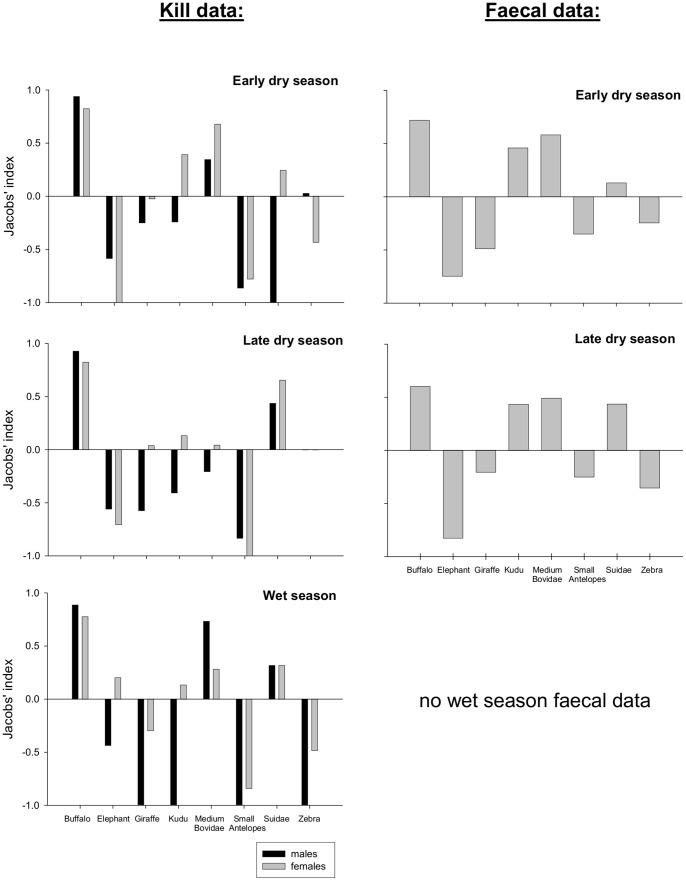
Large carnivores inhabiting ecosystems with heterogeneously distributed environmental resources with strong seasonal variations frequently employ opportunistic foraging strategies, often typified by seasonal switches in diet. In semi-arid ecosystems, herbivore distribution is generally more homogeneous in the wet season, when surface water is abundant, than in the dry season when only permanent sources remain. Here, we investigate the seasonal contribution of the different herbivore species, prey preference and distribution of kills (i.e. feeding locations) of African lions in Hwange National Park, Zimbabwe, a semi-arid African savanna structured by artificial waterholes. We used data from 245 kills and 74 faecal samples. Buffalo consistently emerged as the most frequently utilised prey in all seasons by both male (56%) and female (33%) lions, contributing the most to lion dietary biomass. Jacobs' index also revealed that buffalo was the most intensively selected species throughout the year. For female lions, kudu and to a lesser extent the group "medium Bovidae" are the most important secondary prey. This study revealed seasonal patterns in secondary prey consumption by female lions partly based on prey ecology with browsers, such as giraffe and kudu, mainly consumed in the early dry season, and grazers, such as zebra and suids, contributing more to female diet in the late dry season. Further, it revealed the opportunistic hunting behaviour of lions for prey as diverse as elephants and mice, with elephants taken mostly as juveniles at the end of the dry season during droughts. Jacobs' index finally revealed a very strong preference for kills within 2 km from a waterhole for all prey species, except small antelopes, in all seasons. This suggested that surface-water resources form passive traps and contribute to the structuring of lion foraging behaviour.
大型肉食动物栖息在环境资源分布不均且具有强烈季节性变化的生态系统中,经常采用机会主义的觅食策略,其典型特征是饮食的季节性转变。在半干旱生态系统中,食草动物的分布在雨季通常比旱季更加均匀,因为在雨季地表水丰富,而旱季只剩下永久性水源。在这里,我们研究了津巴布韦万基国家公园不同食草动物物种的季节性贡献、猎物偏好以及非洲狮捕杀地点(即觅食地点)的分布情况,该公园是一个由人工水坑构成的半干旱非洲稀树草原生态系统。我们使用了 245 起捕杀事件和 74 份粪便样本的数据。在所有季节,无论是雄性(56%)还是雌性(33%)狮子,水牛都是最常被利用的猎物,对狮子的食物生物量贡献最大。雅各布斯指数还表明,水牛是全年最受选择的物种。对于雌性狮子来说,角马和在较小程度上的“中型牛科动物”是最重要的次要猎物。本研究揭示了雌性狮子在次要猎物消费方面的季节性模式,部分基于猎物生态学,例如,食草动物(如长颈鹿和角马)主要在早旱季被食用,而食草动物(如斑马和猪科动物)则在晚旱季对雌性饮食的贡献更大。此外,本研究还揭示了狮子对各种猎物(如大象和老鼠)的机会主义狩猎行为,在旱季末期干旱期间,狮子主要以幼象为食。最后,雅各布斯指数还揭示了除小羚羊外,所有猎物物种在所有季节都非常强烈地偏好在离水坑 2 公里以内的捕杀地点。这表明地表水是被动陷阱,有助于塑造狮子的觅食行为。