Department of Integrative Biology, University of Guelph, 50 Stone Road East, Guelph, Ontario N1G 2W1 Canada ; Present address: The Wilderness &Wildlife Conservation Trust, 130 Reid Avenue, Colombo 04, Sri Lanka.
Tazania Wildlife Research Institute, P.O. Box 661, Arusha, United Republic of Tanzania.
Mov Ecol. 2016 Jul 1;4:17. doi: 10.1186/s40462-016-0082-9. eCollection 2016.
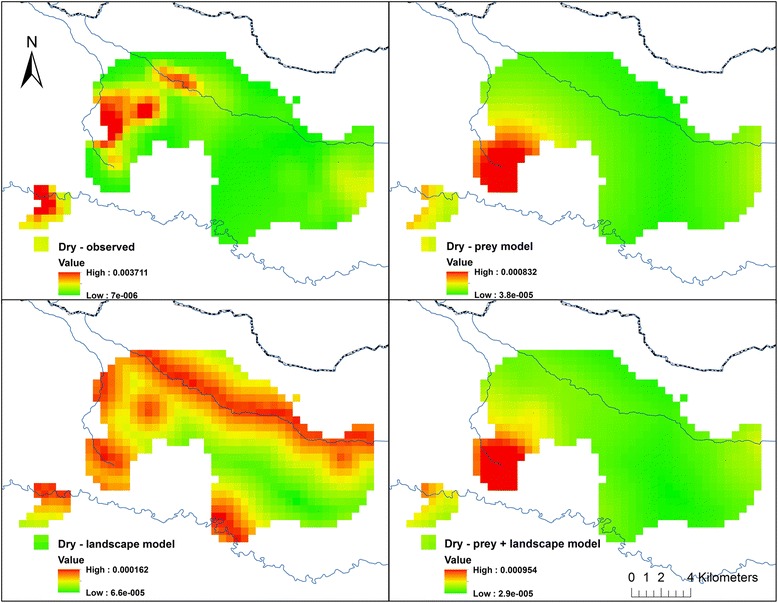
Where apex predators move on the landscape influences ecosystem structure and function and is therefore key to effective landscape-level management and species-specific conservation. However the factors underlying predator distribution patterns within functional ecosystems are poorly understood. Predator movement should be sensitive to the spatial patterns of inter-specific competitors, spatial variation in prey density, and landscape attributes that increase individual prey vulnerability. We investigated the relative role of these fundamental factors on seasonal resource utilization by a globally endangered apex carnivore, the African lion (Panthera leo) in Tanzania's Serengeti National Park. Lion space use was represented by novel landscape-level, modified utilization distributions (termed "localized density distributions") created from telemetry relocations of individual lions from multiple neighbouring prides. Spatial patterns of inter-specific competitors were similarly determined from telemetry re-locations of spotted hyenas (Crocuta crocuta), this system's primary competitor for lions; prey distribution was derived from 18 months of detailed census data; and remote sensing data was used to represent relevant habitat attributes.
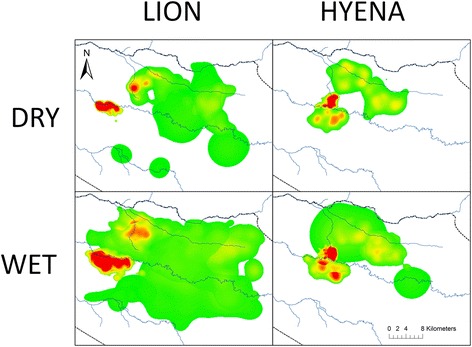
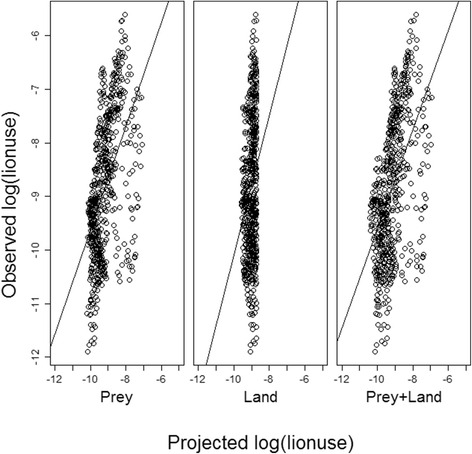
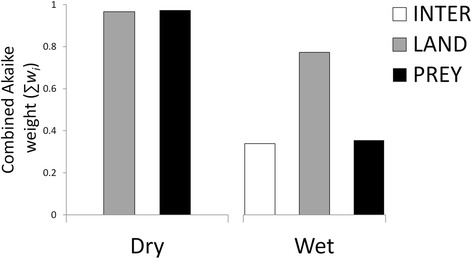
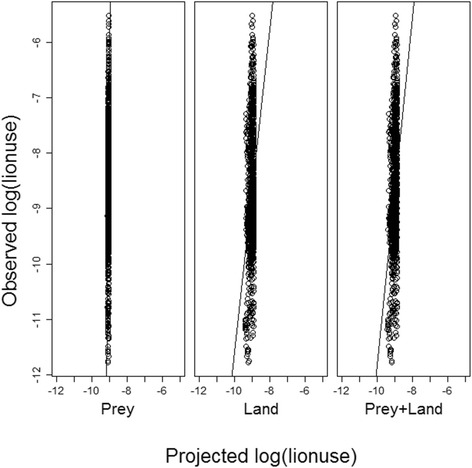
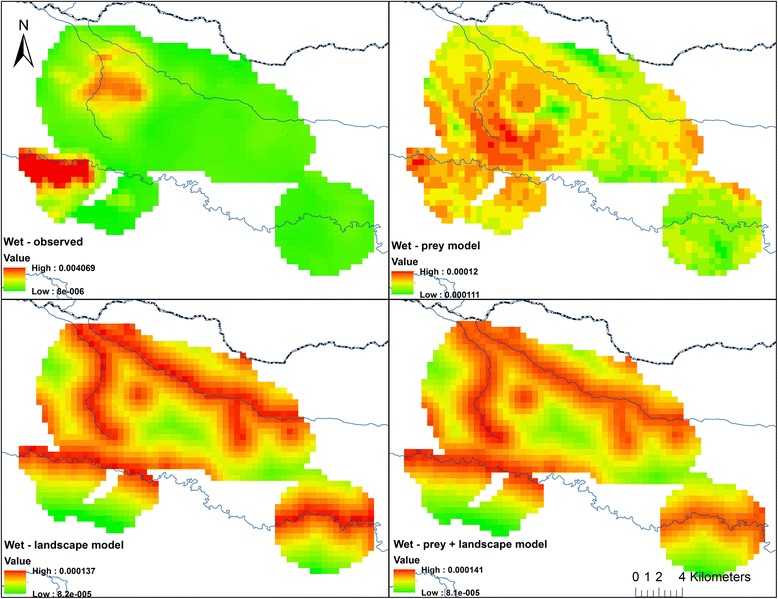
Lion space use was consistently influenced by landscape attributes that increase individual prey vulnerability to predation. Wet season activity, when available prey were scarce, was concentrated near embankments, which provide ambush opportunities, and dry season activity, when available prey were abundant, near remaining water sources where prey occurrence is predictable. Lion space use patterns were positively associated with areas of high prey biomass, but only in the prey abundant dry season. Finally, at the broad scale of this analysis, lion and hyena space use was positively correlated in the comparatively prey-rich dry season and unrelated in the wet season, suggesting lion movement was unconstrained by the spatial patterns of their main inter-specific competitors.
The availability of potential prey and vulnerability of that prey to predation both motivate lion movement decisions, with their relative importance apparently mediated by overall prey abundance. With practical and theoretical implications, these results suggest that while top carnivores are consistently cognizant of how landscape features influence individual prey vulnerability, they also adopt a flexible approach to range use by adjusting spatial behaviour according to fluctuations in local prey abundance.
顶级掠食者在景观中的移动方式会影响生态系统的结构和功能,因此对于有效的景观管理和特定物种的保护至关重要。然而,在功能生态系统中,支配捕食者分布模式的因素还知之甚少。捕食者的移动应该对种间竞争的空间格局、猎物密度的空间变化以及增加个体猎物易感性的景观属性敏感。我们调查了这些基本因素对坦桑尼亚塞伦盖蒂国家公园一种全球濒危的顶级掠食者——非洲狮(Panthera leo)在季节性资源利用中的相对作用。狮子的空间利用由个体狮子的遥测重新定位创建的新颖的景观水平、修改后的利用分布(称为“本地化密度分布”)来表示。来自多个相邻狮群的个体狮子的遥测重新定位;同样,来自鬣狗(Crocuta crocuta)的遥测重新定位确定了种间竞争者的空间模式,鬣狗是狮子的主要竞争者;猎物分布来自 18 个月的详细普查数据;并使用遥感数据来表示相关的栖息地属性。
狮子的空间利用一直受到增加个体猎物易感性的景观属性的影响。在可用猎物稀少的湿季,活动集中在堤岸附近,这些堤岸提供了伏击机会,而在可用猎物丰富的干季,活动集中在剩余水源附近,那里猎物的出现是可预测的。狮子的空间利用模式与高猎物生物量的区域呈正相关,但仅在猎物丰富的干季。最后,在这项分析的广泛范围内,狮子和鬣狗的空间利用在相对猎物丰富的干季呈正相关,而在湿季无关,这表明狮子的移动不受主要种间竞争者的空间模式的限制。
潜在猎物的可利用性和猎物对捕食的易感性都激发了狮子的移动决策,它们的相对重要性显然受到整体猎物丰度的调节。这些结果具有实际和理论意义,表明尽管顶级掠食者始终意识到景观特征如何影响个体猎物的易感性,但它们还通过根据当地猎物丰度的波动调整空间行为来采用灵活的方法来使用范围。