Department of Neurobiology and Anatomy, Drexel University College of Medicine Philadelphia, PA, USA ; Department of Mathematical Sciences, Indiana University - Purdue University Indianapolis, IN, USA.
Front Neural Circuits. 2013 Feb 13;7:16. doi: 10.3389/fncir.2013.00016. eCollection 2013.
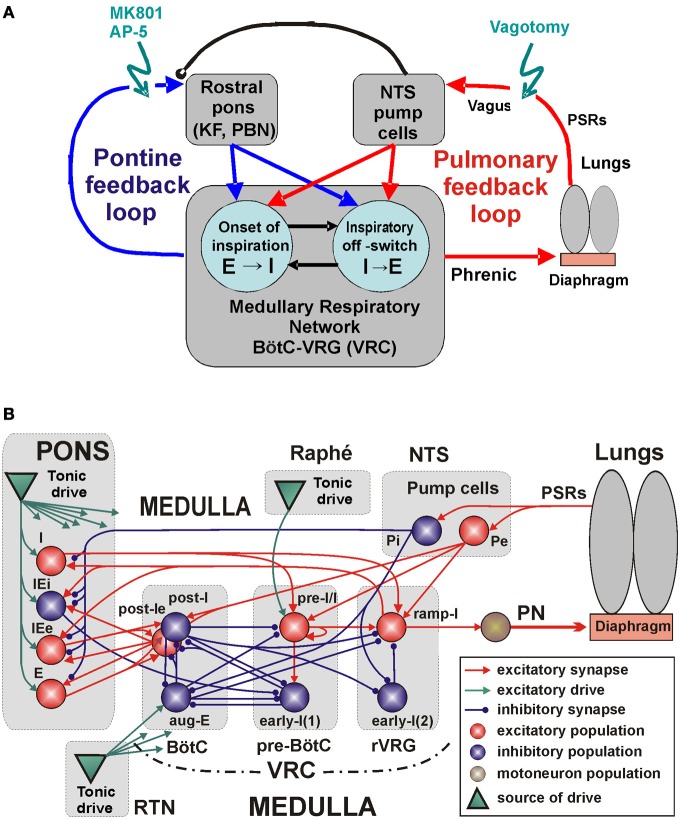
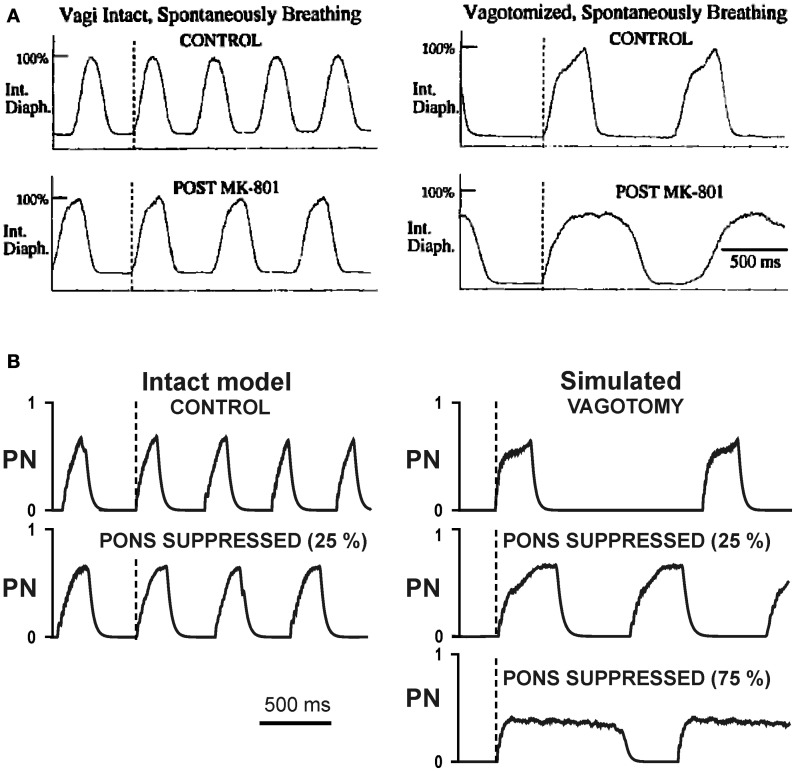
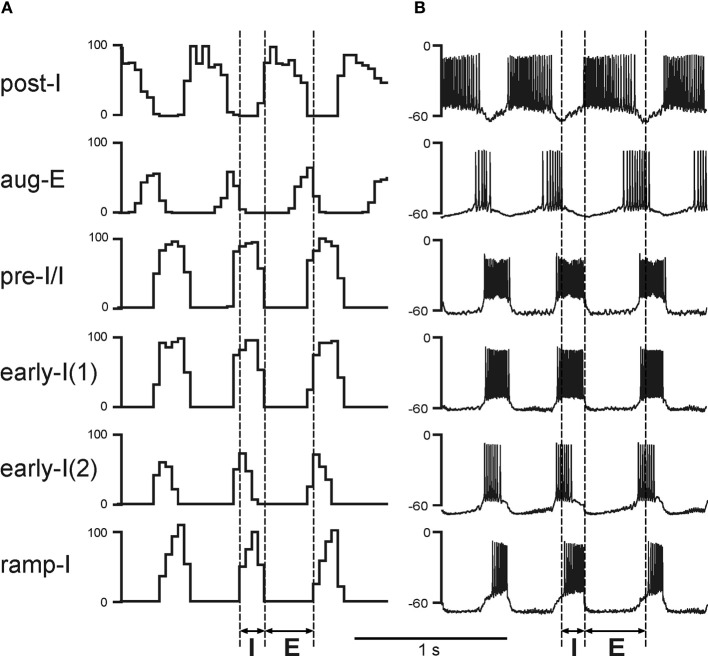
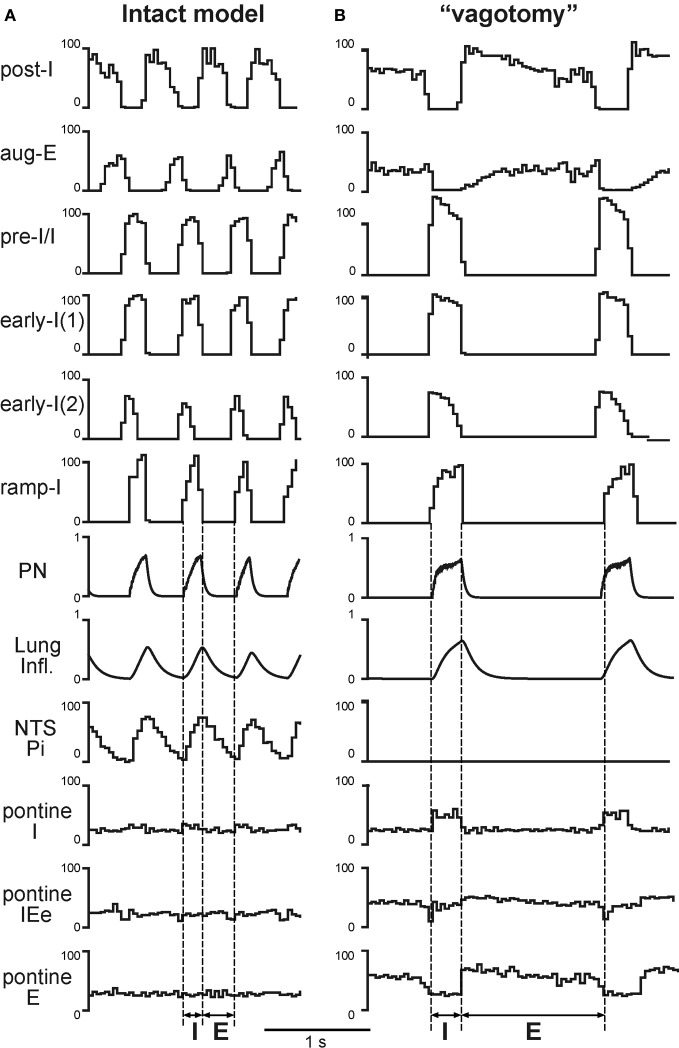
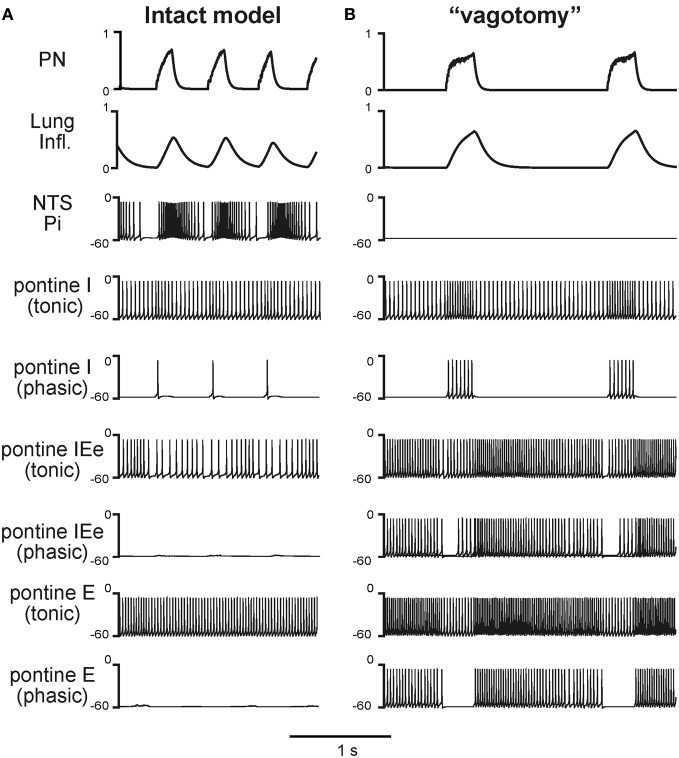
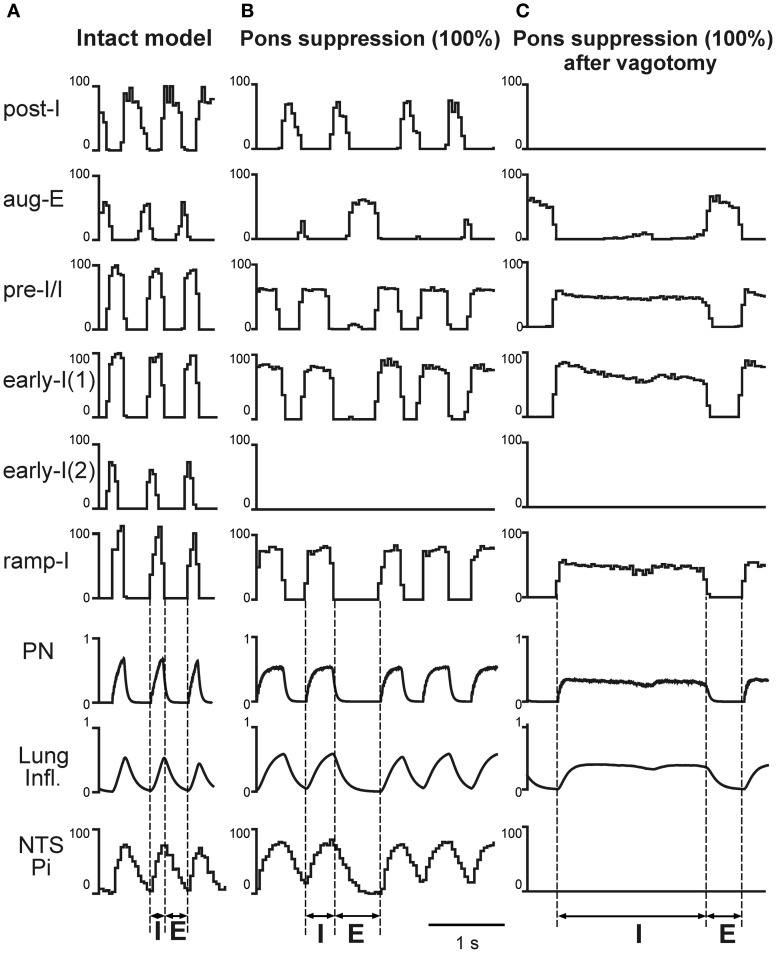
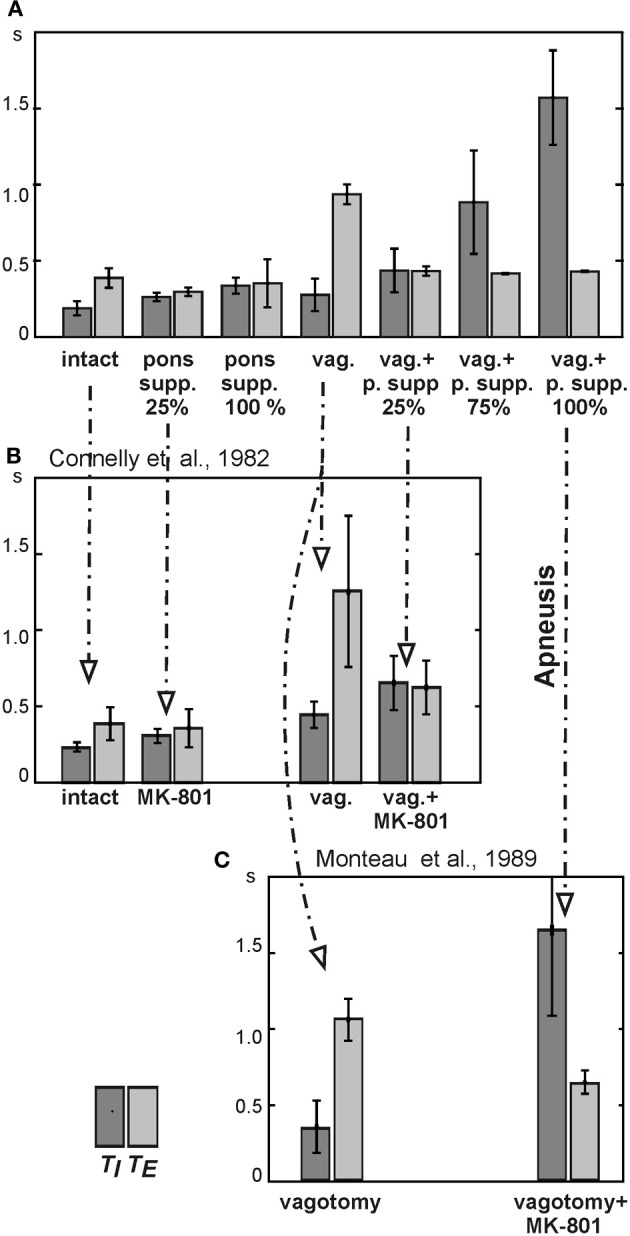
The medullary respiratory network generates respiratory rhythm via sequential phase switching, which in turn is controlled by multiple feedbacks including those from the pons and nucleus tractus solitarii; the latter mediates pulmonary afferent feedback to the medullary circuits. It is hypothesized that both pontine and pulmonary feedback pathways operate via activation of medullary respiratory neurons that are critically involved in phase switching. Moreover, the pontine and pulmonary control loops interact, so that pulmonary afferents control the gain of pontine influence of the respiratory pattern. We used an established computational model of the respiratory network (Smith et al., 2007) and extended it by incorporating pontine circuits and pulmonary feedback. In the extended model, the pontine neurons receive phasic excitatory activation from, and provide feedback to, medullary respiratory neurons responsible for the onset and termination of inspiration. The model was used to study the effects of: (1) "vagotomy" (removal of pulmonary feedback), (2) suppression of pontine activity attenuating pontine feedback, and (3) these perturbations applied together on the respiratory pattern and durations of inspiration (T(I)) and expiration (T(E)). In our model: (a) the simulated vagotomy resulted in increases of both T(I) and T(E), (b) the suppression of pontine-medullary interactions led to the prolongation of T(I) at relatively constant, but variable T(E), and (c) these perturbations applied together resulted in "apneusis," characterized by a significantly prolonged T(I). The results of modeling were compared with, and provided a reasonable explanation for, multiple experimental data. The characteristic changes in T(I) and T(E) demonstrated with the model may represent characteristic changes in the balance between the pontine and pulmonary feedback control mechanisms that may reflect specific cardio-respiratory disorders and diseases.
延髓呼吸网络通过顺序相位转换产生呼吸节律,而相位转换反过来又受到多个反馈的控制,包括来自脑桥和孤束核的反馈;后者介导肺传入反馈到延髓回路。据推测,脑桥和肺反馈途径都通过激活在相位转换中起关键作用的延髓呼吸神经元来起作用。此外,脑桥和肺控制回路相互作用,使得肺传入控制脑桥对呼吸模式影响的增益。我们使用了一个已建立的呼吸网络计算模型(Smith 等人,2007 年),并通过纳入脑桥回路和肺反馈对其进行了扩展。在扩展模型中,脑桥神经元从负责吸气起始和终止的延髓呼吸神经元中获得阶段性兴奋激活,并向其提供反馈。该模型用于研究以下影响:(1)“迷走神经切断术”(去除肺反馈),(2)抑制减弱脑桥反馈的脑桥活动,以及(3)这些干扰同时应用于呼吸模式和吸气(T(I))和呼气(T(E))的持续时间。在我们的模型中:(a) 模拟的迷走神经切断术导致 T(I)和 T(E)都增加,(b) 抑制脑桥-延髓相互作用导致 T(I)延长,而相对恒定但可变的 T(E),以及 (c) 这些干扰同时应用导致“呼吸暂停”,其特征是 T(I)显著延长。模型的结果与多个实验数据进行了比较,并提供了合理的解释。模型中显示的 T(I)和 T(E)的特征变化可能代表了脑桥和肺反馈控制机制之间平衡的特征变化,这些变化可能反映了特定的心肺疾病。