Department of Family Medicine, Brown University Providence, RI, USA.
Front Hum Neurosci. 2013 Feb 13;7:12. doi: 10.3389/fnhum.2013.00012. eCollection 2013.
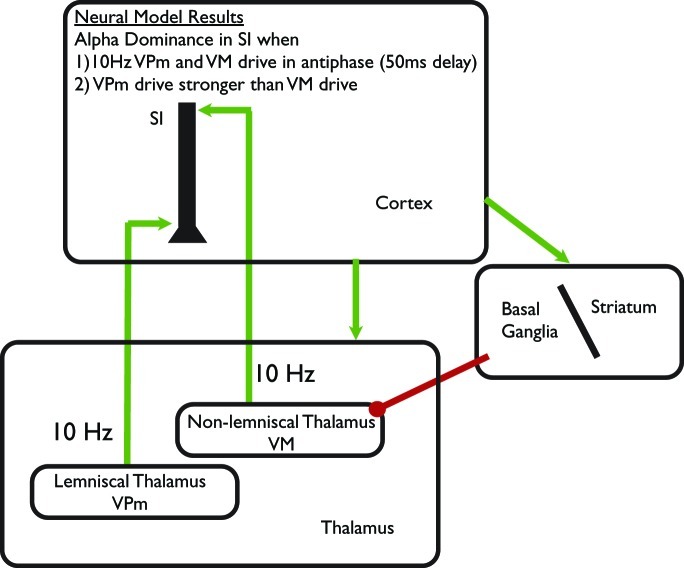
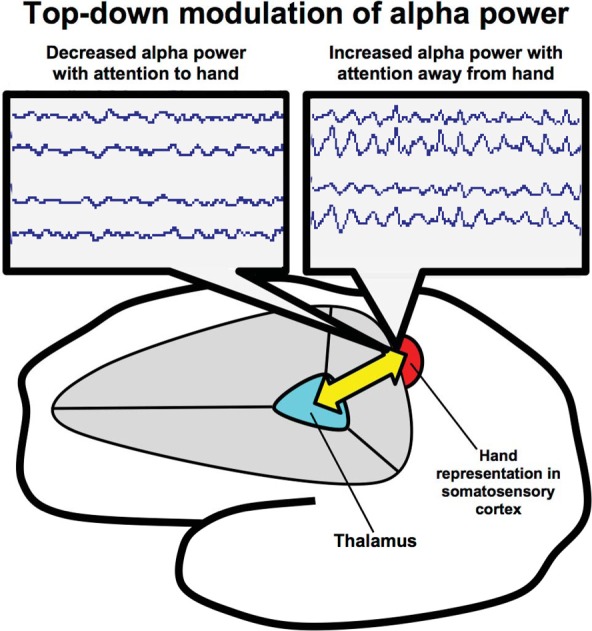
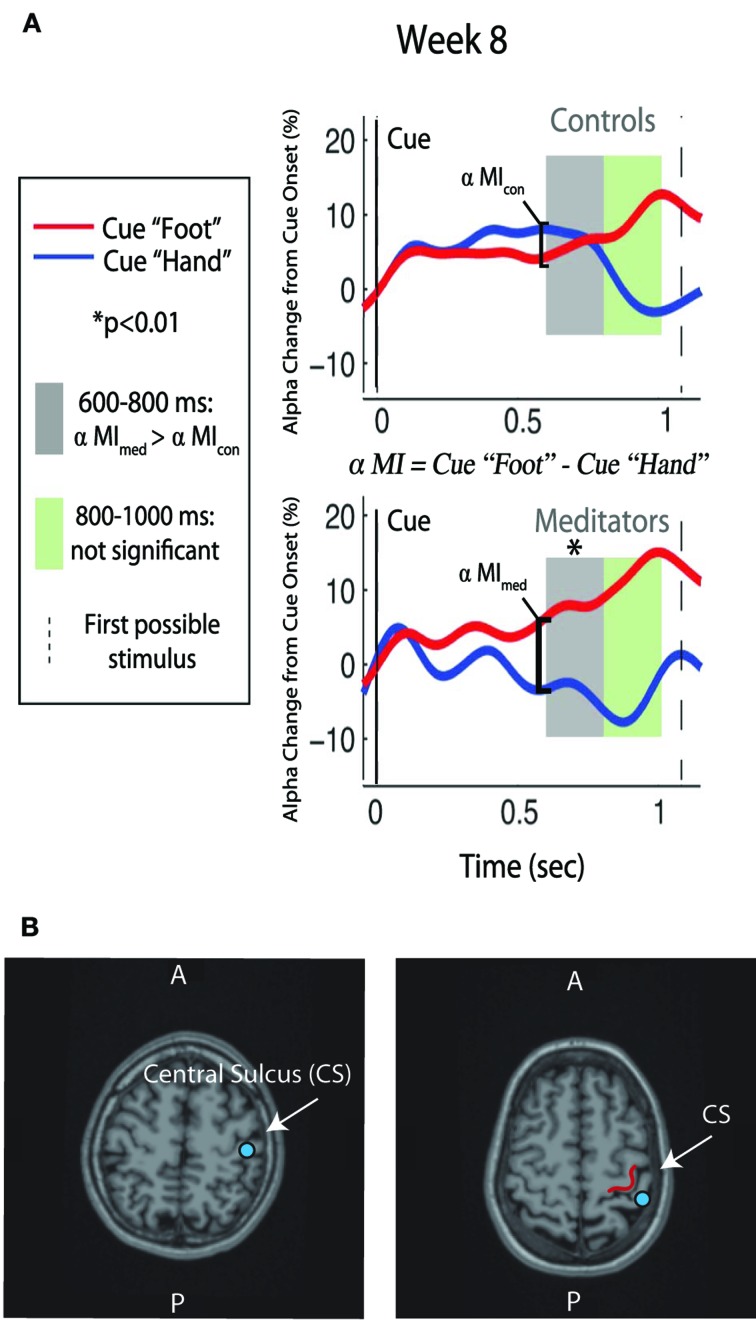
Using a common set of mindfulness exercises, mindfulness based stress reduction (MBSR) and mindfulness based cognitive therapy (MBCT) have been shown to reduce distress in chronic pain and decrease risk of depression relapse. These standardized mindfulness (ST-Mindfulness) practices predominantly require attending to breath and body sensations. Here, we offer a novel view of ST-Mindfulness's somatic focus as a form of training for optimizing attentional modulation of 7-14 Hz alpha rhythms that play a key role in filtering inputs to primary sensory neocortex and organizing the flow of sensory information in the brain. In support of the framework, we describe our previous finding that ST-Mindfulness enhanced attentional regulation of alpha in primary somatosensory cortex (SI). The framework allows us to make several predictions. In chronic pain, we predict somatic attention in ST-Mindfulness "de-biases" alpha in SI, freeing up pain-focused attentional resources. In depression relapse, we predict ST-Mindfulness's somatic attention competes with internally focused rumination, as internally focused cognitive processes (including working memory) rely on alpha filtering of sensory input. Our computational model predicts ST-Mindfulness enhances top-down modulation of alpha by facilitating precise alterations in timing and efficacy of SI thalamocortical inputs. We conclude by considering how the framework aligns with Buddhist teachings that mindfulness starts with "mindfulness of the body." Translating this theory into neurophysiology, we hypothesize that with its somatic focus, mindfulness' top-down alpha rhythm modulation in SI enhances gain control which, in turn, sensitizes practitioners to better detect and regulate when the mind wanders from its somatic focus. This enhanced regulation of somatic mind-wandering may be an important early stage of mindfulness training that leads to enhanced cognitive regulation and metacognition.
使用一套常见的正念练习,正念减压疗法(MBSR)和正念认知疗法(MBCT)已被证明可以减轻慢性疼痛中的痛苦并降低抑郁复发的风险。这些标准化的正念(ST-Mindfulness)练习主要需要关注呼吸和身体感觉。在这里,我们提供了一种新颖的观点,即 ST-Mindfulness 的躯体焦点是一种优化注意力调节 7-14 Hz 阿尔法节律的训练形式,阿尔法节律在过滤初级感觉新皮层的输入和组织大脑中感觉信息的流动方面起着关键作用。为了支持该框架,我们描述了我们之前的发现,即 ST-Mindfulness 增强了初级体感皮层(SI)中注意力对阿尔法的调节。该框架使我们能够做出一些预测。在慢性疼痛中,我们预测 ST-Mindfulness 的躯体注意力会“去偏置”SI 中的阿尔法,释放出专注于疼痛的注意力资源。在抑郁复发中,我们预测 ST-Mindfulness 的躯体注意力会与内部焦点的沉思竞争,因为内部焦点的认知过程(包括工作记忆)依赖于对感觉输入的阿尔法过滤。我们的计算模型预测,ST-Mindfulness 通过促进 SI 丘脑皮质输入的时间和功效的精确改变,增强了对阿尔法的自上而下的调节。最后,我们考虑了该框架如何与佛教教义保持一致,即正念从“对身体的正念”开始。将这一理论转化为神经生理学,我们假设,由于其躯体焦点,正念对 SI 中阿尔法节律的自上而下调制增强了增益控制,进而使从业者能够更好地检测和调节思维何时从躯体焦点漂移。这种对躯体思维漂移的增强调节可能是正念训练的一个重要早期阶段,它会增强认知调节和元认知。