Department of Molecular Microbiology and Genetics, Institute of Microbiology and Genetics, Georg-August-Universität Göttingen, Göttingen, Germany.
PLoS Genet. 2013;9(2):e1003275. doi: 10.1371/journal.pgen.1003275. Epub 2013 Feb 7.
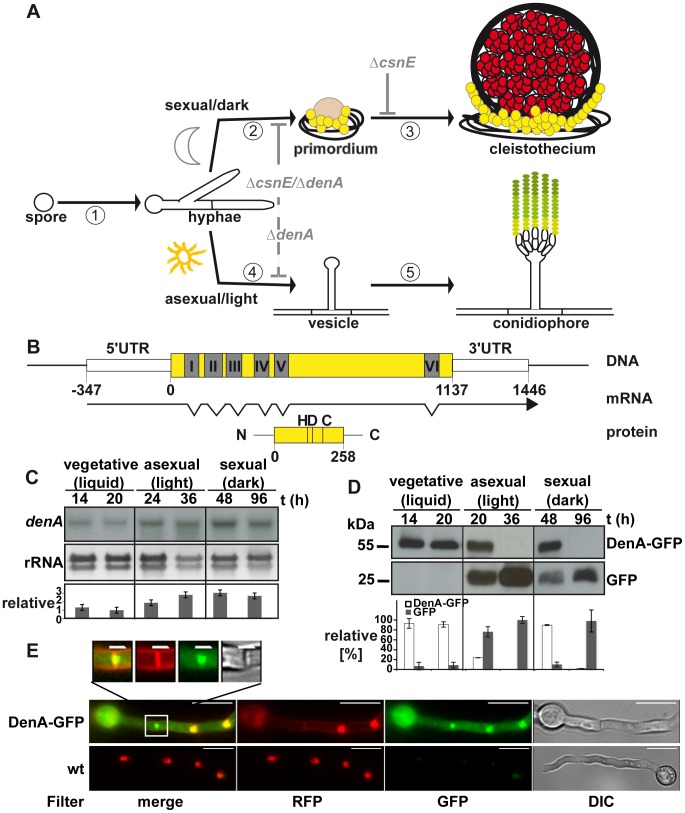
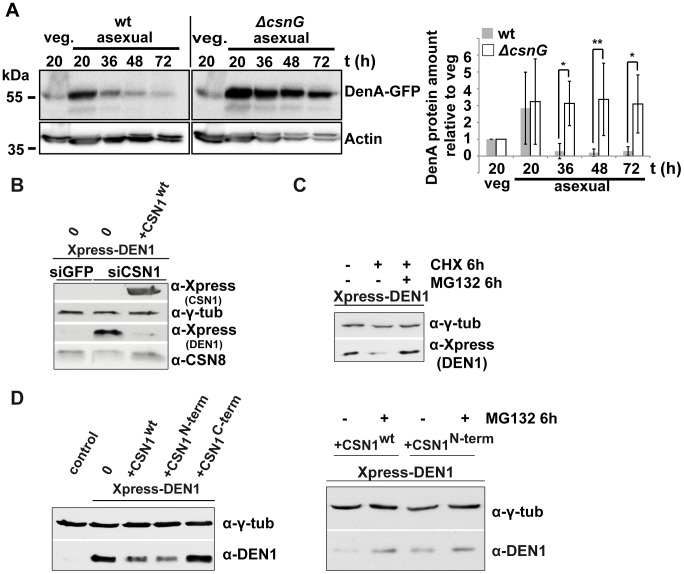
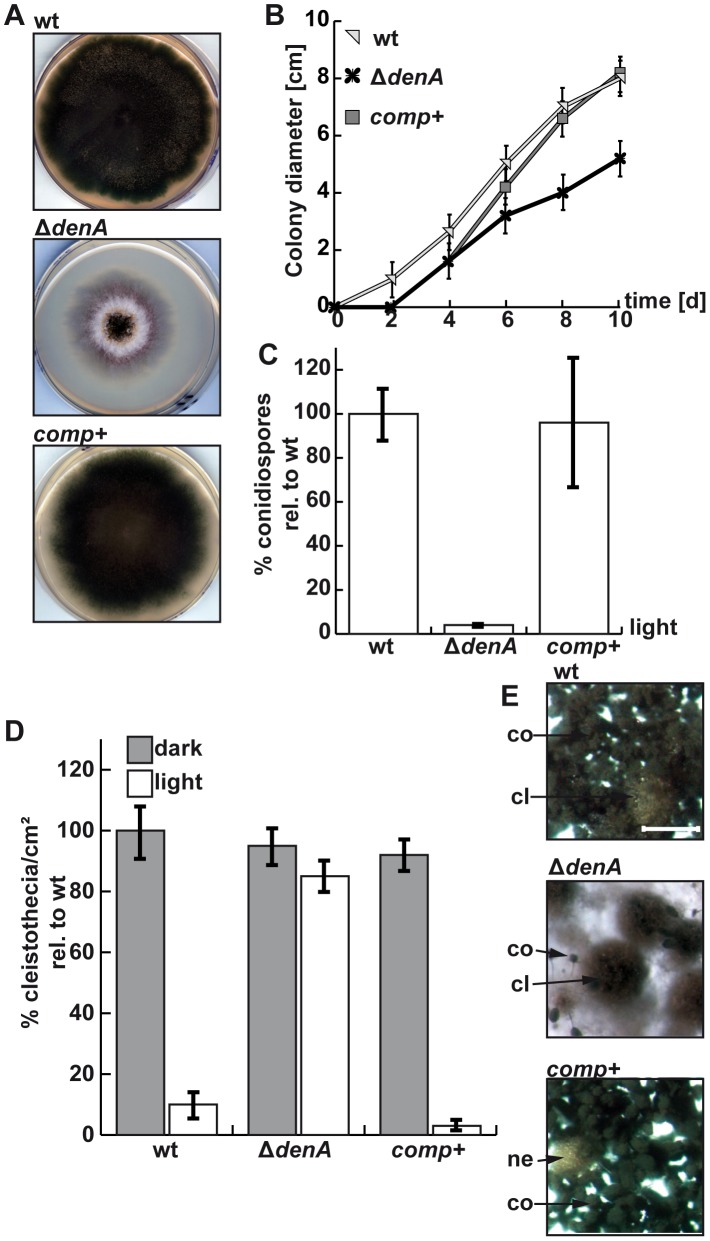
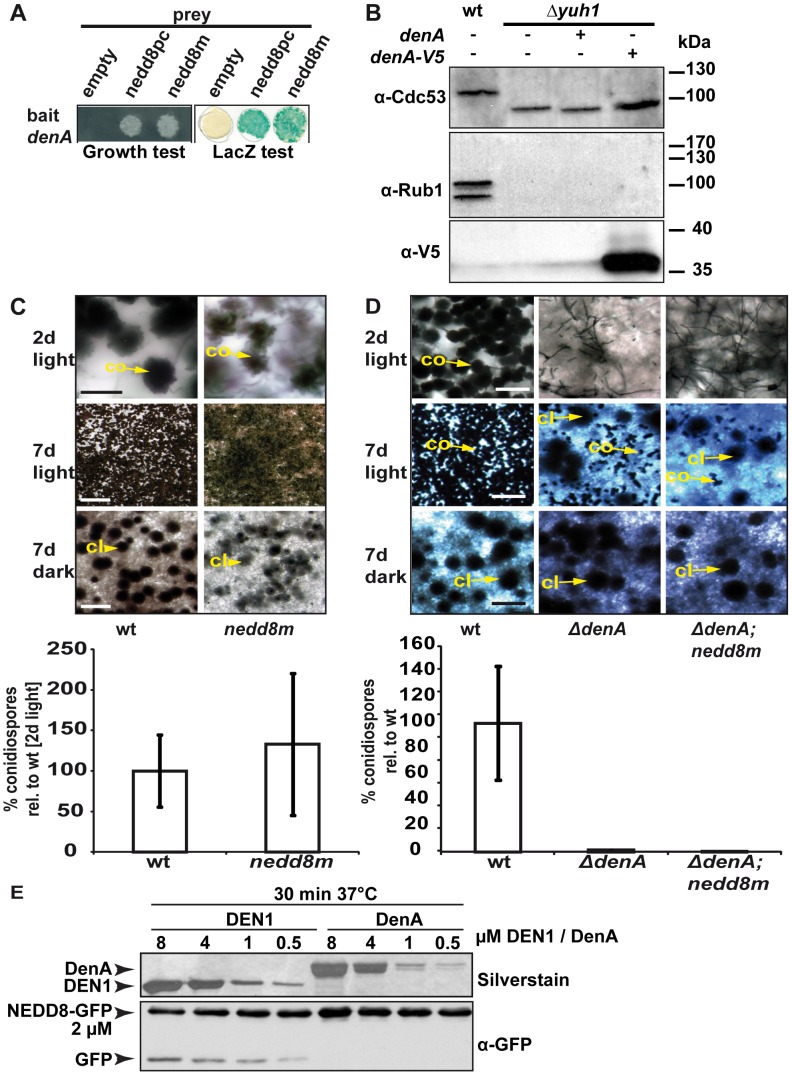
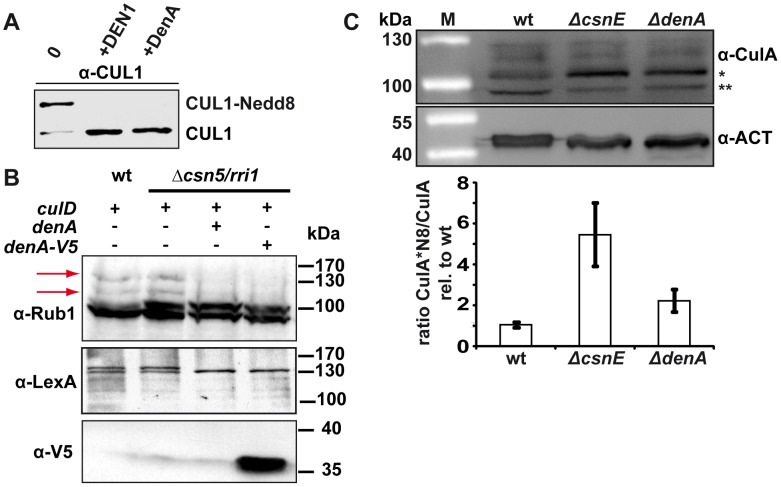
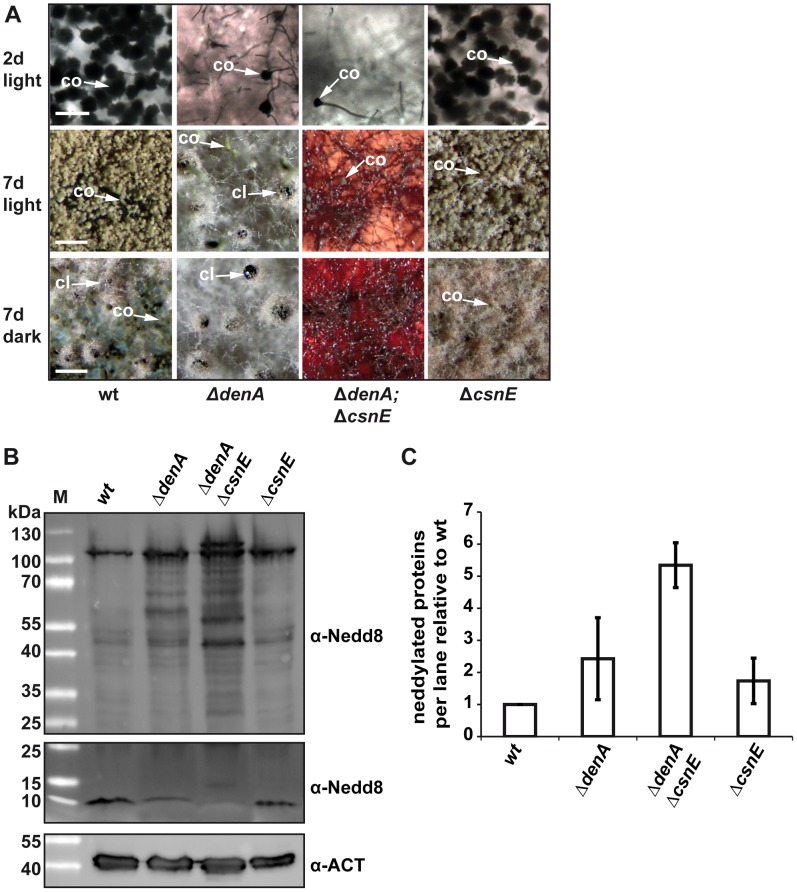
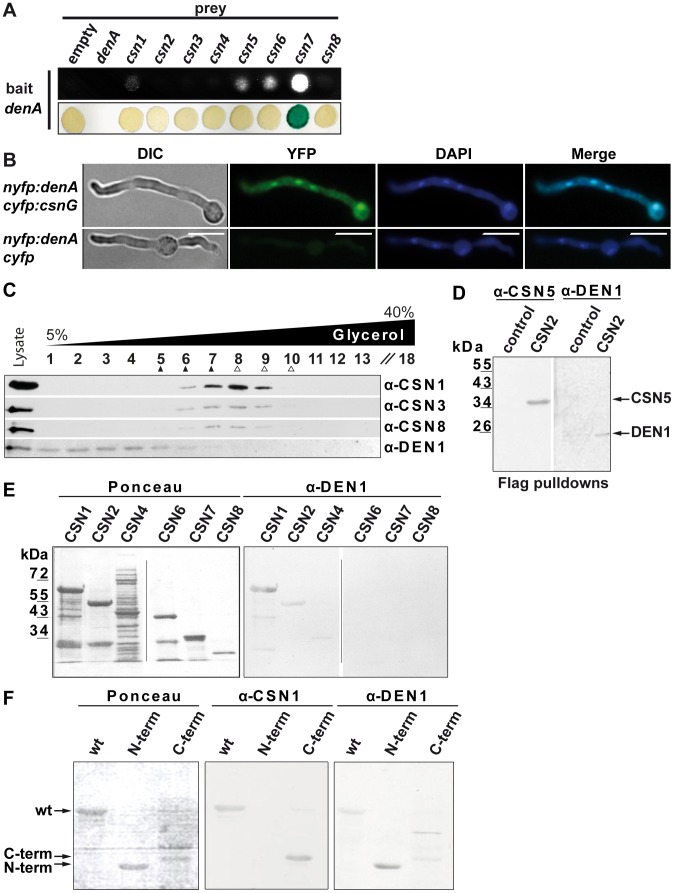
Deneddylases remove the ubiquitin-like protein Nedd8 from modified proteins. An increased deneddylase activity has been associated with various human cancers. In contrast, we show here that a mutant strain of the model fungus Aspergillus nidulans deficient in two deneddylases is viable but can only grow as a filament and is highly impaired for multicellular development. The DEN1/DenA and the COP9 signalosome (CSN) deneddylases physically interact in A. nidulans as well as in human cells, and CSN targets DEN1/DenA for protein degradation. Fungal development responds to light and requires both deneddylases for an appropriate light reaction. In contrast to CSN, which is necessary for sexual development, DEN1/DenA is required for asexual development. The CSN-DEN1/DenA interaction that affects DEN1/DenA protein levels presumably balances cellular deneddylase activity. A deneddylase disequilibrium impairs multicellular development and suggests that control of deneddylase activity is important for multicellular development.
去泛素化酶从修饰蛋白上移除泛素样蛋白 Nedd8。泛素化酶活性增加与多种人类癌症有关。相比之下,我们在这里表明,模型真菌构巢曲霉中缺失两种去泛素化酶的突变菌株是有活力的,但只能以丝状生长,并且在多细胞发育方面受到严重损害。DEN1/DenA 和 COP9 信号小体 (CSN) 的去泛素化酶在构巢曲霉和人类细胞中相互作用,并且 CSN 将 DEN1/DenA 靶向进行蛋白降解。真菌发育对光有反应,并且适当的光反应需要两种去泛素化酶。与对有性发育是必需的 CSN 不同,DEN1/DenA 是无性发育所必需的。影响 DEN1/DenA 蛋白水平的 CSN-DEN1/DenA 相互作用可能平衡了细胞内去泛素化酶的活性。去泛素化酶的失衡会损害多细胞发育,并表明控制去泛素化酶活性对多细胞发育很重要。