Department of Molecular Biology, Medical Biochemistry, and Pathology, Faculty of Medicine, Laval University, Centre de recherche le CHU de Quebec, Quebec, Canada.
PLoS One. 2013;8(2):e55342. doi: 10.1371/journal.pone.0055342. Epub 2013 Feb 7.
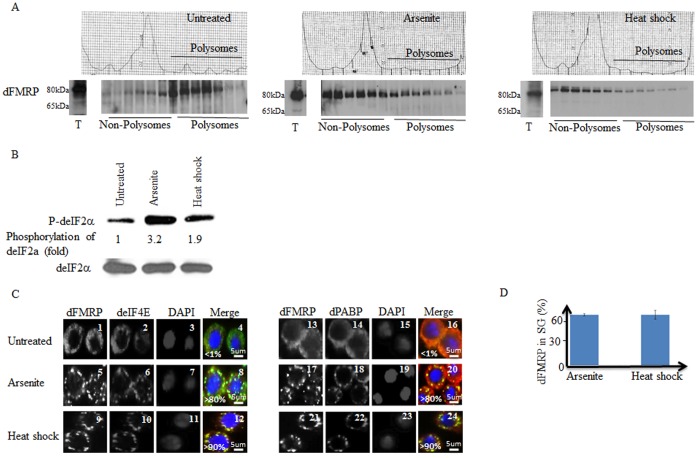
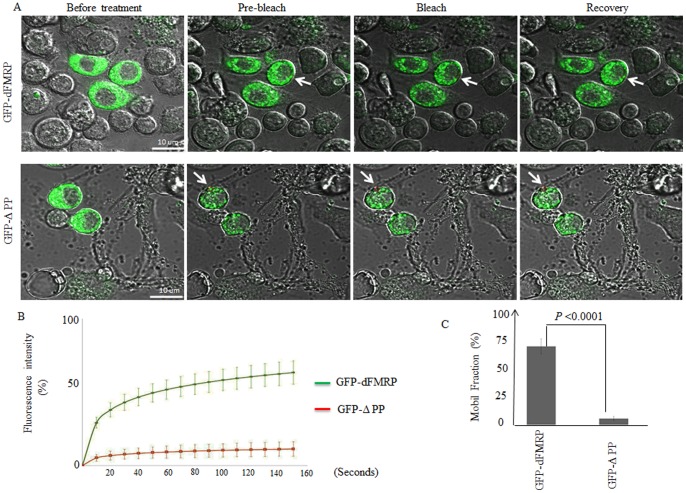
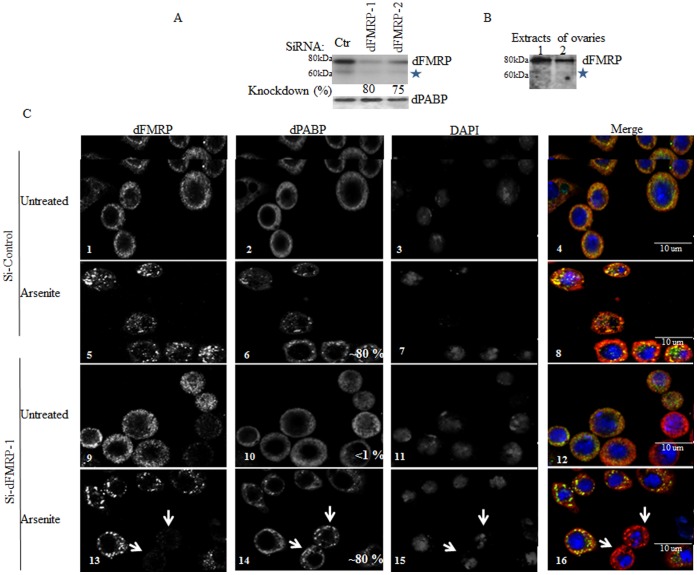
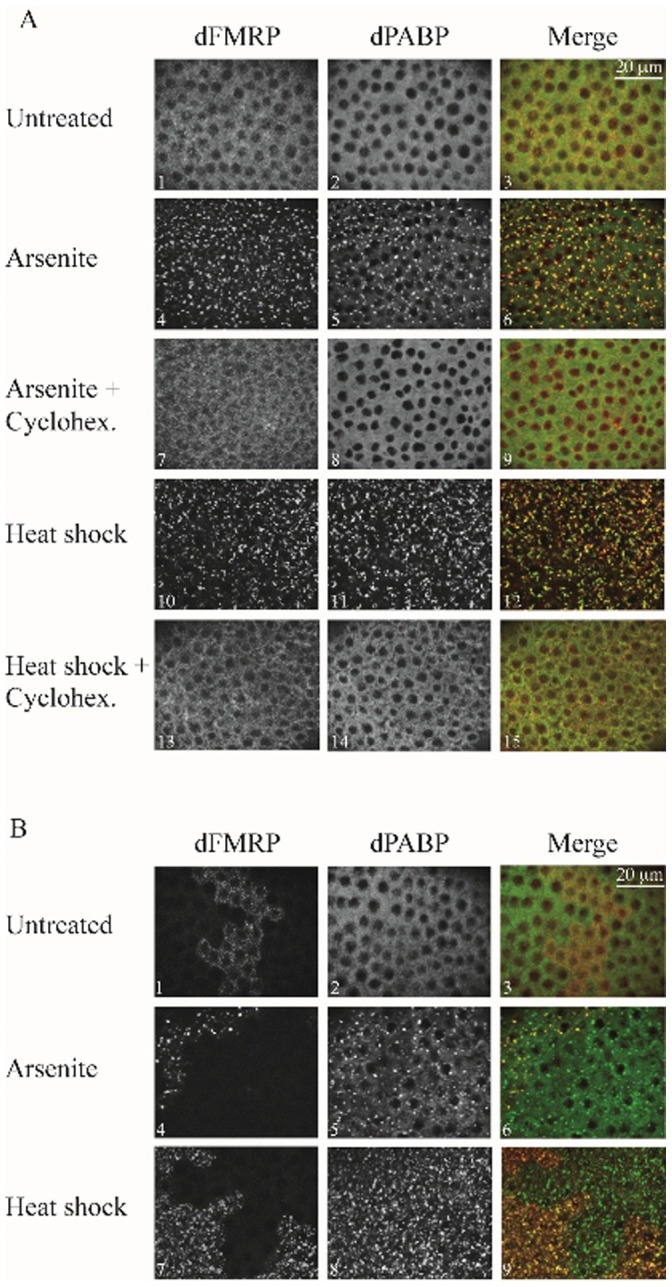
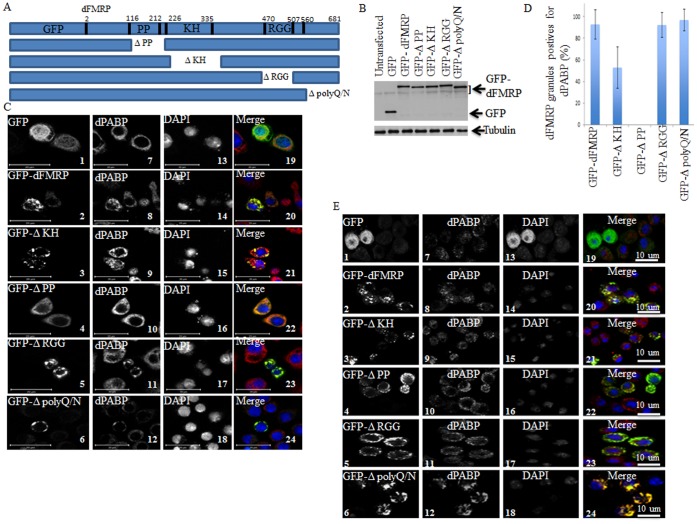
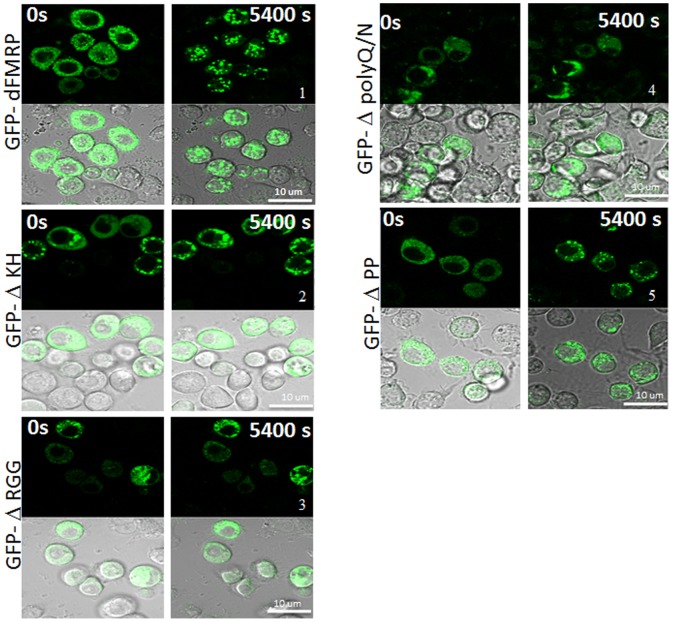
The RNA-binding protein Fragile X Mental Retardation (FMRP) is an evolutionarily conserved protein that is particularly abundant in the brain due to its high expression in neurons. FMRP deficiency causes fragile X mental retardation syndrome. In neurons, FMRP controls the translation of target mRNAs in part by promoting dynamic transport in and out neuronal RNA granules. We and others have previously shown that upon stress, mammalian FMRP dissociates from translating polysomes to localize into neuronal-like granules termed stress granules (SG). This localization of FMRP in SG is conserved in Drosophila. Whether FMRP plays a key role in SG formation, how FMRP is recruited into SG, and whether its association with SG is dynamic are currently unknown. In contrast with mammalian FMRP, which has two paralog proteins, Drosophila FMR1 (dFMRP) is encoded by a single gene that has no paralog. Using this genetically simple model, we assessed the role of dFMRP in SG formation and defined the determinants required for its recruitment in SG as well as its dynamics in SG. We show that dFMRP is dispensable for SG formation in vitro and ex vivo. FRAP experiments showed that dFMRP shuttles in and out SG. The shuttling activity of dFMRP is mediated by a protein-protein interaction domain located at the N-terminus of the protein. This domain is, however, dispensable for the localization of dFMRP in SG. This localization of dFMRP in SG requires the KH and RGG motifs which are known to mediate RNA binding, as well as the C-terminal glutamine/asparagine rich domain. Our studies thus suggest that the mechanisms controlling the recruitment of FMRP into SG and those that promote its shuttling between granules and the cytosol are uncoupled. To our knowledge, this is the first demonstration of the regulated shuttling activity of a SG component between RNA granules and the cytosol.
RNA 结合蛋白脆性 X 智力低下症(FMRP)是一种进化上保守的蛋白质,由于其在神经元中的高表达,在大脑中尤为丰富。FMRP 缺乏会导致脆性 X 智力低下症。在神经元中,FMRP 通过促进神经元 RNA 颗粒的内外动态运输,部分控制靶 mRNA 的翻译。我们和其他人之前已经表明,在应激下,哺乳动物 FMRP 从翻译多核糖体上解离,定位到称为应激颗粒(SG)的神经元样颗粒中。FMRP 在 SG 中的这种定位在果蝇中是保守的。FMRP 是否在 SG 形成中发挥关键作用,FMRP 如何被招募到 SG 中,以及其与 SG 的关联是否是动态的,目前尚不清楚。与具有两个同源蛋白的哺乳动物 FMRP 不同,果蝇 FMR1(dFMRP)由一个没有同源蛋白的基因编码。利用这种遗传上简单的模型,我们评估了 dFMRP 在 SG 形成中的作用,并确定了其在 SG 中招募的必需决定因素及其在 SG 中的动力学。我们表明,dFMRP 在体外和离体条件下对于 SG 的形成是可有可无的。FRAP 实验表明,dFMRP 在 SG 中穿梭。dFMRP 的穿梭活性是由位于蛋白质 N 端的蛋白-蛋白相互作用结构域介导的。然而,该结构域对于 dFMRP 在 SG 中的定位是可有可无的。dFMRP 在 SG 中的定位需要 KH 和 RGG 基序,这些基序已知介导 RNA 结合,以及 C 端富含谷氨酰胺/天冬酰胺的结构域。因此,我们的研究表明,控制 FMRP 招募到 SG 中的机制与促进其在颗粒和细胞质之间穿梭的机制是分离的。据我们所知,这是第一个证明 SG 成分在 RNA 颗粒和细胞质之间的调控穿梭活性的实验。