Department of Neurobiology, Care Sciences and Society, Karolinska Institutet, KI-Alzheimer's Disease Research center (KI-ADRC), Huddinge, Sweden.
PLoS One. 2013;8(2):e55847. doi: 10.1371/journal.pone.0055847. Epub 2013 Feb 11.
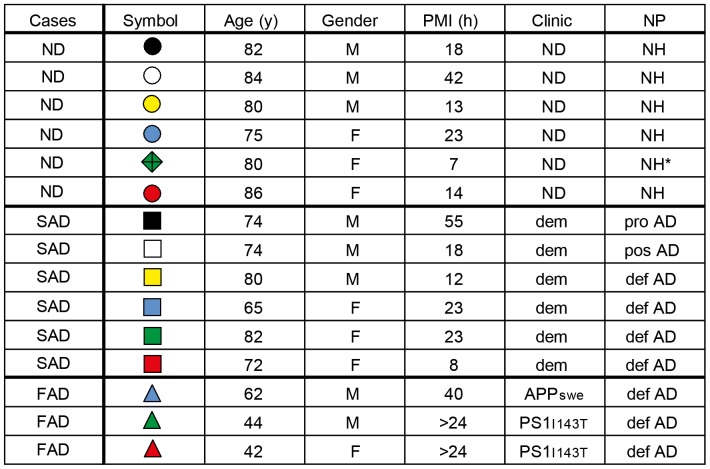
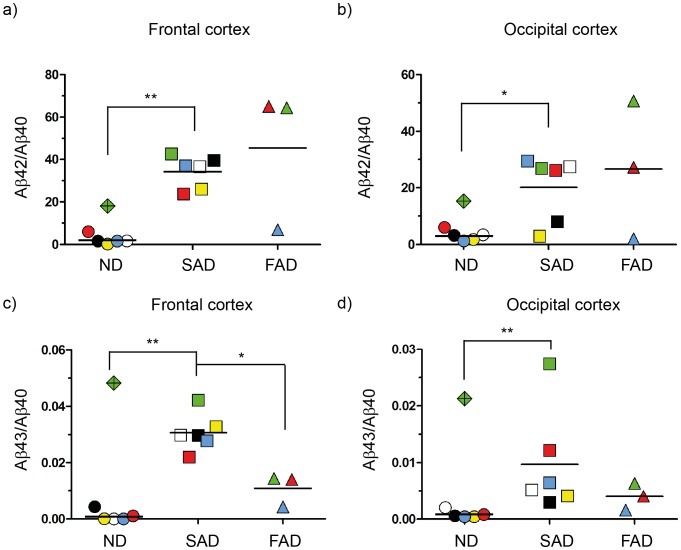
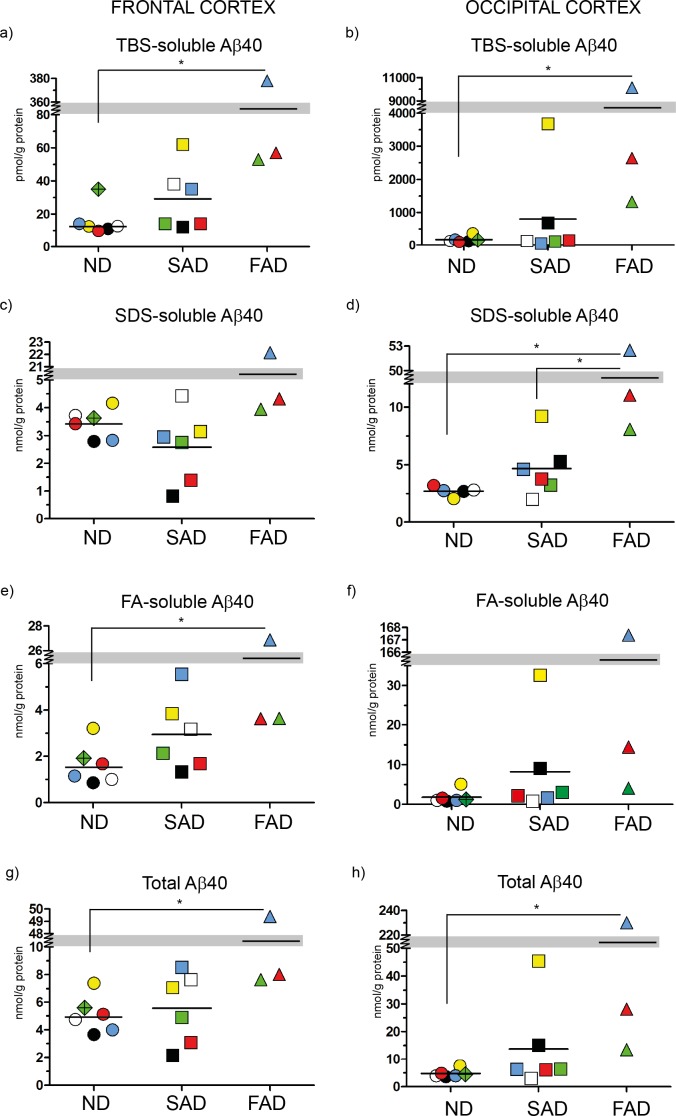
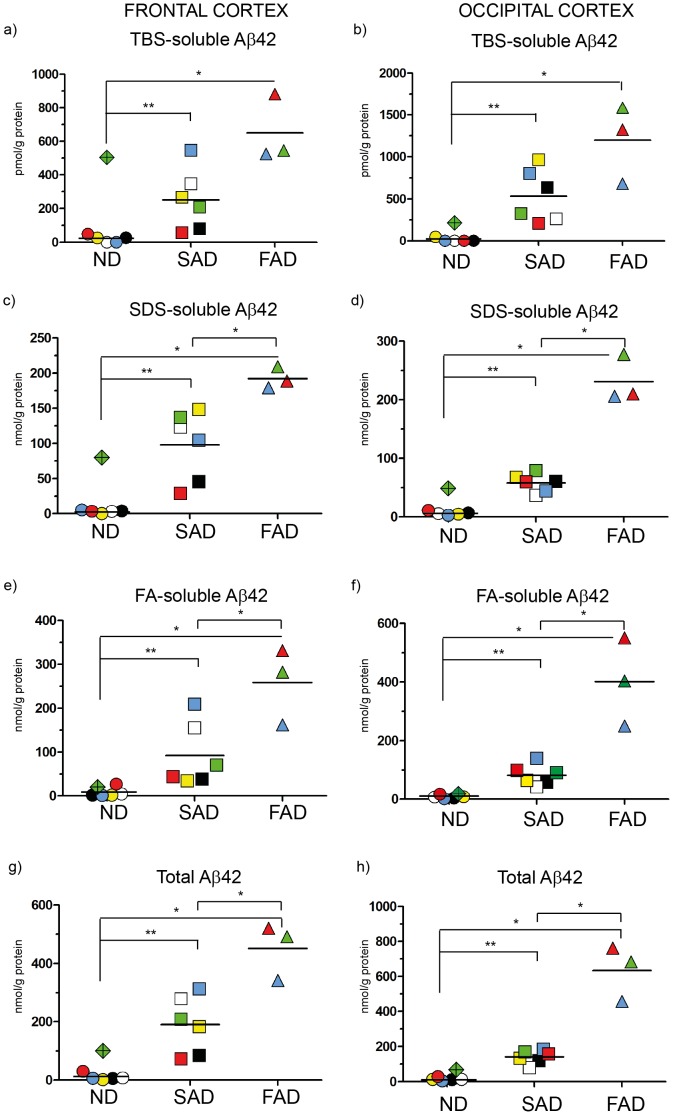
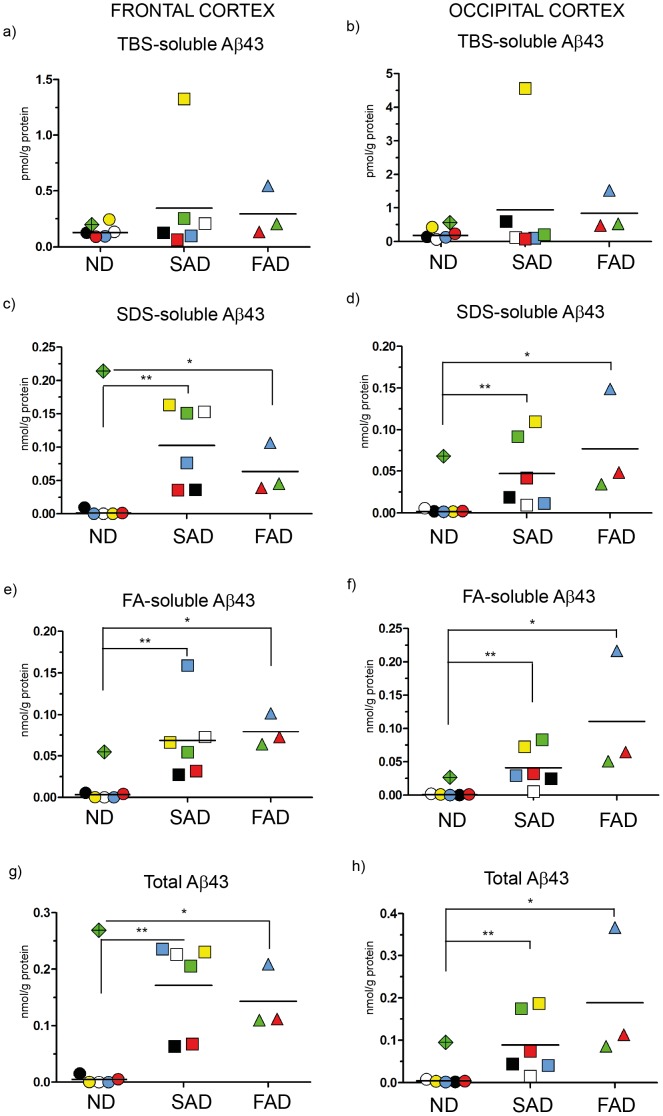
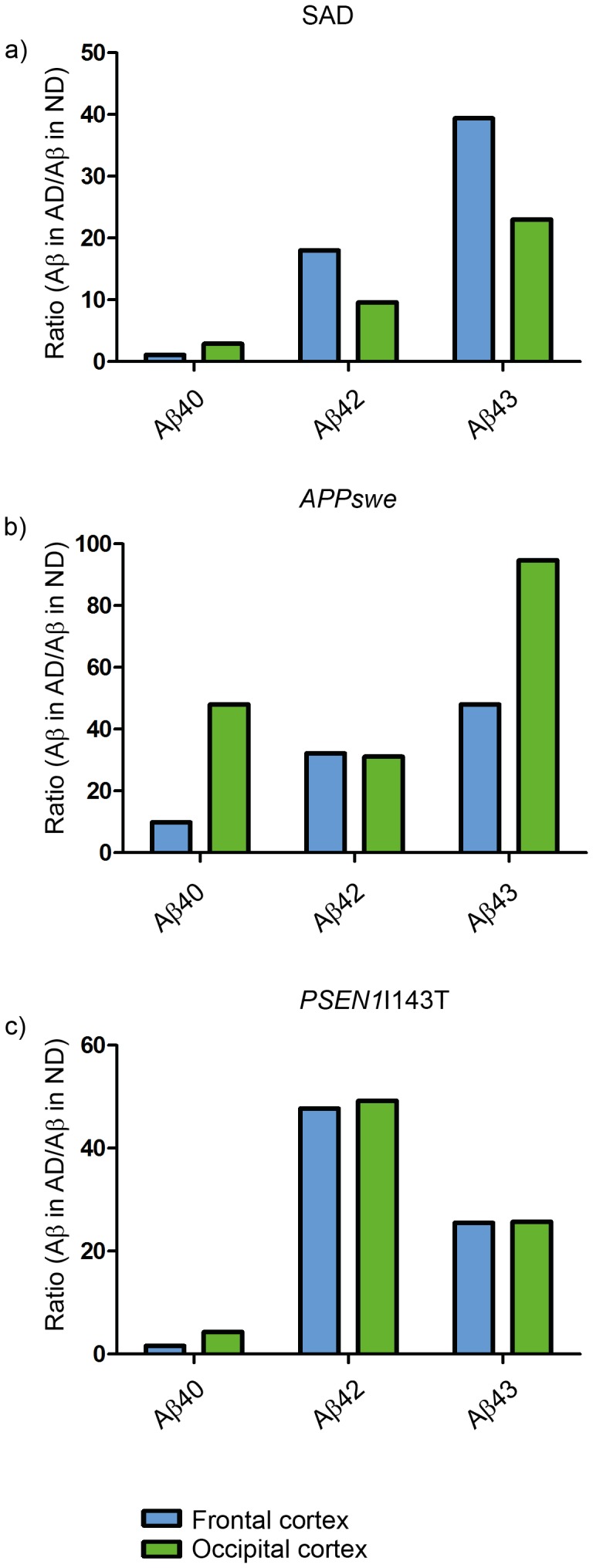
The amyloid-cascade hypothesis posits that the role of amyloid β-peptide (Aβ) in Alzheimer disease (AD) involves polymerization into structures that eventually are deposited as amyloid plaques. During this process, neurotoxic oligomers are formed that induce synaptic loss and neuronal death. Several different isoforms of Aβ are produced, of which the 40 and 42 residue variants (Aβ40 and Aβ42) are the most common. Aβ42 has a strong tendency to form neurotoxic aggregates and is involved in AD pathogenesis. Longer Aβ isoforms, like the less studied Aβ43, are gaining attention for their higher propensity to aggregate into neurotoxic oligomers. To further investigate Aβ43 in AD, we conducted a quantitative study on Aβ43 levels in human brain. We homogenized human brain tissue and prepared fractions of various solubility; tris buffered saline (TBS), sodium dodecyl sulfate (SDS) and formic acid (FA). Levels of Aβ43, as well as Aβ40 and Aβ42, were quantified using ELISA. We compared quantitative data showing Aβ levels in occipital and frontal cortex from sporadic (SAD) and familial (FAD) AD cases, as well as non-demented (ND) controls. Results showed Aβ43 present in each fraction from the SAD and FAD cases, while its level was lower than the detection limit in the majority of the ND-cases. Aβ42 and Aβ43 were enriched in the less soluble fractions (SDS and FA) of SAD and FAD cases in both occipital and frontal cortex. Thus, although the total levels of Aβ43 in human brain are low compared to Aβ40 and Aβ42, we suggest that Aβ43 could initiate the formation of oligomers and amyloid plaques and thereby be crucial to AD pathogenesis.
淀粉样蛋白级联假说认为,淀粉样β肽(Aβ)在阿尔茨海默病(AD)中的作用涉及聚合形成最终沉积为淀粉样斑块的结构。在此过程中,形成了神经毒性寡聚物,导致突触丧失和神经元死亡。产生了几种不同的 Aβ 同工型,其中 40 和 42 个残基变体(Aβ40 和 Aβ42)最为常见。Aβ42 具有强烈形成神经毒性聚集物的倾向,并与 AD 发病机制有关。较长的 Aβ 同工型,如研究较少的 Aβ43,因其更倾向于聚集形成神经毒性寡聚物而受到关注。为了进一步研究 Aβ43 在 AD 中的作用,我们对人脑 Aβ43 水平进行了定量研究。我们将人脑组织匀浆并制备了不同溶解度的级分;三缓冲盐水(TBS)、十二烷基硫酸钠(SDS)和甲酸(FA)。使用 ELISA 定量测定 Aβ43 以及 Aβ40 和 Aβ42 的水平。我们比较了显示散发性(SAD)和家族性(FAD)AD 病例以及非痴呆(ND)对照者额颞叶皮质 Aβ 水平的定量数据。结果表明,SAD 和 FAD 病例的每个级分中均存在 Aβ43,而其水平在大多数 ND 病例中低于检测限。Aβ42 和 Aβ43 在 SAD 和 FAD 病例的较难溶解的级分(SDS 和 FA)中均丰富。因此,尽管与 Aβ40 和 Aβ42 相比,人脑 Aβ43 的总水平较低,但我们认为 Aβ43 可能引发寡聚物和淀粉样斑块的形成,从而对 AD 发病机制至关重要。