Departamento de Bioquímica, Instituto de Química, Universidade de São Paulo, São Paulo, São Paulo, Brazil.
PLoS One. 2013;8(2):e56388. doi: 10.1371/journal.pone.0056388. Epub 2013 Feb 11.
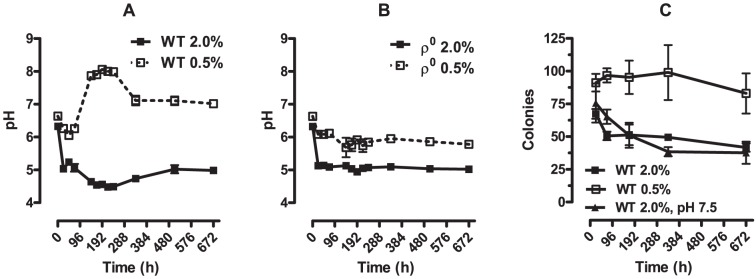
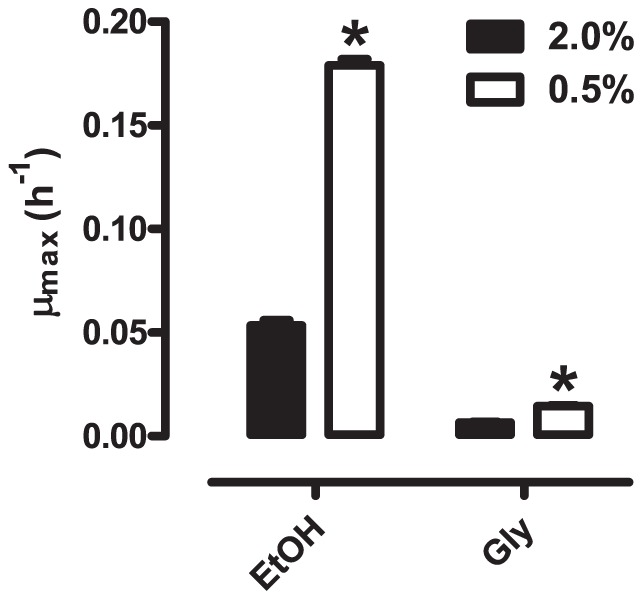
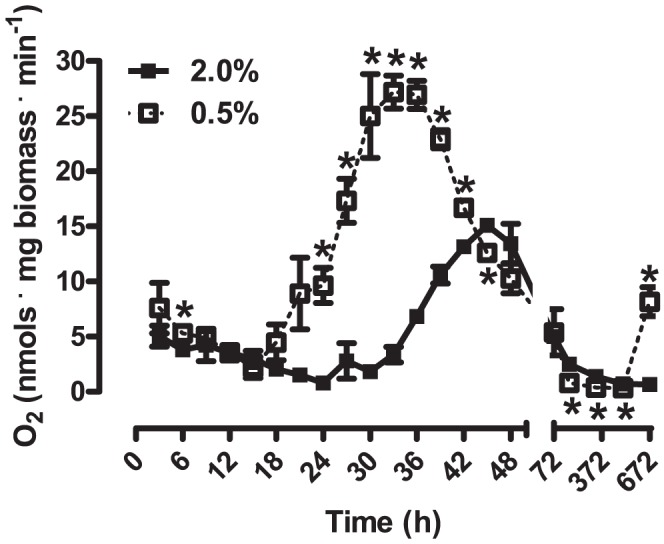
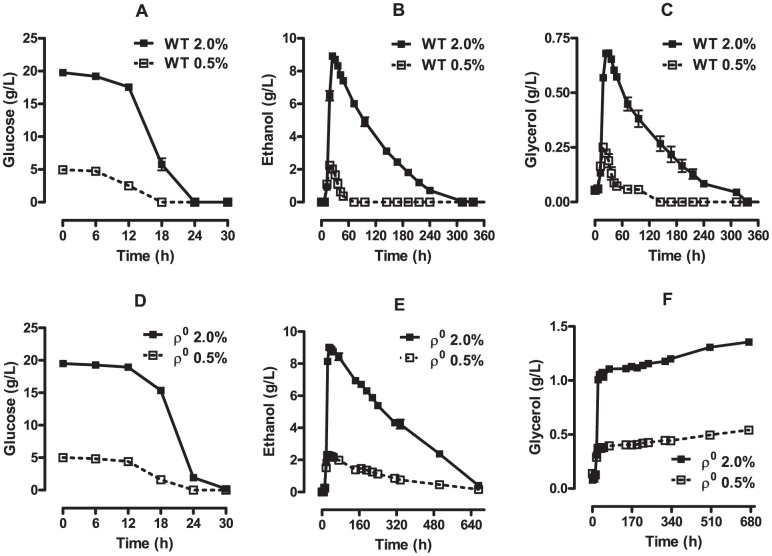
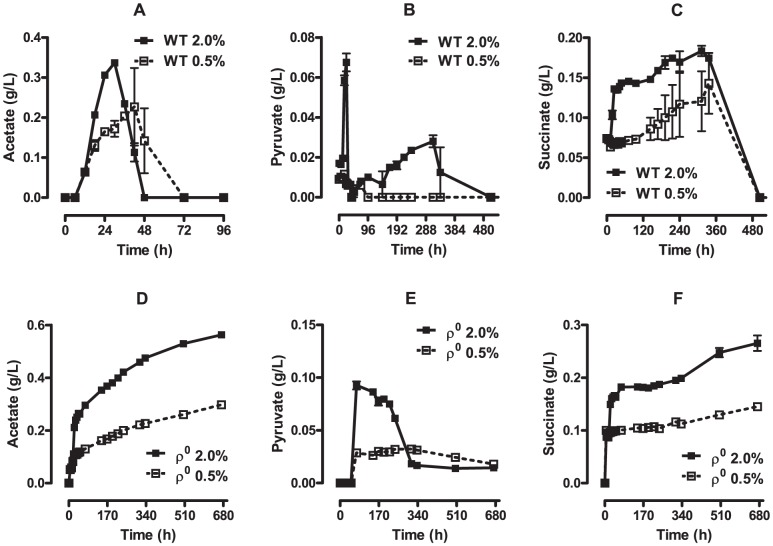
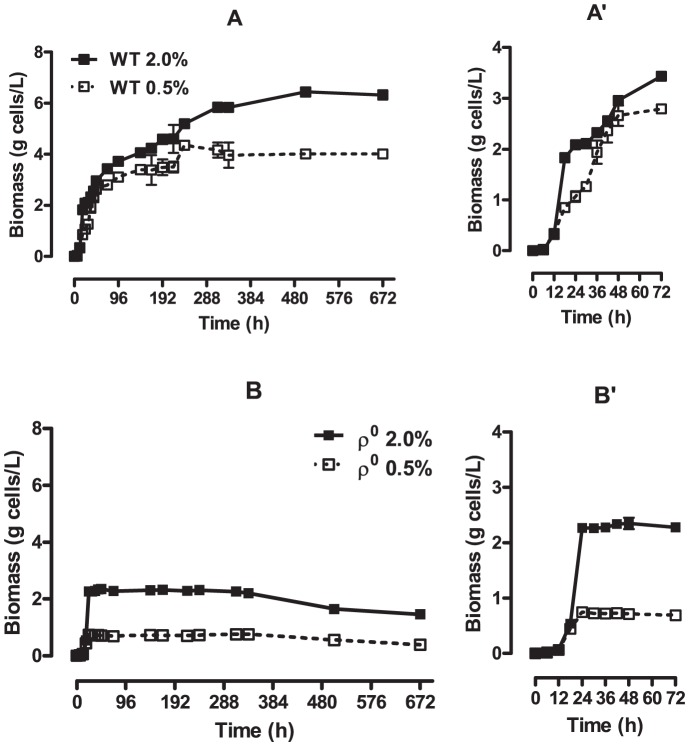
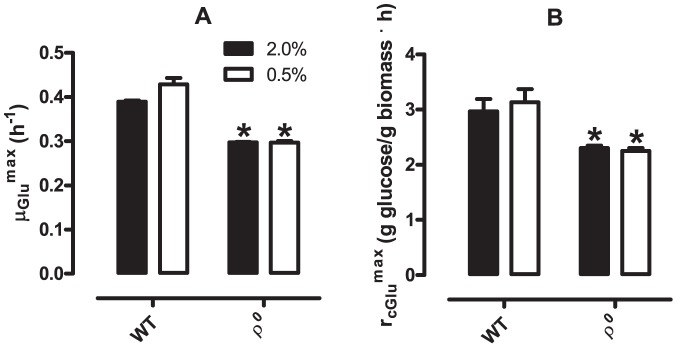
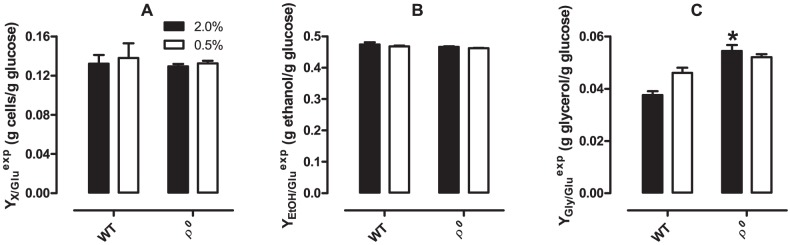
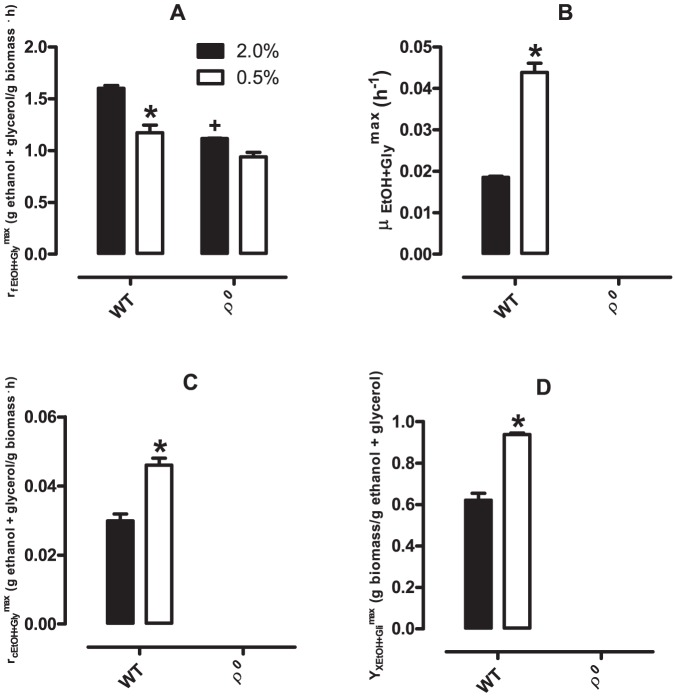
Calorie restriction (CR) is an intervention known to extend the lifespan of a wide variety of organisms. In S. cerevisiae, chronological lifespan is prolonged by decreasing glucose availability in the culture media, a model for CR. The mechanism has been proposed to involve an increase in the oxidative (versus fermentative) metabolism of glucose. Here, we measured wild-type and respiratory incompetent (ρ(0)) S. cerevisiae biomass formation, pH, oxygen and glucose consumption, and the evolution of ethanol, glycerol, acetate, pyruvate and succinate levels during the course of 28 days of chronological aging, aiming to identify metabolic changes responsible for the effects of CR. The concomitant and quantitative measurements allowed for calculations of conversion factors between different pairs of substrates and products, maximum specific substrate consumption and product formation rates and maximum specific growth rates. Interestingly, we found that the limitation of glucose availability in CR S. cerevisiae cultures hysteretically increases oxygen consumption rates many hours after the complete exhaustion of glucose from the media. Surprisingly, glucose-to-ethanol conversion and cellular growth supported by glucose were not quantitatively altered by CR. Instead, we found that CR primed the cells for earlier, faster and more efficient metabolism of respiratory substrates, especially ethanol. Since lifespan-enhancing effects of CR are absent in respiratory incompetent ρ(0) cells, we propose that the hysteretic effect of glucose limitation on oxidative metabolism is central toward chronological lifespan extension by CR in this yeast.
热量限制(CR)是一种众所周知的干预措施,可以延长多种生物的寿命。在酿酒酵母中,通过降低培养基中葡萄糖的可用性来延长其时序寿命,这是 CR 的一种模型。该机制被提出涉及葡萄糖的氧化(相对于发酵)代谢增加。在这里,我们测量了野生型和呼吸缺陷(ρ(0))酿酒酵母生物量形成、pH 值、氧气和葡萄糖消耗以及 28 天时序老化过程中乙醇、甘油、乙酸、丙酮酸和琥珀酸水平的演变,旨在确定负责 CR 影响的代谢变化。同时和定量测量允许计算不同底物和产物对之间的转换因子、最大比底物消耗和产物形成速率以及最大比生长速率。有趣的是,我们发现 CR 酿酒酵母培养物中葡萄糖可用性的限制在葡萄糖完全耗尽后数小时内会产生氧气消耗率的滞后增加。令人惊讶的是,CR 并没有定量改变葡萄糖支持的葡萄糖向乙醇的转化和细胞生长。相反,我们发现 CR 使细胞能够更早、更快、更有效地代谢呼吸底物,特别是乙醇。由于 CR 对呼吸缺陷的 ρ(0)细胞没有延长寿命的作用,我们提出葡萄糖限制对氧化代谢的滞后作用是 CR 延长这种酵母时序寿命的核心。