Materials Research & Education Center, Auburn University, 275 Wilmore Labs, Auburn, AL 36849, USA.
Sci Rep. 2013;3:1327. doi: 10.1038/srep01327.
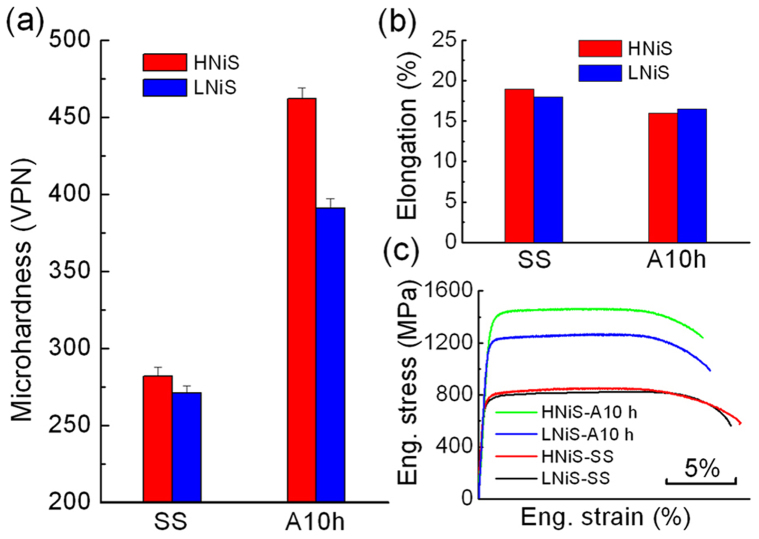
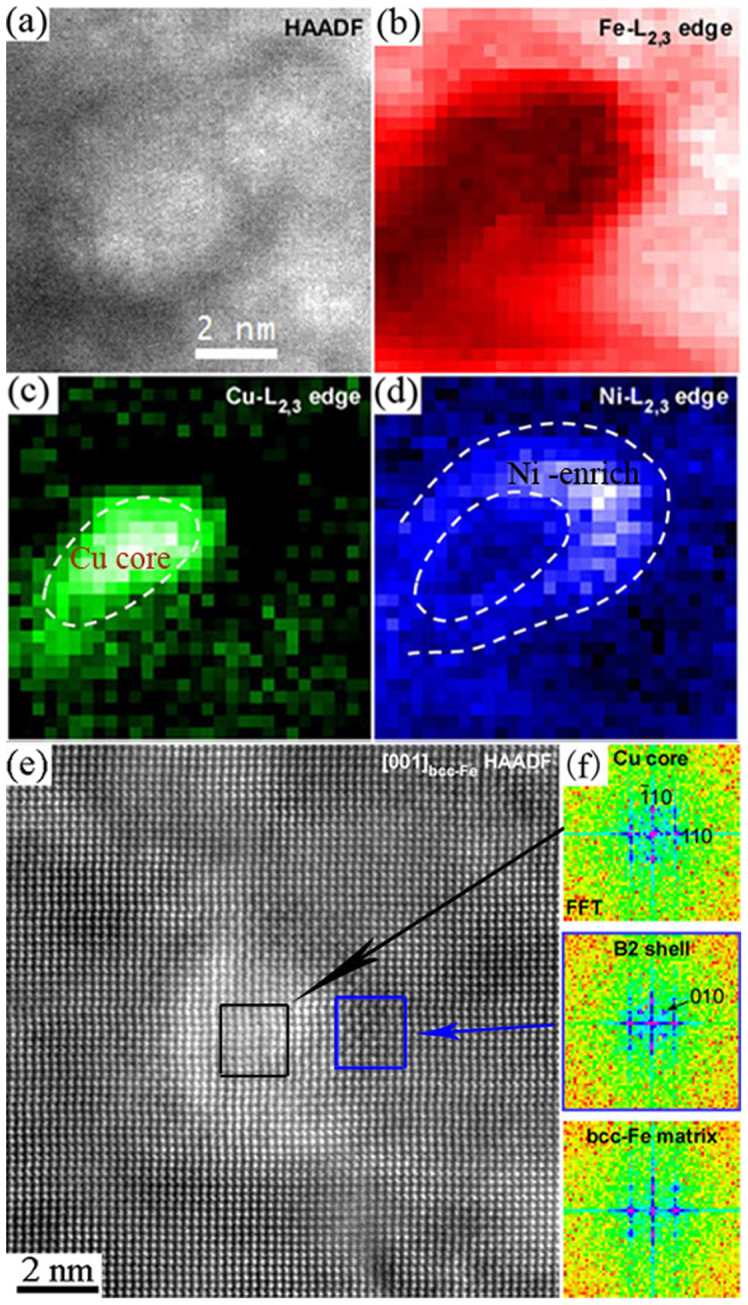
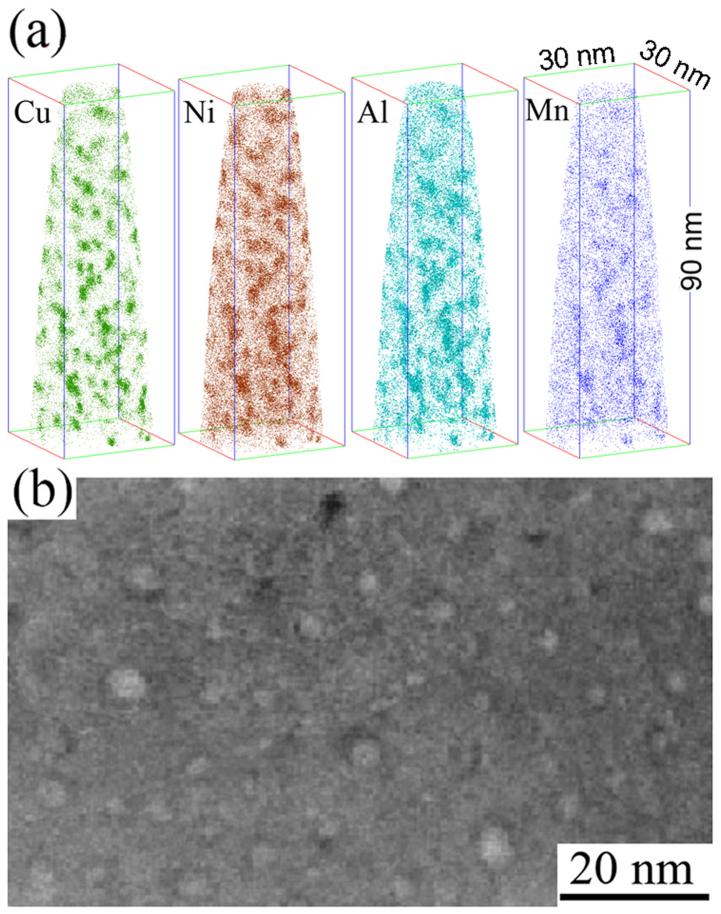
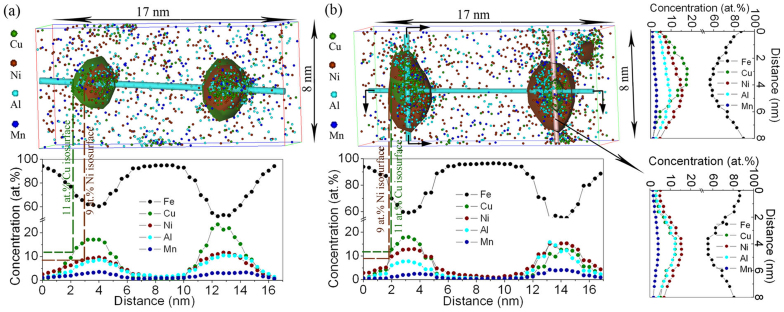
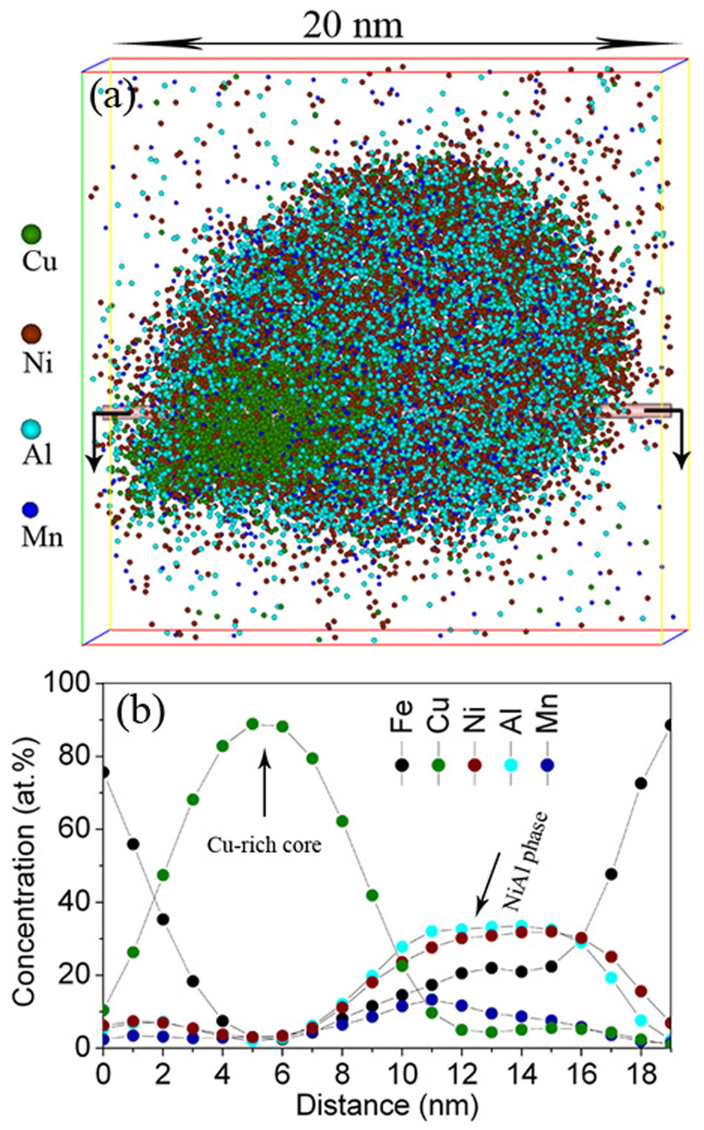
Precipitate size and number density are two key factors for tailoring the mechanical behavior of nanoscale precipitate-hardened alloys. However, during thermal aging, the precipitate size and number density change, leading to either poor strength or high strength but significantly reduced ductility. Here we demonstrate, by producing nanoscale co-precipitates in composition-optimized multicomponent precipitation-hardened alloys, a unique approach to improve the stability of the alloy against thermal aging and hence the mechanical properties. Our study provides compelling experimental evidence that these nanoscale co-precipitates consist of a Cu-enriched bcc core partially encased by a B2-ordered Ni(Mn, Al) phase. This co-precipitate provides a more complex obstacle for dislocation movement due to atomic ordering together with interphases, resulting in a high yield strength alloy without sacrificing alloy ductility.
沉淀尺寸和数密度是调整纳米析出强化合金力学性能的两个关键因素。然而,在热时效过程中,沉淀的尺寸和数密度会发生变化,导致强度降低或强度升高但延展性显著降低。在这里,我们通过在成分优化的多组分析出强化合金中生成纳米共析出相,展示了一种提高合金抗热时效稳定性从而改善力学性能的独特方法。我们的研究提供了有力的实验证据,表明这些纳米共析出相由富 Cu 的 bcc 核心部分包裹在 B2 有序的 Ni(Mn, Al)相中。由于原子有序和相间的存在,这种共析出相会对位错运动形成更复杂的阻碍,从而使合金具有较高的屈服强度而不牺牲合金的延展性。