Instituto de Zoonosis Luis Pasteur, Buenos Aires, Argentina.
Mem Inst Oswaldo Cruz. 2013 Feb;108(1):123-5. doi: 10.1590/s0074-02762013000100022.
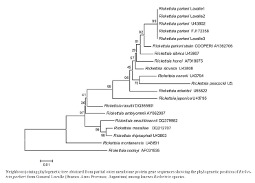
Specimens of the hard tick Amblyomma triste were found infected with Rickettsia parkeri in an area of Argentina (General Lavalle, Buenos Aires Province) where cases of human illness attributed to this microorganism have been reported. Molecular detection of R. parkeri was based on polymerase chain reactions that amplify a ca. 400-bp fragment of the 23S-5S intergenic spacer and a ca. 500-bp fragment of the gene encoding a 190-kDa outer membrane protein. Three (6.97%) of 43 A. triste ticks were determined to be positive for R. parkeri. These results provide strong evidence that A. triste is the vector of R. parkeri in the study area. The findings of this work have epidemiological relevance because human parasitism by A. triste ticks has been frequently recorded in some riparian areas of Argentina and Uruguay and new cases of R. parkeri rickettsiosis might arise in the South American localities where humans are exposed to the bites of this tick species.
在阿根廷(布宜诺斯艾利斯省拉瓦勒将军区)的一个地区发现了感染帕克氏立克次体的硬蜱 Amblyomma triste 标本,该地区已报告了归因于这种微生物的人类疾病病例。帕克氏立克次体的分子检测基于聚合酶链反应,该反应扩增了约 400bp 的 23S-5S 基因间隔区和约 500bp 的编码 190kDa 外膜蛋白的基因片段。在 43 只 A. triste 蜱中,有 3 只(6.97%)被确定为帕克氏立克次体阳性。这些结果有力地证明了 A. triste 是研究区域内帕克氏立克次体的传播媒介。这项工作的发现具有流行病学意义,因为在阿根廷和乌拉圭的一些河畔地区经常记录到人类被 A. triste 蜱寄生,并且在人类暴露于这种蜱种叮咬的南美洲地区可能会出现新的帕克氏立克次体斑疹热病例。