Department of Pediatrics, Division of Neurology, David Geffen School of Medicine at UCLA, 22-474 MDCC in CHS, Los Angeles, CA 90095-1752, USA.
J Neuroinflammation. 2013 Feb 26;10:30. doi: 10.1186/1742-2094-10-30.
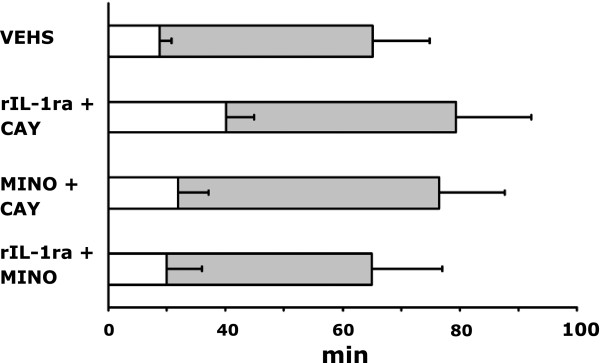
Inflammatory signaling elicited by prolonged seizures can be contributory to neuronal injury as well as adverse plasticity leading to the development of spontaneous recurrent seizures (epilepsy) and associated co-morbidities. In this study, developing rat pups were subjected to lithium-pilocarpine status epilepticus (SE) at 2 and 3 weeks of age to study the effect of anti-inflammatory drugs (AID) on SE-induced hippocampal injury and the development of spontaneous seizures.
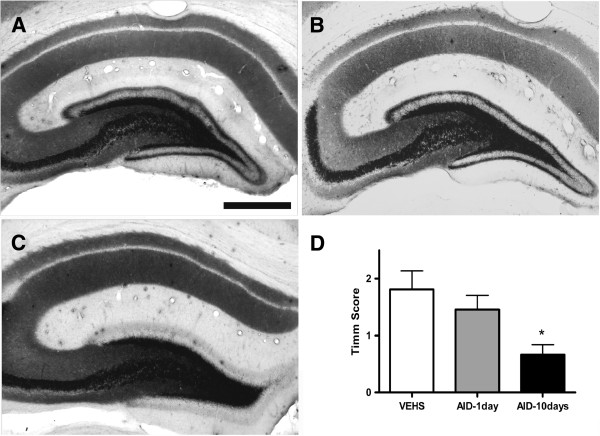
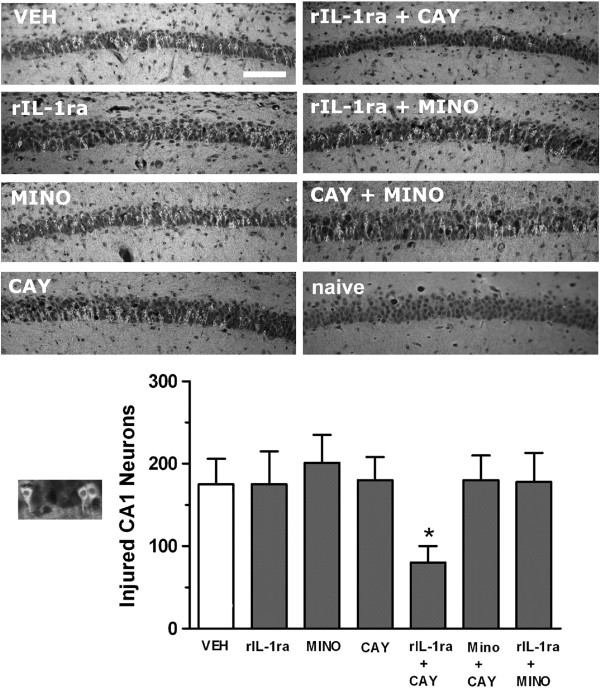
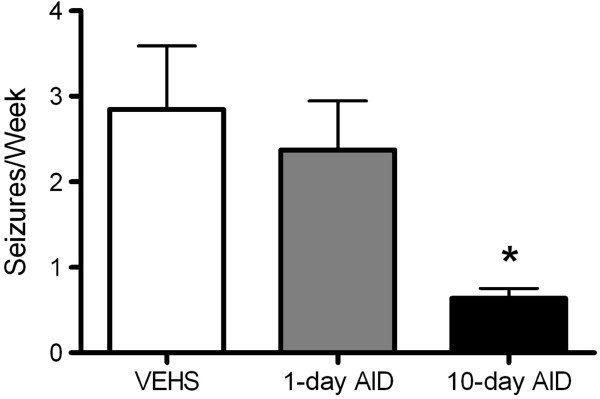
We selected AIDs directed against interleukin-1 receptors (IL-1ra), a cyclooxygenase-2 (COX-2) inhibitor (CAY 10404), and an antagonist of microglia activation of caspase-1 (minocycline). Acute injury after SE was studied in the 2-week-old rats 24 h after SE. Development of recurrent spontaneous seizures was studied in 3-week-old rats subjected to SE 4 months after the initial insult.None of those AIDs were effective in attenuating CA1 injury in the 2-week-old pups or in limiting the development of spontaneous seizures in 3-week-old pups when administered individually. When empiric binary combinations of these drugs were tried, the combined targeting of IL-1r and COX-2 resulted in attenuation of acute CA1 injury, as determined 24 h after SE, in those animals. The same combination administered for 10 days following SE in 3-week-old rats, reduced the development of spontaneous recurrent seizures and limited the extent of mossy fiber sprouting.
Deployment of an empirically designed 'drug cocktail' targeting multiple inflammatory signaling pathways for a limited duration after an initial insult like SE may provide a practical approach to neuroprotection and anti-epileptogenic therapy.
长时间癫痫发作引发的炎症信号可能导致神经元损伤和不良可塑性,从而导致自发性反复发作性癫痫(癫痫)和相关合并症的发生。在这项研究中,我们在 2 周龄和 3 周龄时使发育中的大鼠幼仔发生锂-匹罗卡品癫痫持续状态(SE),以研究抗炎药物(AID)对 SE 诱导的海马损伤和自发性癫痫发作发展的影响。
我们选择了针对白细胞介素-1 受体(IL-1ra)的 AID、环氧化酶-2(COX-2)抑制剂(CAY 10404)和小胶质细胞激活半胱天冬酶-1 的拮抗剂(米诺环素)。SE 后 24 小时研究 SE 后 2 周龄大鼠的急性损伤。在 SE 后 4 个月,对 3 周龄大鼠进行 SE,研究其反复发作性自发性癫痫的发展。当单独给药时,这些 AID 均不能减轻 2 周龄幼仔 CA1 损伤,也不能限制 3 周龄幼仔自发性癫痫的发展。当尝试经验性的这些药物的二元组合时,IL-1r 和 COX-2 的联合靶向导致 SE 后 24 小时那些动物的急性 CA1 损伤减轻。在 SE 后 3 周龄大鼠中给予 SE 后 10 天的相同组合,减少了自发性反复发作性癫痫的发展,并限制了苔藓纤维发芽的程度。
在初始损伤(如 SE)后有限时间内,针对多个炎症信号通路设计的经验性“药物鸡尾酒”的应用可能为神经保护和抗癫痫发生治疗提供一种实用方法。