Center for Molecular Therapeutics, Center for Cancer Research, Massachusetts General Hospital, and Harvard Medical School, CNY 149-Rm7308, Thirteenth St. Charlestown, MA 02129, USA.
BMC Cancer. 2013 Feb 27;13:93. doi: 10.1186/1471-2407-13-93.
The development of resistance to chemotherapies represents a significant barrier to successful cancer treatment. Resistance mechanisms are complex, can involve diverse and often unexpected cellular processes, and can vary with both the underlying genetic lesion and the origin or type of tumor. For these reasons developing experimental strategies that could be used to understand, identify and predict mechanisms of resistance in different malignant cells would be a major advance.
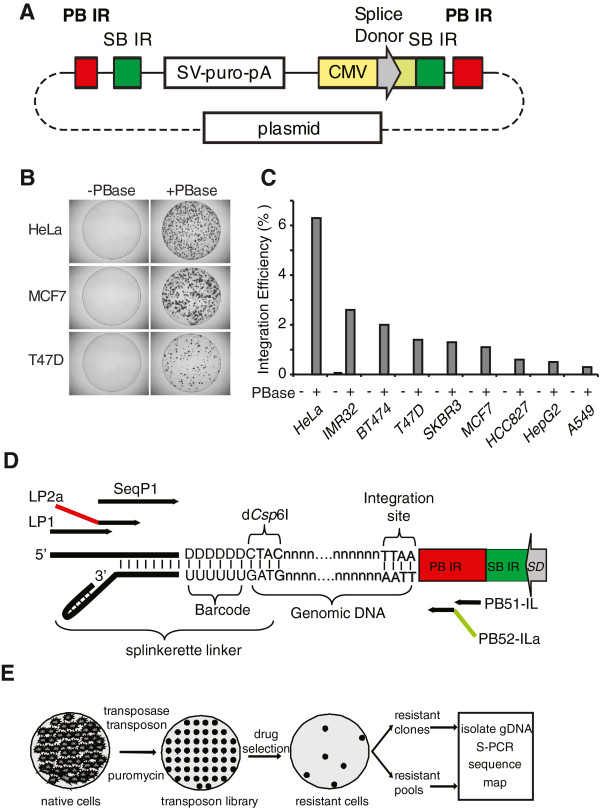
Here we describe a gain-of-function forward genetic approach for identifying mechanisms of resistance. This approach uses a modified piggyBac transposon to generate libraries of mutagenized cells, each containing transposon insertions that randomly activate nearby gene expression. Genes of interest are identified using next-gen high-throughput sequencing and barcode multiplexing is used to reduce experimental cost.
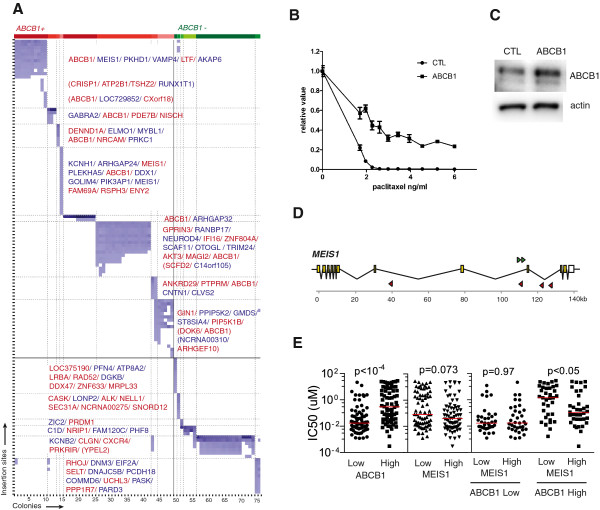
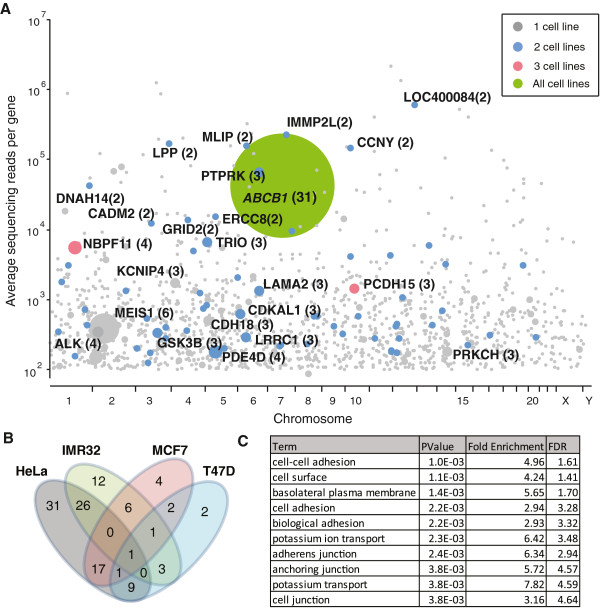
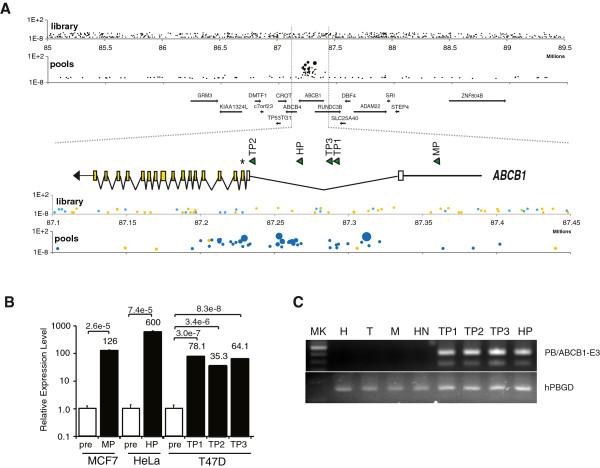
Using this approach we successfully identify genes involved in paclitaxel resistance in a variety of cancer cell lines, including the multidrug transporter ABCB1, a previously identified major paclitaxel resistance gene. Analysis of co-occurring transposons integration sites in single cell clone allows for the identification of genes that might act cooperatively to produce drug resistance a level of information not accessible using RNAi or ORF expression screening approaches.
We have developed a powerful pipeline to systematically discover drug resistance in mammalian cells in vitro. This cost-effective approach can be readily applied to different cell lines, to identify canonical or context specific resistance mechanisms. Its ability to probe complex genetic context and non-coding genomic elements as well as cooperative resistance events makes it a good complement to RNAi or ORF expression based screens.
对化疗药物的耐药性的发展是癌症治疗成功的重大障碍。耐药机制复杂,涉及多种且常常是意料之外的细胞过程,并且可能因潜在的遗传缺陷以及肿瘤的起源或类型而有所不同。出于这些原因,开发可用于理解、识别和预测不同恶性细胞耐药机制的实验策略将是一项重大进展。
本文描述了一种用于鉴定耐药机制的正向遗传功能获得方法。该方法使用改良的 piggyBac 转座子生成突变细胞文库,每个文库都包含随机激活附近基因表达的转座子插入。使用下一代高通量测序鉴定感兴趣的基因,并使用条形码多重化来降低实验成本。
使用这种方法,我们成功地鉴定了多种癌细胞系中紫杉醇耐药相关的基因,包括多药转运体 ABCB1,这是一个先前鉴定的主要紫杉醇耐药基因。在单个细胞克隆中分析共同发生的转座子整合位点,可鉴定可能协同产生耐药性的基因,这种信息水平是使用 RNAi 或 ORF 表达筛选方法无法获得的。
我们已经开发了一种强大的管道,可在体外系统地发现哺乳动物细胞中的药物耐药性。这种具有成本效益的方法可以很容易地应用于不同的细胞系,以鉴定常见或特定于背景的耐药机制。它能够探测复杂的遗传背景和非编码基因组元件以及协同耐药事件,使其成为 RNAi 或 ORF 表达筛选的良好补充。