Division of Infectious Diseases and Hospital Epidemiology, University Hospital Zurich, University of Zurich, Rämistr 100, 8091 Zürich, Switzerland.
J Mol Med (Berl). 2013 Jul;91(7):861-9. doi: 10.1007/s00109-013-1012-6. Epub 2013 Feb 27.
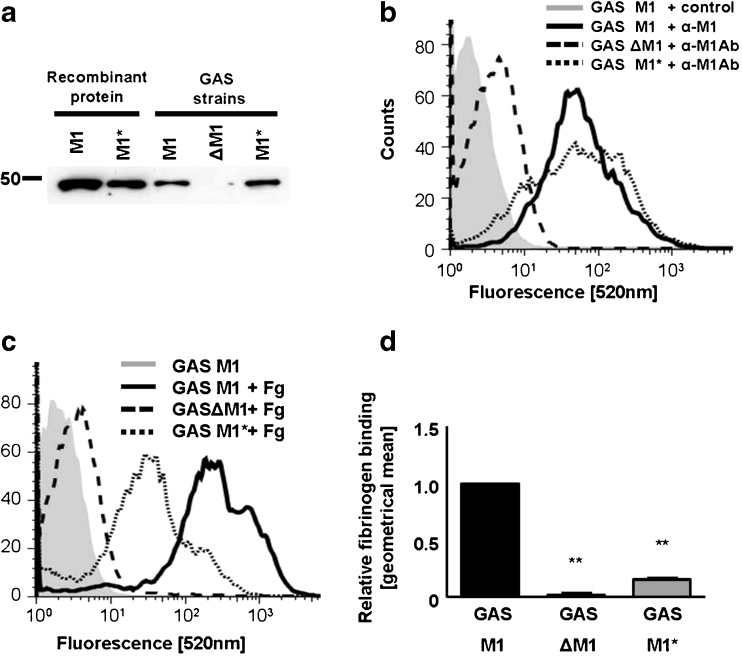
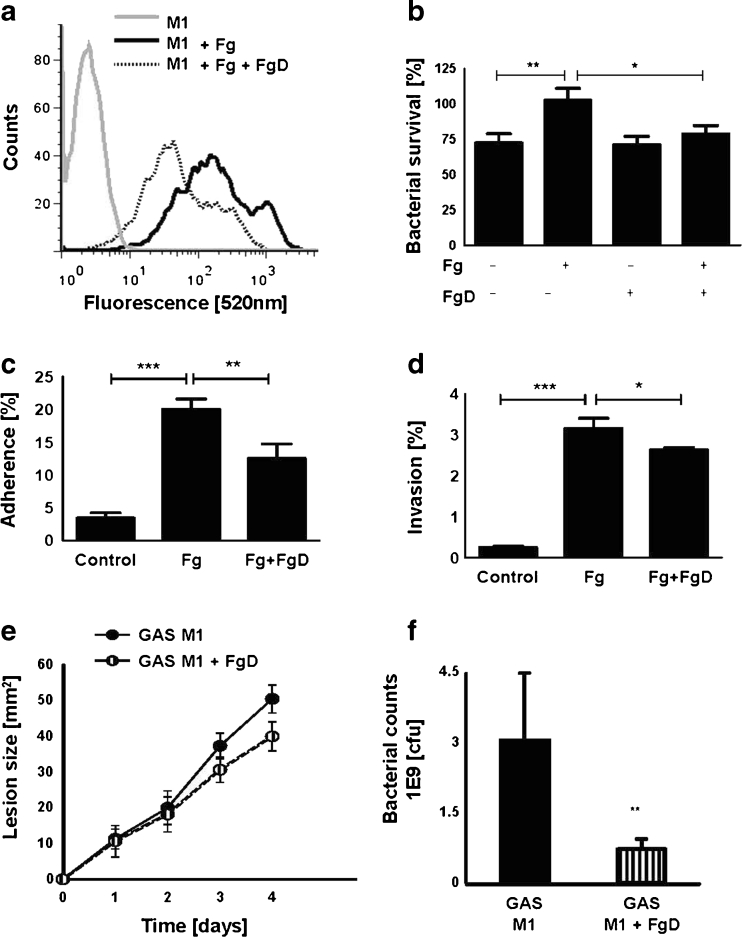
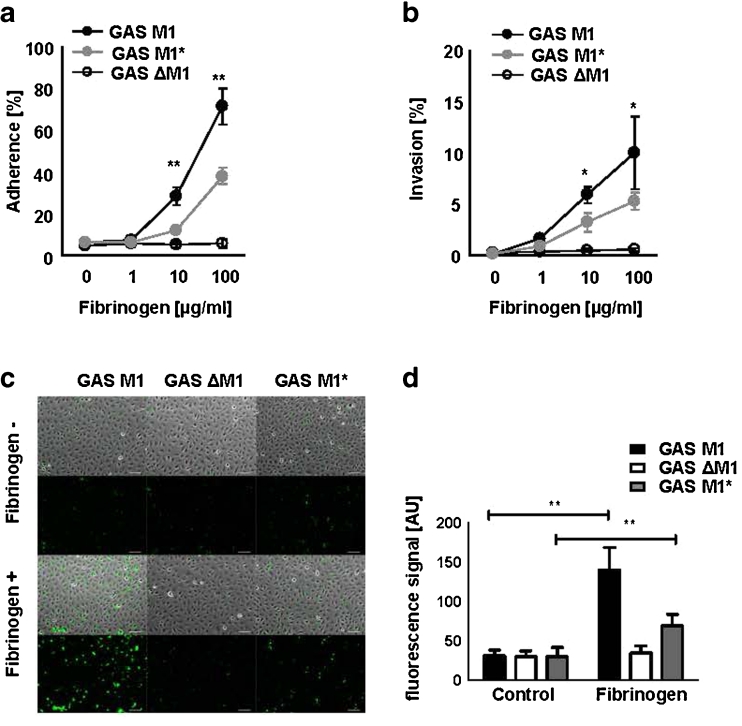
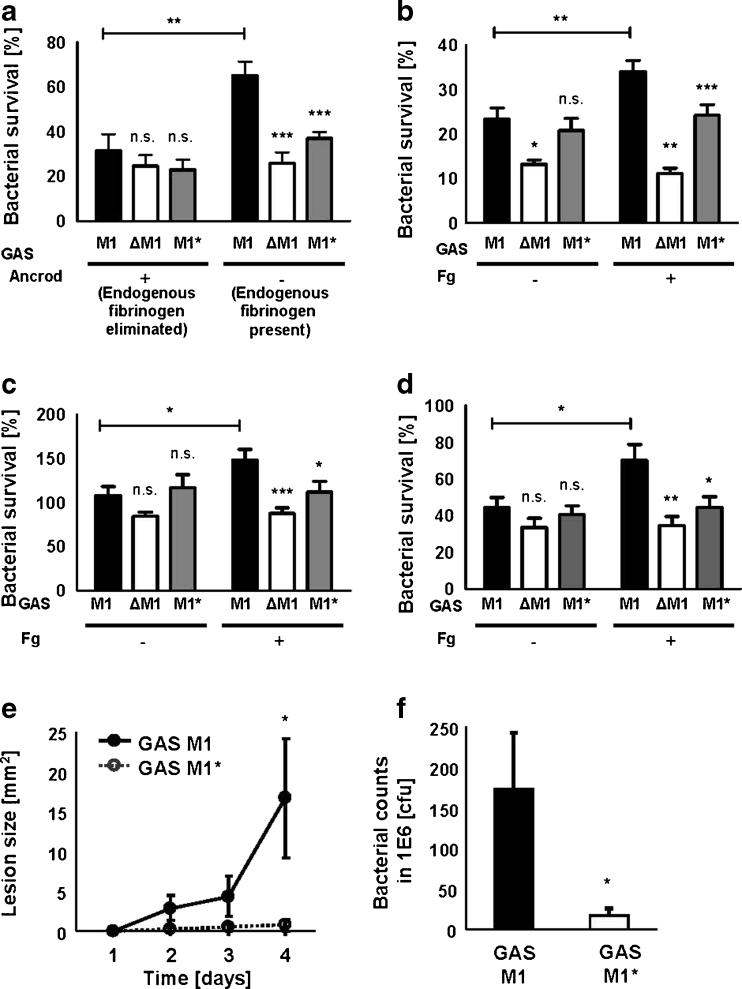
Group A Streptococcus (GAS) is a human pathogen causing a wide range of mild to severe and life-threatening diseases. The GAS M1 protein is a major virulence factor promoting GAS invasiveness and resistance to host innate immune clearance. M1 displays an irregular coiled-coil structure, including the B-repeats that bind fibrinogen. Previously, we found that B-repeat stabilisation generates an idealised version of M1 (M1) characterised by decreased fibrinogen binding in vitro. To extend these findings based on a soluble truncated version of M1, we now studied the importance of the B-repeat coiled-coil irregularities in full length M1 and M1 expressed in live GAS and tested whether the modulation of M1-fibrinogen interactions would open up novel therapeutic approaches. We found that altering either the M1 structure on the GAS cell surface or removing its target host protein fibrinogen blunted GAS virulence. GAS expressing M1 showed an impaired ability to adhere to and to invade human endothelial cells, was more readily killed by whole blood or neutrophils and most importantly was less virulent in a murine necrotising fasciitis model. M1-mediated virulence of wild-type GAS was strictly dependent on the presence and concentration of fibrinogen complementing our finding that M1-fibrinogen interactions are crucial for GAS virulence. Consistently blocking M1-fibrinogen interactions by fragment D reduced GAS virulence in vitro and in vivo. This supports our conclusion that M1-fibrinogen interactions are crucial for GAS virulence and that interference may open up novel complementary treatment options for GAS infections caused by the leading invasive GAS strain M1.
A 组链球菌(GAS)是一种人类病原体,可引起广泛的轻度至重度和危及生命的疾病。GAS M1 蛋白是一种主要的毒力因子,可促进 GAS 的侵袭性和对宿主固有免疫清除的抵抗力。M1 呈现出不规则的卷曲螺旋结构,包括结合纤维蛋白原的 B-重复序列。以前,我们发现 B-重复序列的稳定化产生了 M1 的理想版本(M1),其体外纤维蛋白原结合能力降低。为了基于可溶性截断的 M1 版本扩展这些发现,我们现在研究了全长 M1 中 B-重复卷曲螺旋不规则性的重要性以及在活 GAS 中表达的 M1,并测试了调节 M1-纤维蛋白原相互作用是否会开辟新的治疗方法。我们发现,改变 GAS 细胞表面上的 M1 结构或去除其靶宿主蛋白纤维蛋白原都会削弱 GAS 的毒力。表达 M1 的 GAS 显示出粘附和侵袭人内皮细胞的能力受损,更容易被全血或中性粒细胞杀死,最重要的是在鼠坏死性筋膜炎模型中的毒力降低。野生型 GAS 的 M1 介导的毒力严格依赖于纤维蛋白原的存在和浓度,这补充了我们的发现,即 M1-纤维蛋白原相互作用对 GAS 毒力至关重要。通过片段 D 阻断 M1-纤维蛋白原相互作用可降低体外和体内 GAS 的毒力。这支持了我们的结论,即 M1-纤维蛋白原相互作用对 GAS 毒力至关重要,并且干扰可能为由主要侵袭性 GAS 株 M1 引起的 GAS 感染开辟新的补充治疗选择。