Division of Biology, MC 156-29, California Institute of Technology, 1200 East California Boulevard, Pasadena, CA 91125, USA.
Cell. 2013 Mar 28;153(1):206-15. doi: 10.1016/j.cell.2013.02.024. Epub 2013 Feb 28.
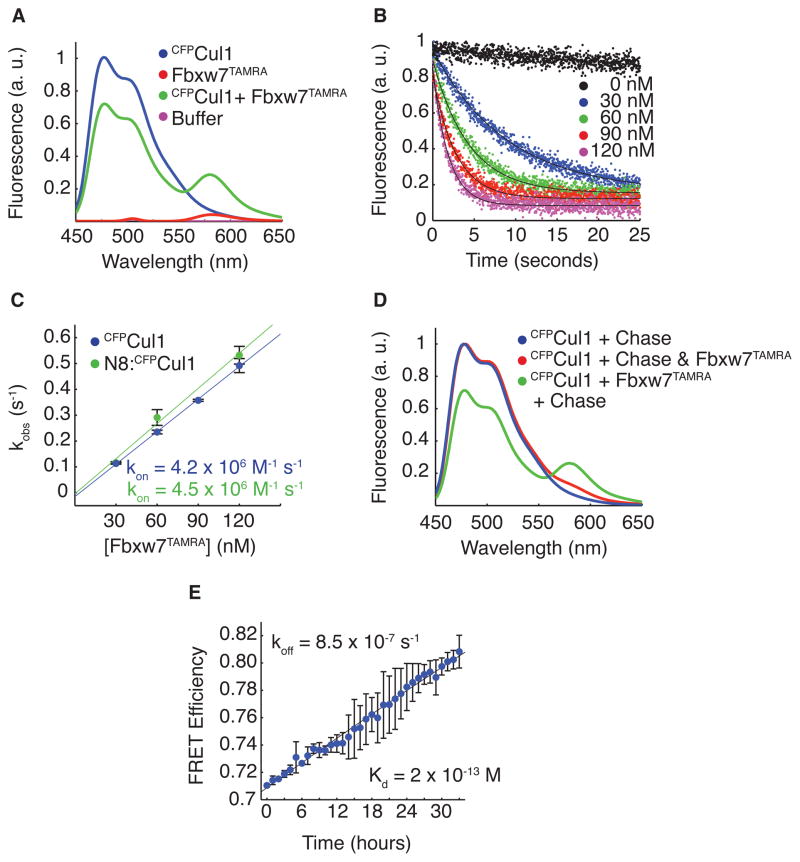
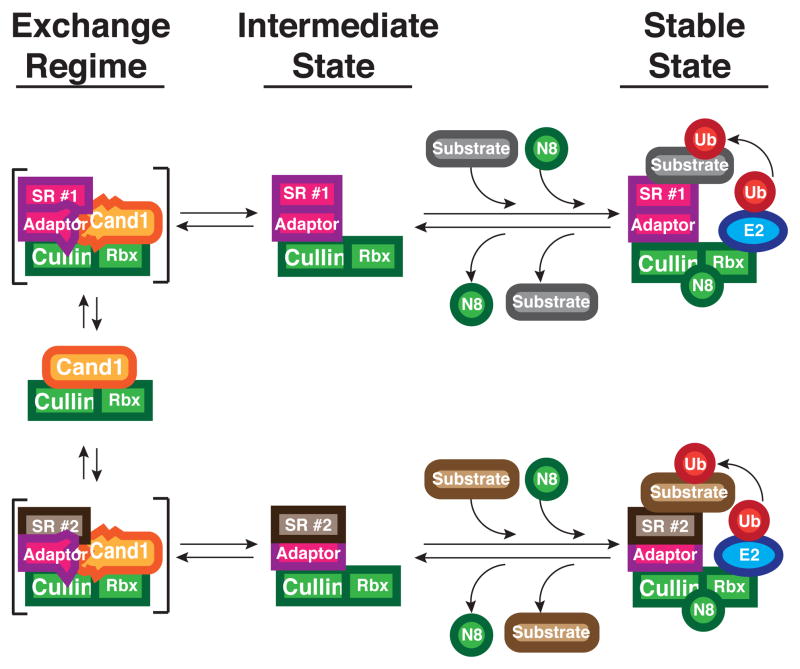
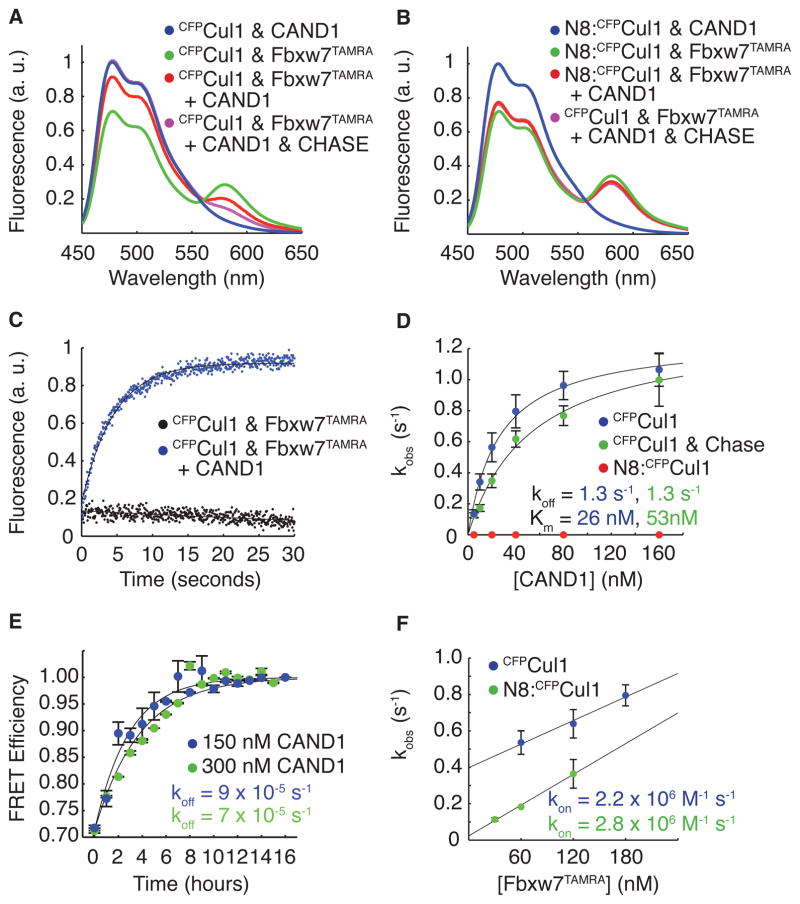
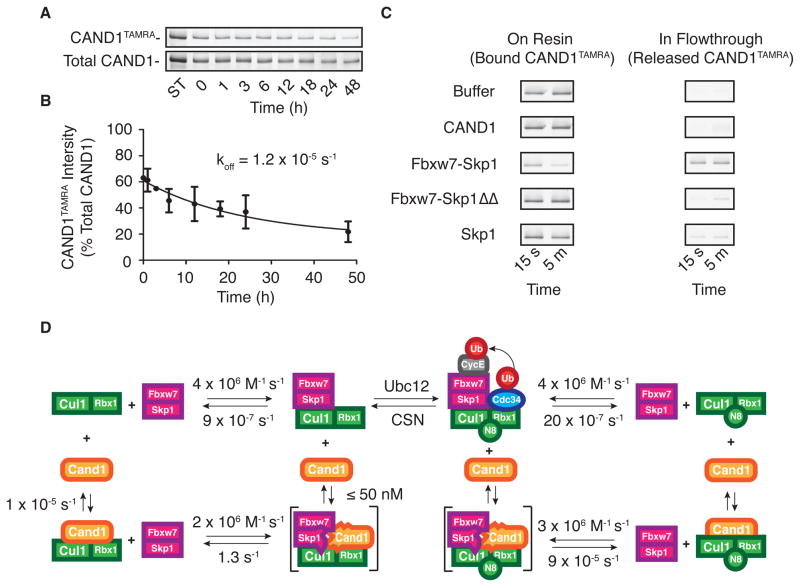
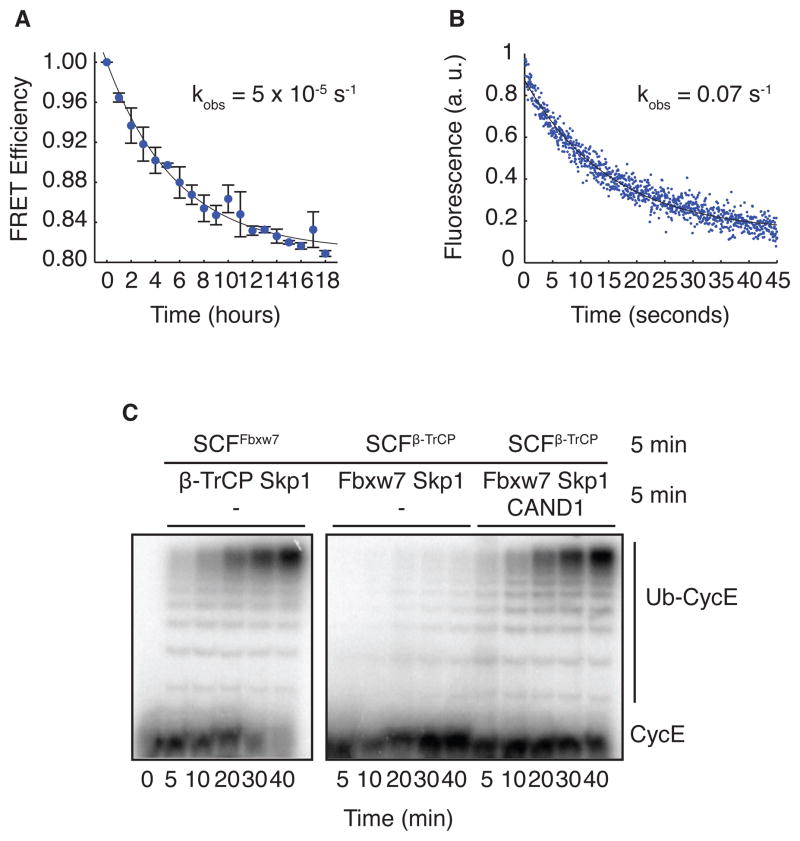
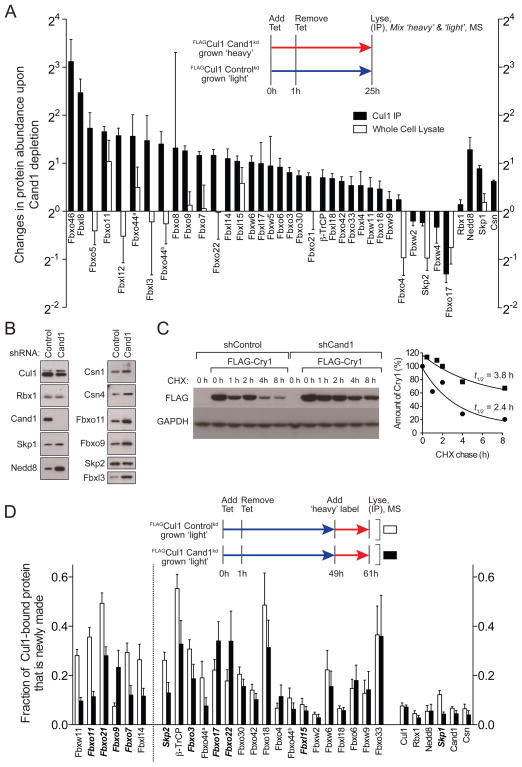
The modular SCF (Skp1, cullin, and F box) ubiquitin ligases feature a large family of F box protein substrate receptors that enable recognition of diverse targets. However, how the repertoire of SCF complexes is sustained remains unclear. Real-time measurements of formation and disassembly indicate that SCF(Fbxw7) is extraordinarily stable, but, in the Nedd8-deconjugated state, the cullin-binding protein Cand1 augments its dissociation by one-million-fold. Binding and ubiquitylation assays show that Cand1 is a protein exchange factor that accelerates the rate at which Cul1-Rbx1 equilibrates with multiple F box protein-Skp1 modules. Depletion of Cand1 from cells impedes recruitment of new F box proteins to pre-existing Cul1 and profoundly alters the cellular landscape of SCF complexes. We suggest that catalyzed protein exchange may be a general feature of dynamic macromolecular machines and propose a hypothesis for how substrates, Nedd8, and Cand1 collaborate to regulate the cellular repertoire of SCF complexes.
模块化的 SCF(Skp1、cullin 和 F -box)泛素连接酶具有一个庞大的 F -box 蛋白底物受体家族,能够识别多种靶标。然而,SCF 复合物的组成如何维持尚不清楚。形成和拆卸的实时测量表明,SCF(Fbxw7)非常稳定,但在 Nedd8 去共轭状态下,Cullin 结合蛋白 Cand1 将其解离速度提高了一百万倍。结合和泛素化测定表明,Cand1 是一种蛋白质交换因子,可加速 Cul1-Rbx1 与多个 F 框蛋白-Skp1 模块平衡的速度。从细胞中耗尽 Cand1 会阻碍新的 F 框蛋白招募到预先存在的 Cul1 上,并严重改变 SCF 复合物在细胞中的状态。我们认为,催化的蛋白质交换可能是动态大分子机器的一个普遍特征,并提出了一个假设,即底物、Nedd8 和 Cand1 如何协作来调节细胞中 SCF 复合物的组成。