Department of Neuroscience, University of Wisconsin, School of Medicine and Public Health, 1300 University Avenue, Madison, WI 53706, USA.
Neuroscience. 2013 Jun 14;240:129-34. doi: 10.1016/j.neuroscience.2013.02.035. Epub 2013 Feb 28.
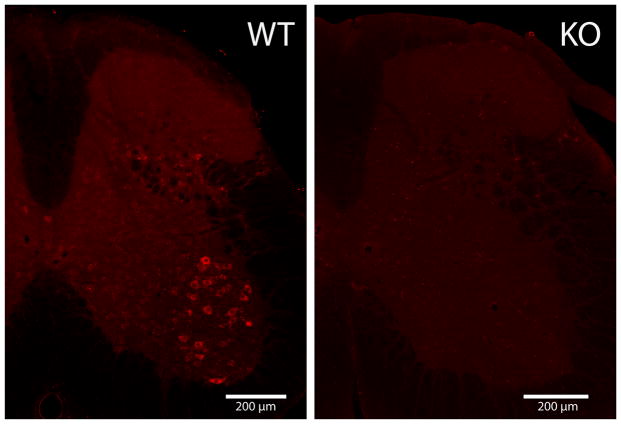
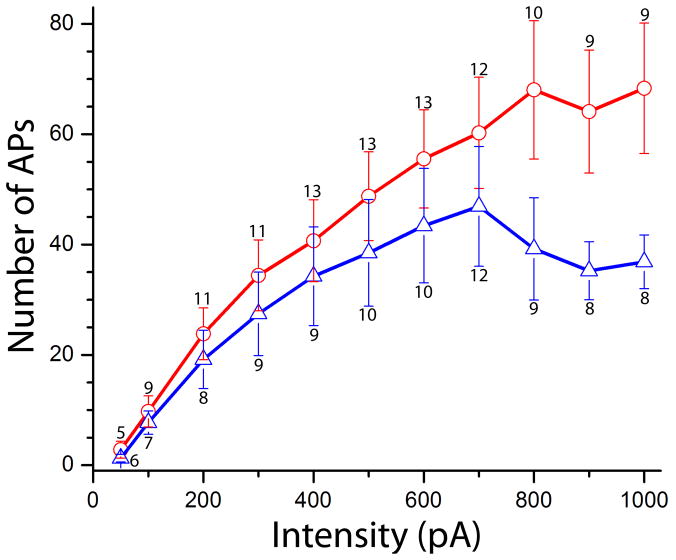
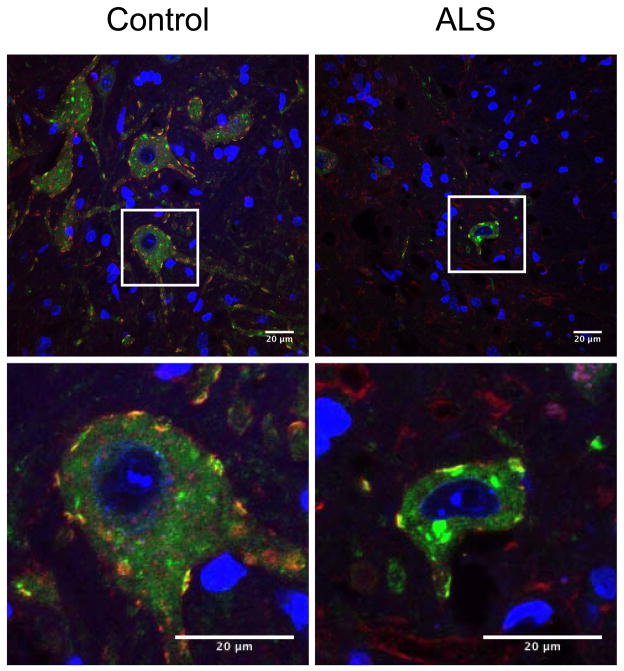
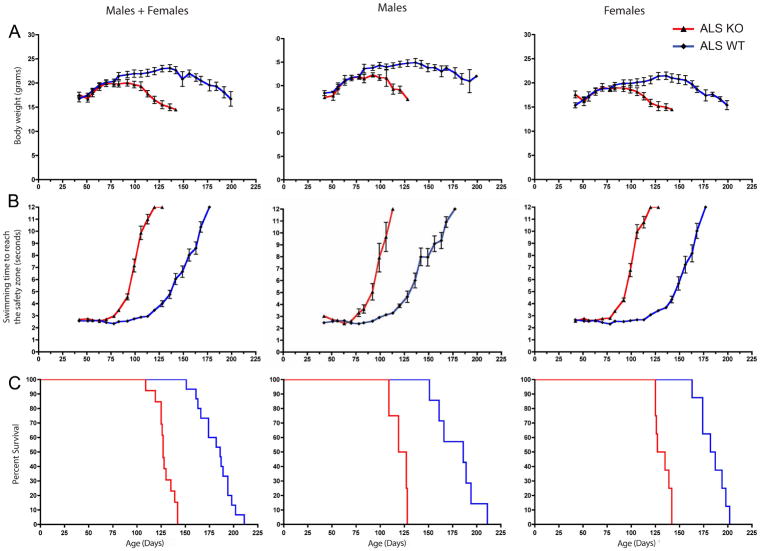
The function of the sigma-1 receptor (S1R) has been implicated in modulating the activity of various ion channels. In the CNS S1R is enriched in cholinergic postsynaptic densities in spinal cord motoneurons (MNs). Mutations in S1R have been found in familial cases of amyotrophic lateral sclerosis (ALS). In this study we show that a knockout of S1R in the SOD1*G93A mouse model of ALS significantly reduces longevity (end stage). Electrophysiological experiments demonstrate that MN of mice lacking S1R exhibit increased excitability. Taken together the data suggest the S1R acts as a brake on excitability, an effect that might enhance longevity in an ALS mouse model.
西格玛-1 受体 (S1R) 的功能被认为可以调节各种离子通道的活性。在中枢神经系统中,S1R 在脊髓运动神经元 (MN) 的胆碱能突触后密度中富集。在家族性肌萎缩侧索硬化症 (ALS) 的病例中发现 S1R 突变。在这项研究中,我们表明,在 SOD1*G93A 肌萎缩侧索硬化症小鼠模型中敲除 S1R 会显著降低寿命 (终末期)。电生理实验表明,缺乏 S1R 的小鼠 MN 表现出兴奋性增加。总之,这些数据表明 S1R 作为兴奋性的制动器发挥作用,这种作用可能会增强 ALS 小鼠模型的寿命。