Department of Diagnostic Medicine/Pathobiology, College of Veterinary Medicine, Kansas State University, Manhattan, Kansas, USA.
PLoS Pathog. 2013 Feb;9(2):e1003171. doi: 10.1371/journal.ppat.1003171. Epub 2013 Feb 14.
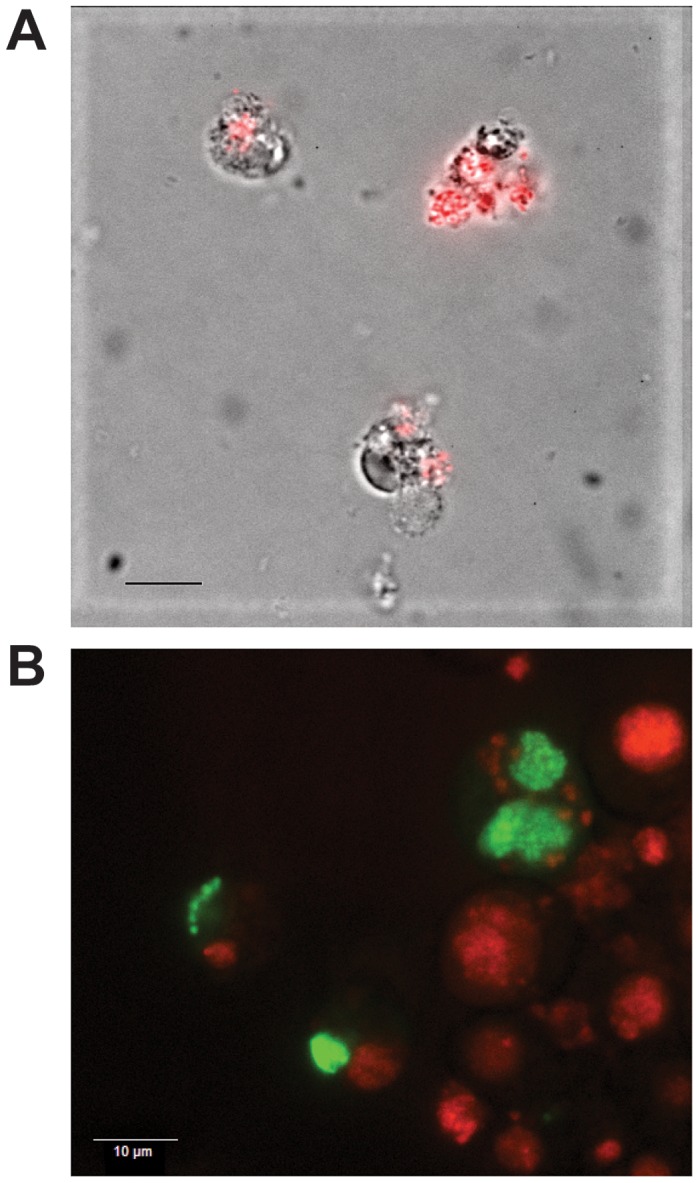
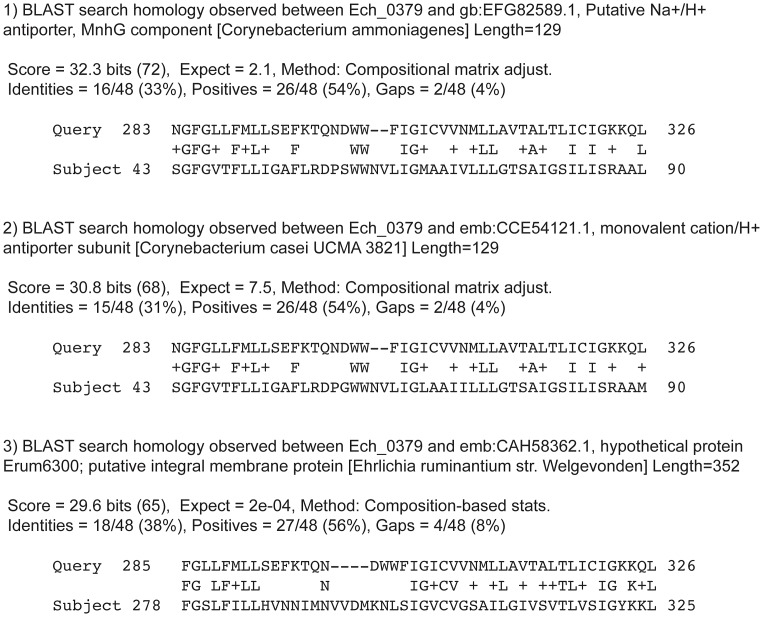
Ehrlichia chaffeensis is a tick transmitted pathogen responsible for the disease human monocytic ehrlichiosis. Research to elucidate gene function in rickettsial pathogens is limited by the lack of genetic manipulation methods. Mutational analysis was performed, targeting to specific and random insertion sites within the bacterium's genome. Targeted mutagenesis at six genomic locations by homologous recombination and mobile group II intron-based methods led to the consistent identification of mutants in two genes and in one intergenic site; the mutants persisted in culture for 8 days. Three independent experiments using Himar1 transposon mutagenesis of E. chaffeensis resulted in the identification of multiple mutants; these mutants grew continuously in macrophage and tick cell lines. Nine mutations were confirmed by sequence analysis. Six insertions were located within non-coding regions and three were present in the coding regions of three transcriptionally active genes. The intragenic mutations prevented transcription of all three genes. Transposon mutants containing a pool of five different insertions were assessed for their ability to infect deer and subsequent acquisition by Amblyomma americanum ticks, the natural reservoir and vector, respectively. Three of the five mutants with insertions into non-coding regions grew well in deer. Transposition into a differentially expressed hypothetical gene, Ech_0379, and at 18 nucleotides downstream to Ech_0230 gene coding sequence resulted in the inhibition of growth in deer, which is further evidenced by their failed acquisition by ticks. Similarly, a mutation into the coding region of ECH_0660 gene inhibited the in vivo growth in deer. This is the first study evaluating targeted and random mutagenesis in E. chaffeensis, and the first to report the generation of stable mutants in this obligate intracellular bacterium. We further demonstrate that in vitro mutagenesis coupled with in vivo infection assessment is a successful strategy in identifying genomic regions required for the pathogen's in vivo growth.
查菲埃立克体(Ehrlichia chaffeensis)是一种蜱传病原体,可引起人类单核细胞埃立克体病。由于缺乏遗传操作方法,对立克次体病原体中基因功能的研究受到限制。本研究通过针对细菌基因组中特定和随机插入位点进行突变分析,利用同源重组和移动组 II 内含子为基础的方法在六个基因组位置进行靶向诱变,导致两个基因和一个基因间位点的突变体一致鉴定;突变体在培养中持续存在 8 天。使用 Himar1 转座子诱变查菲埃立克体(E. chaffeensis)的三项独立实验导致了多个突变体的鉴定;这些突变体在巨噬细胞和蜱细胞系中持续生长。通过序列分析确认了 9 个突变。6 个插入位于非编码区,3 个位于三个转录活跃基因的编码区。基因内突变阻止了所有三个基因的转录。含有 5 个不同插入的转座子突变体被评估其感染鹿的能力,以及随后被天然储主和传播媒介的美洲钝缘蜱(Amblyomma americanum)获得的能力。5 个插入非编码区的突变体中有 3 个在鹿中生长良好。转座到差异表达的假设基因 Ech_0379 和 Ech_0230 基因编码序列下游的 18 个核苷酸导致在鹿中的生长受到抑制,这进一步由它们不能被蜱获得所证明。同样,ECH_0660 基因编码区的突变抑制了鹿体内的生长。这是首次评估查菲埃立克体(E. chaffeensis)中的靶向和随机诱变的研究,也是首次报道在这种专性细胞内细菌中产生稳定突变体的研究。我们进一步证明,体外诱变与体内感染评估相结合是鉴定病原体体内生长所需基因组区域的成功策略。