Department of Molecular and Integrative Physiology, University of Kansas Medical Center, Kansas City KS, USA.
Front Neural Circuits. 2013 Mar 1;7:33. doi: 10.3389/fncir.2013.00033. eCollection 2013.
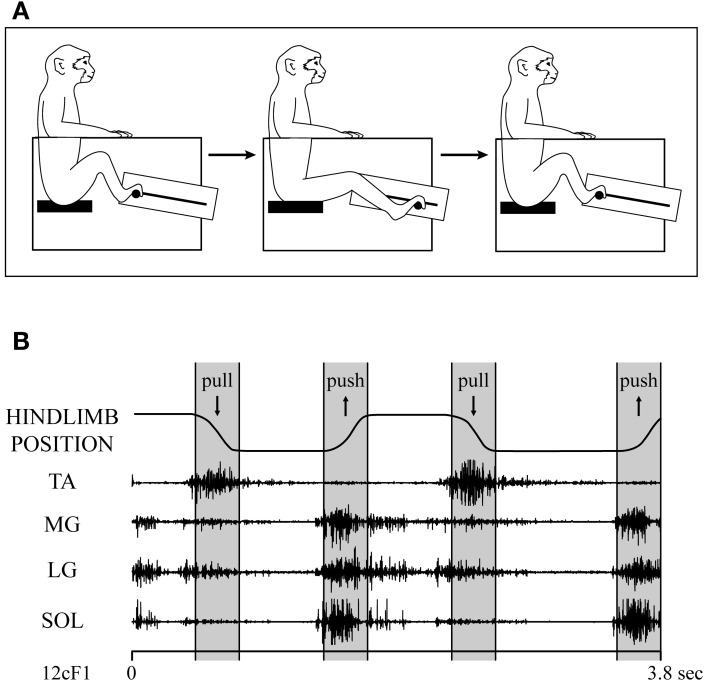
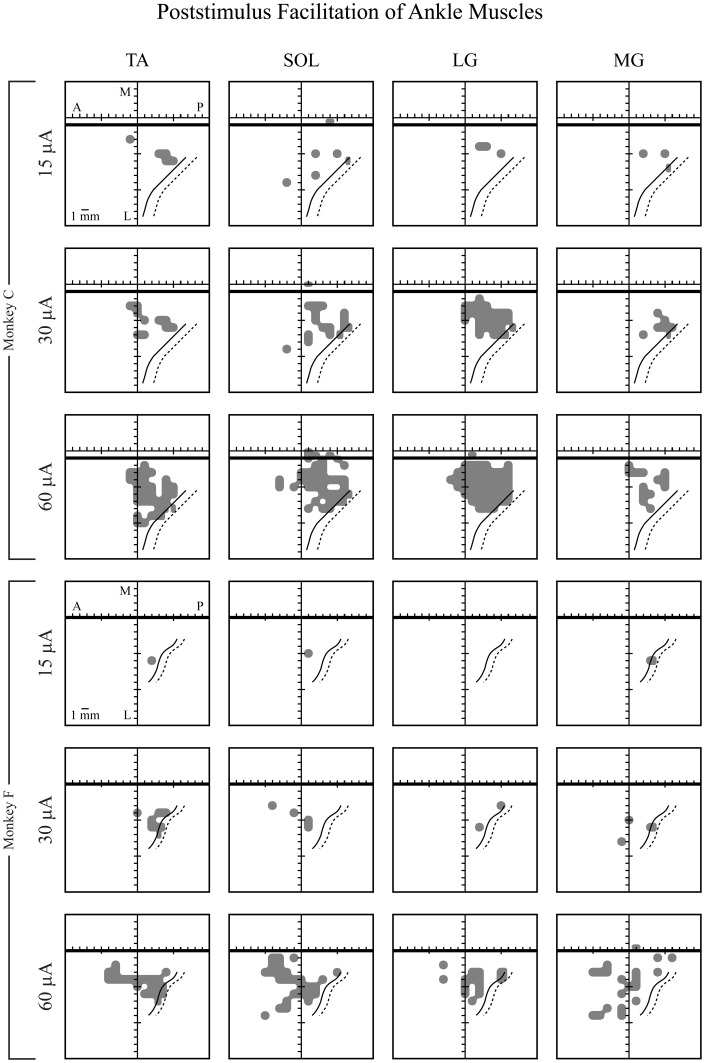
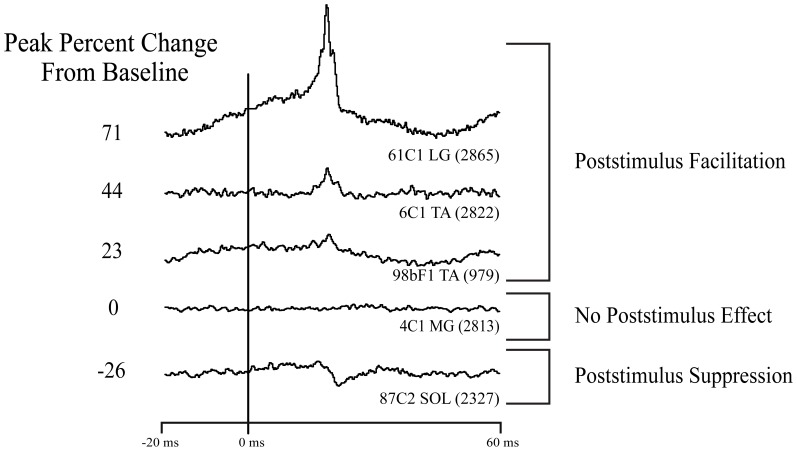
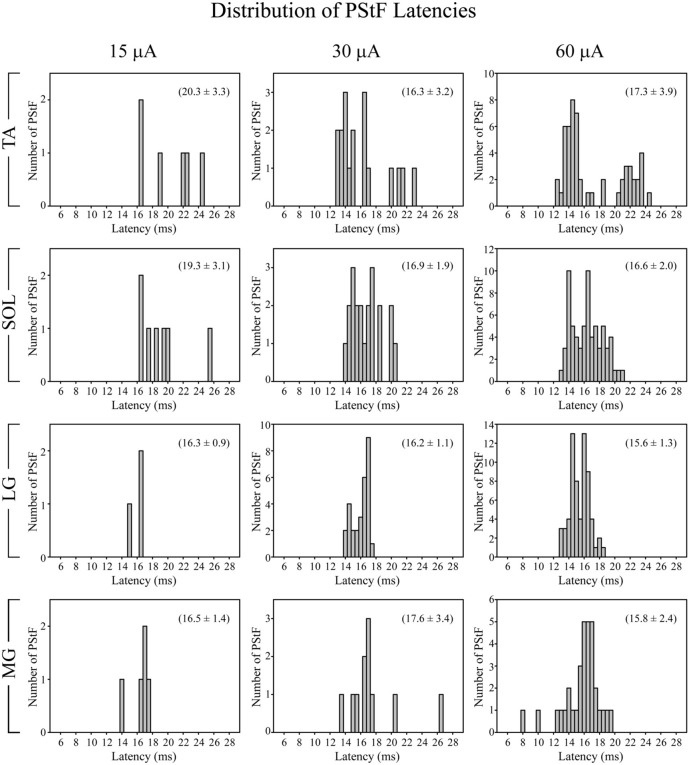
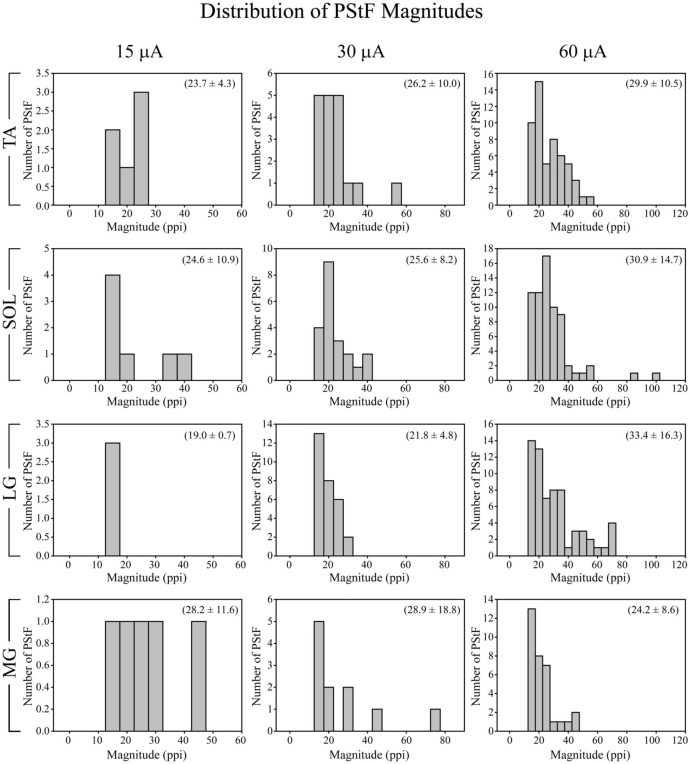
The cortical control of fast and slow muscles of the ankle has been the subject of numerous reports yielding conflicting results. Although it is generally agreed that cortical stimulation yields short latency facilitation of fast muscles, the effects on the slow muscle, soleus, remain controversial. Some studies have shown predominant facilitation of soleus from the cortex while others have provided evidence of differential control in which soleus is predominantly inhibited from the cortex. The objective of this study was to investigate the cortical control of fast and slow muscles of the ankle using stimulus triggered averaging (StTA) of EMG activity, which is a sensitive method of detecting output effects on muscle activity. This method also has relatively high spatial resolution and can be applied in awake, behaving subjects. Two rhesus macaques were trained to perform a hindlimb push-pull task. Stimulus triggered averages (StTAs) of EMG activity (15, 30, and 60 μA at 15 Hz) were computed for four muscles of the ankle [tibialis anterior (TA), medial gastrocnemius (MG), lateral gastrocnemius (LG), and soleus] as the monkeys performed the task. Poststimulus facilitation (PStF) was observed in both the fast muscles (TA, MG, and LG) as well as the slow muscle (soleus) and was as common and as strong in soleus as in the fast muscles. However, while poststimulus suppression (PStS) was observed in all muscles, it was more common in the slow muscle compared to the fast muscles and was as common as facilitation at low stimulus intensities. Overall, our results demonstrate that cortical facilitation of soleus has an organization that is very similar to that of the fast ankle muscles. However, cortical inhibition is organized differently allowing for more prominent suppression of soleus motoneurons.
皮质对踝关节快肌和慢肌的控制作用一直是大量报告的主题,这些报告的结果相互矛盾。虽然普遍认为皮质刺激会产生快肌的短潜伏期易化,但对慢肌(比目鱼肌)的影响仍存在争议。一些研究表明,皮质对比目鱼肌主要起易化作用,而另一些研究则提供了证据表明,皮质对慢肌的控制存在差异,即慢肌主要受到抑制。本研究旨在使用肌电图活动的刺激触发平均(StTA)来研究踝关节的快肌和慢肌的皮质控制作用,这是一种检测肌肉活动输出效应的敏感方法。这种方法还具有相对较高的空间分辨率,可应用于清醒、行为的受试者。两只恒河猴被训练执行后肢推-拉任务。当猴子执行任务时,计算了踝关节的四块肌肉[胫骨前肌(TA)、内侧腓肠肌(MG)、外侧腓肠肌(LG)和比目鱼肌]的肌电图活动的刺激触发平均(StTA)(15、30 和 60 μA,15 Hz)。在快肌(TA、MG 和 LG)和慢肌(比目鱼肌)中均观察到刺激后易化(PStF),且在比目鱼肌中的易化与快肌中的一样常见和强烈。然而,虽然在所有肌肉中都观察到刺激后抑制(PStS),但在慢肌中比在快肌中更常见,并且在低刺激强度下与易化一样常见。总的来说,我们的结果表明,皮质对比目鱼肌的易化具有与快肌踝关节非常相似的组织形式。然而,皮质抑制的组织方式不同,允许比目鱼肌运动神经元的抑制更为明显。