Department of Neurobiology and Behavior, Cornell University, Ithaca, New York 14853, USA.
J Comp Neurol. 2013 Aug 15;521(12):2850-69. doi: 10.1002/cne.23320.
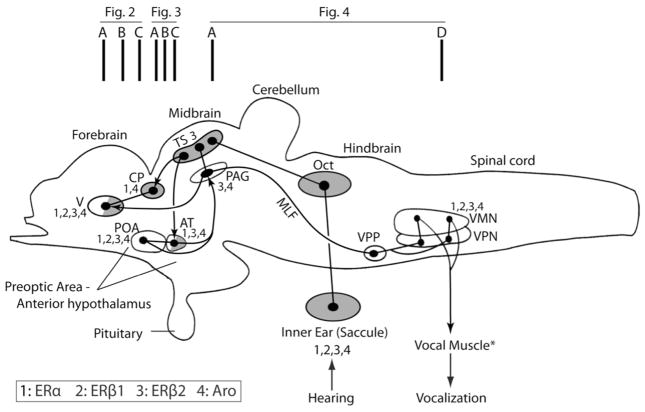
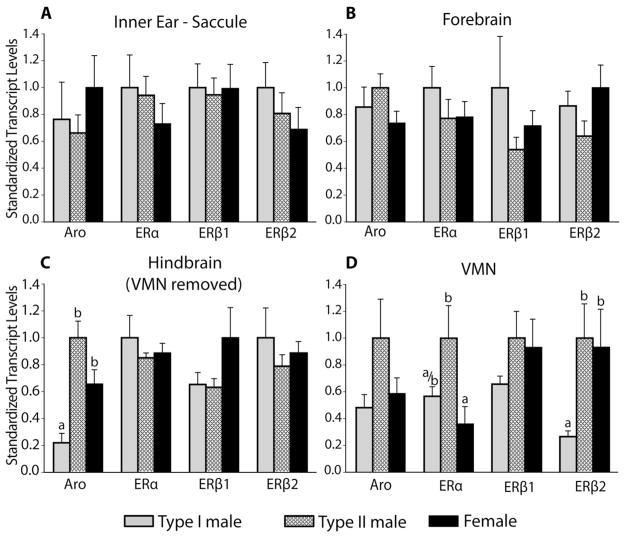
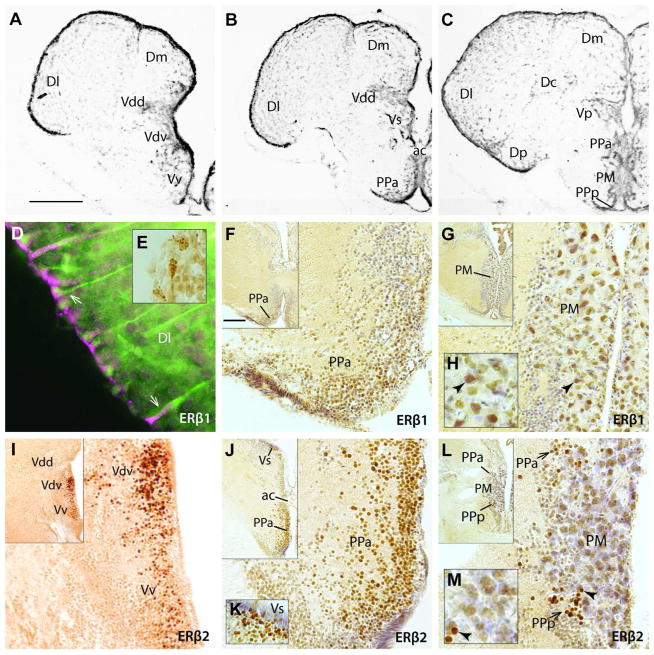
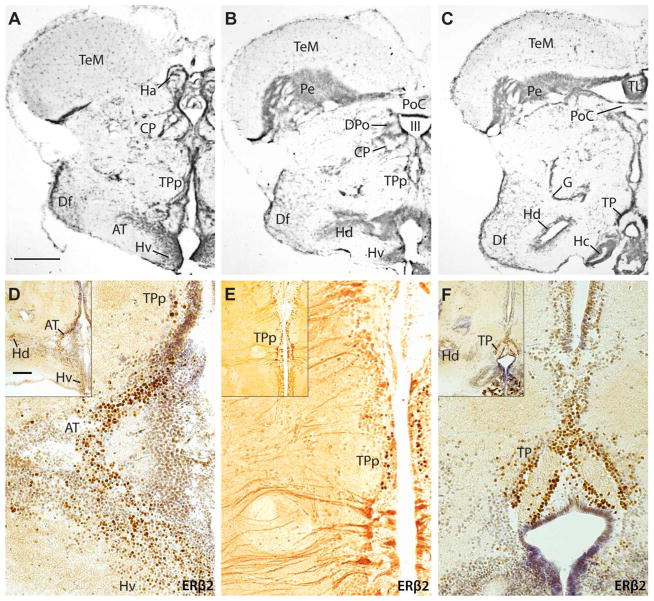
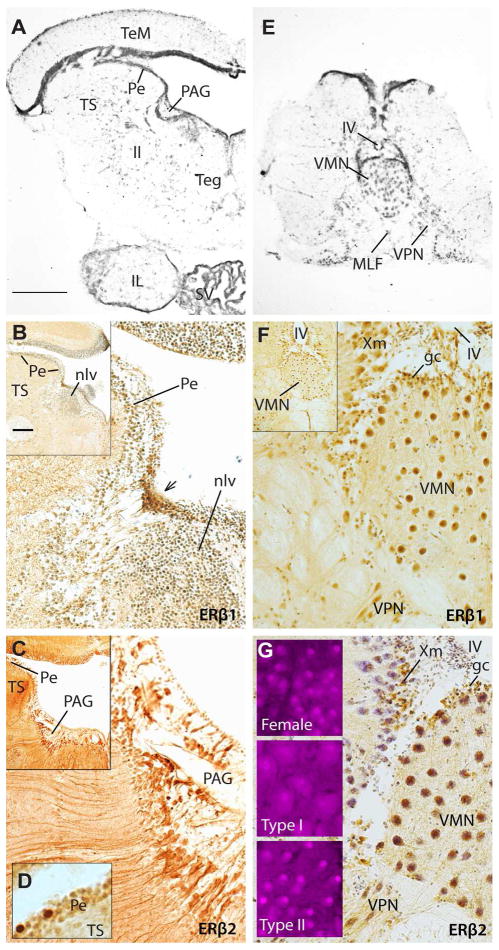
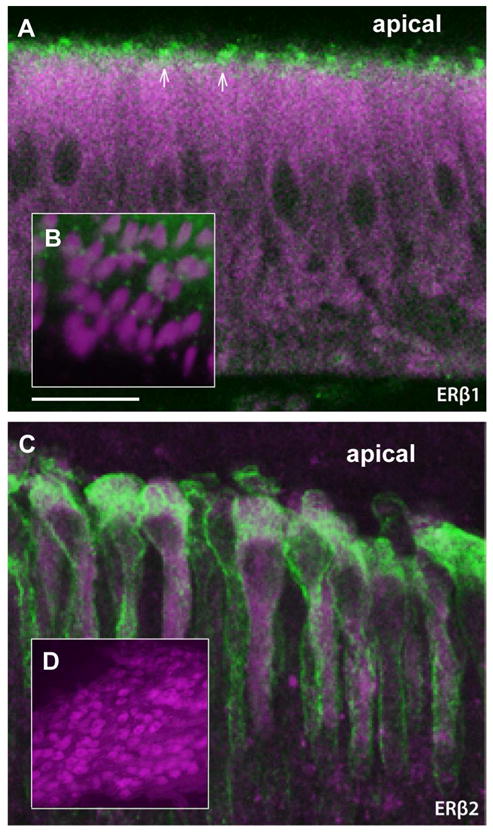
Estrogens play a salient role in the development and maintenance of both male and female nervous systems and behaviors. The plainfin midshipman (Porichthys notatus), a teleost fish, has two male reproductive morphs that follow alternative mating tactics and diverge in multiple somatic, hormonal, and neural traits, including the central control of morph-specific vocal behaviors. After we identified duplicate estrogen receptors (ERβ1 and ERβ2) in midshipman, we developed antibodies to localize protein expression in the central vocal-acoustic networks and saccule, the auditory division of the inner ear. As in other teleost species, ERβ1 and ERβ2 were robustly expressed in the telencephalon and hypothalamus in vocal-acoustic and other brain regions shown previously to exhibit strong expression of ERα and aromatase (estrogen synthetase, CYP19) in midshipman. Like aromatase, ERβ1 label colocalized with glial fibrillary acidic protein (GFAP) in telencephalic radial glial cells. Quantitative polymerase chain reaction revealed similar patterns of transcript abundance across reproductive morphs for ERβ1, ERβ2, ERα, and aromatase in the forebrain and saccule. In contrast, transcript abundance for ERs and aromatase varied significantly between morphs in and around the sexually polymorphic vocal motor nucleus (VMN). Together, the results suggest that VMN is the major estrogen target within the estrogen-sensitive hindbrain vocal network that directly determines the duration, frequency, and amplitude of morph-specific vocalizations. Comparable regional differences in steroid receptor abundances likely regulate morph-specific behaviors in males and females of other species exhibiting alternative reproductive tactics.
雌激素在雄性和雌性神经系统和行为的发育和维持中起着重要作用。平鳍美洲蟾鱼(Porichthys notatus)是一种硬骨鱼,有两种雄性生殖形态,它们遵循不同的交配策略,并在多个躯体、激素和神经特征上分化,包括形态特异性发声行为的中枢控制。在我们确定了平鳍美洲蟾鱼中的两种雌激素受体(ERβ1 和 ERβ2)后,我们开发了抗体来定位中枢发声网络和球囊(内耳的听觉部分)中的蛋白质表达。与其他硬骨鱼物种一样,ERβ1 和 ERβ2 在发声和其他先前显示出 ERα 和芳香酶(雌激素合成酶,CYP19)强烈表达的脑区中在端脑和下丘脑中强烈表达。与芳香酶一样,ERβ1 标记与脑啡肽原(GFAP)在端脑放射状胶质细胞中共定位。定量聚合酶链反应显示,在前脑中,ERβ1、ERβ2、ERα 和芳香酶在不同繁殖形态中的转录丰度模式相似在球囊。相比之下,在具有性多态性的发声运动核(VMN)内外,ER 和芳香酶的转录丰度在形态之间存在显著差异。总之,结果表明 VMN 是雌激素敏感后脑发声网络中的主要雌激素靶标,直接决定形态特异性发声的持续时间、频率和幅度。具有替代繁殖策略的其他物种中类似的甾体受体丰度的区域差异可能调节形态特异性行为。