Department of Pharmacology, Cardiovascular Research Institute Maastricht, Maastricht University, Maastricht, The Netherlands.
PLoS One. 2013;8(2):e57815. doi: 10.1371/journal.pone.0057815. Epub 2013 Feb 28.
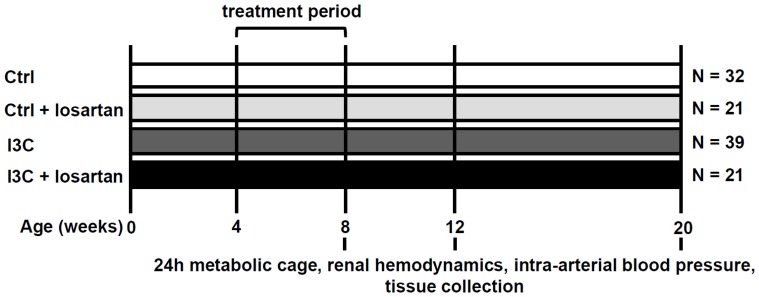
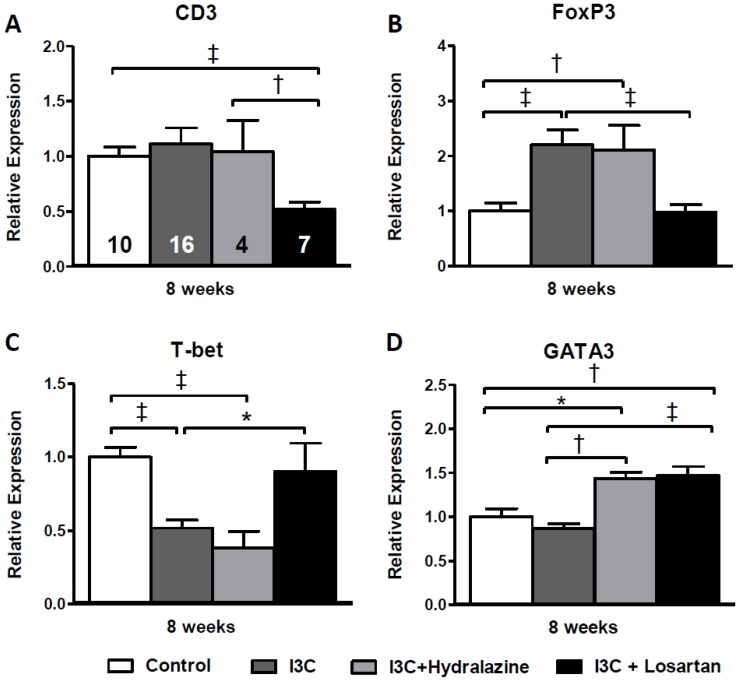
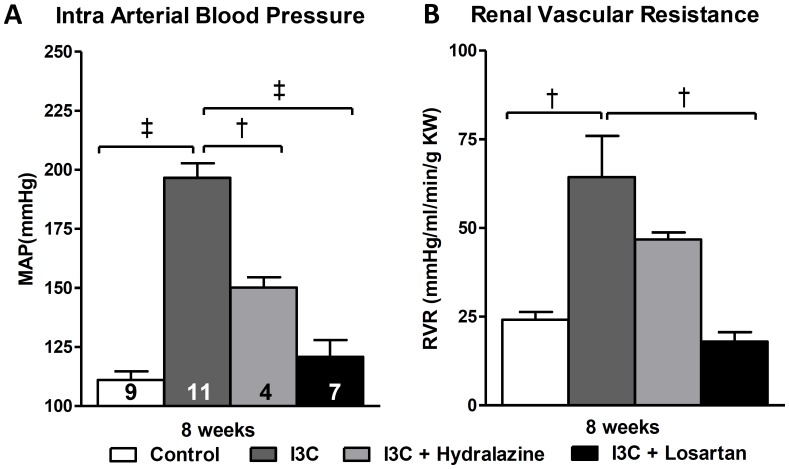
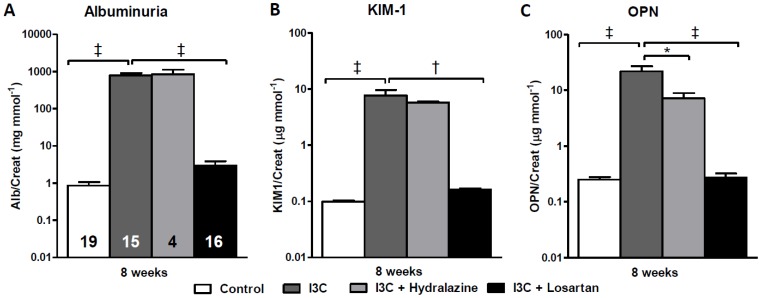
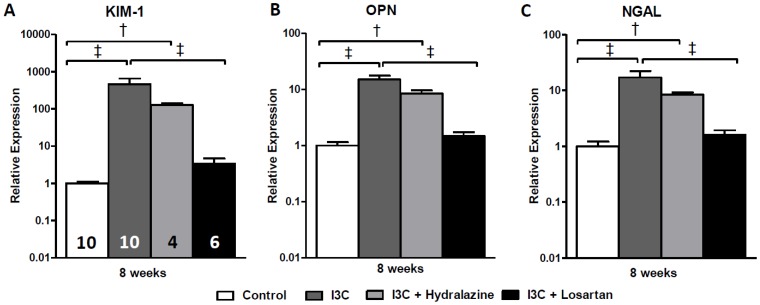
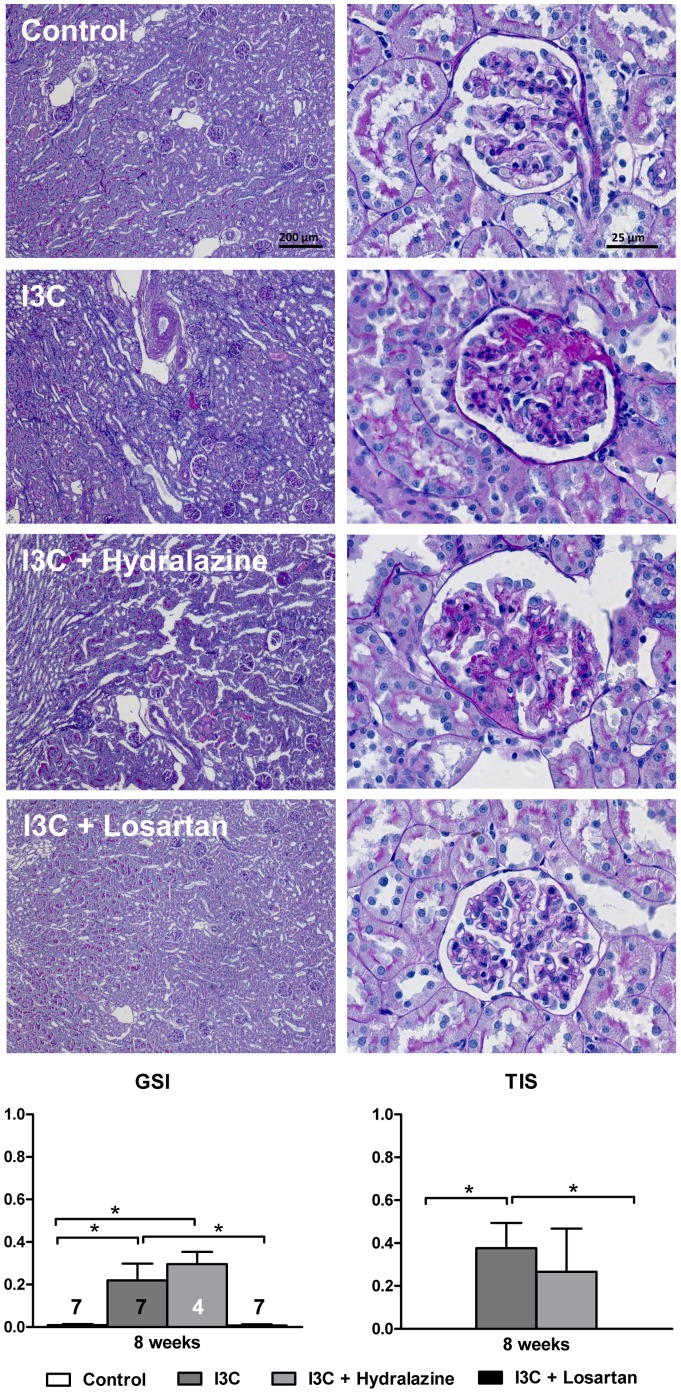
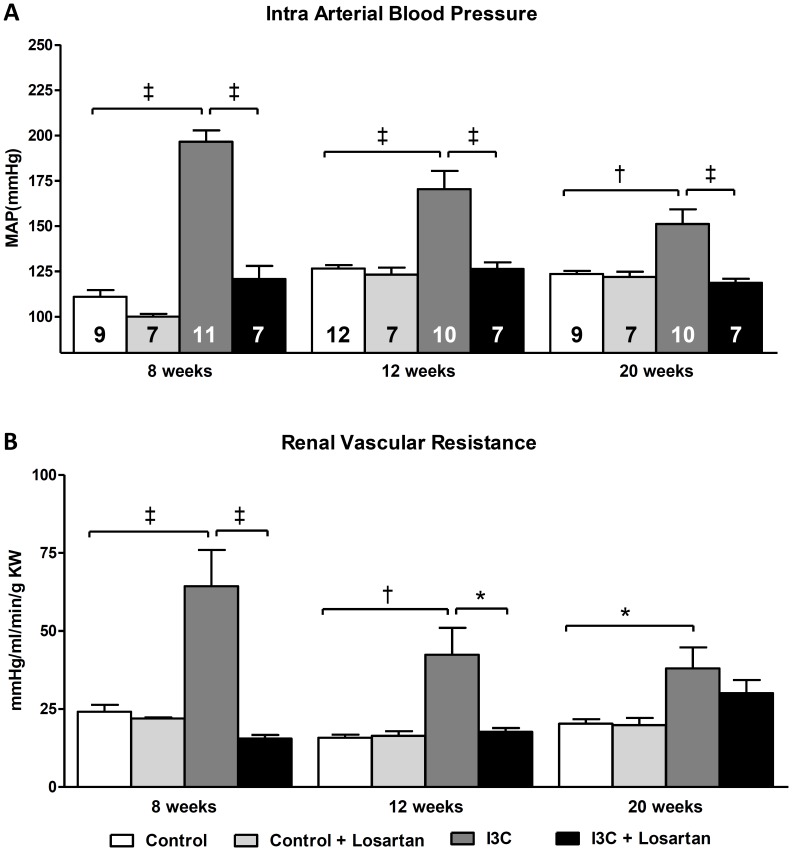
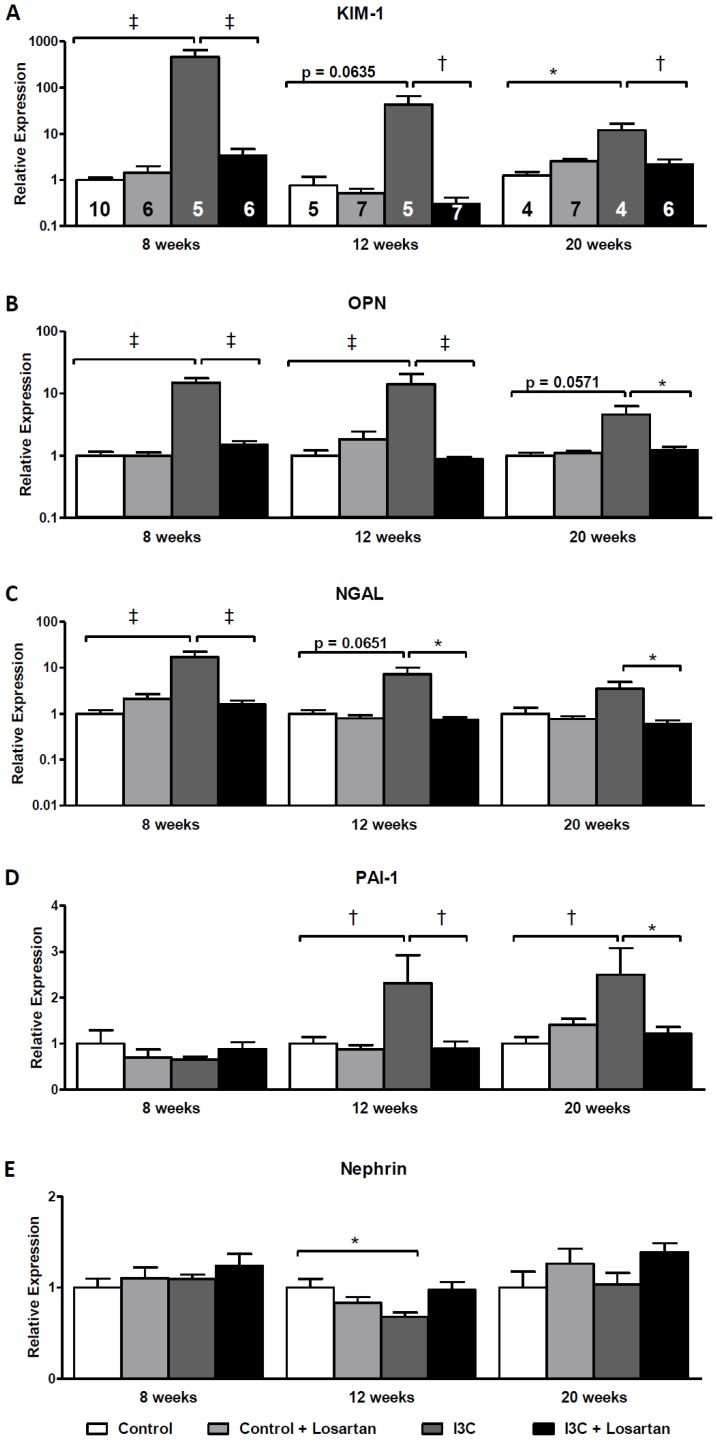
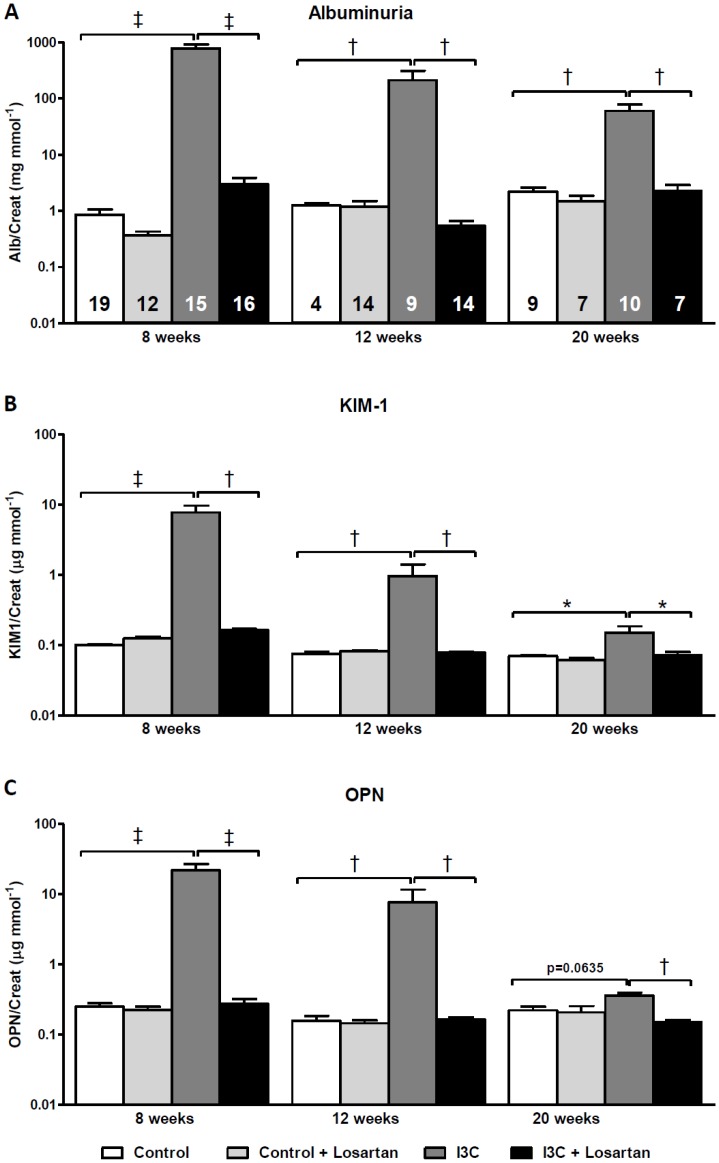
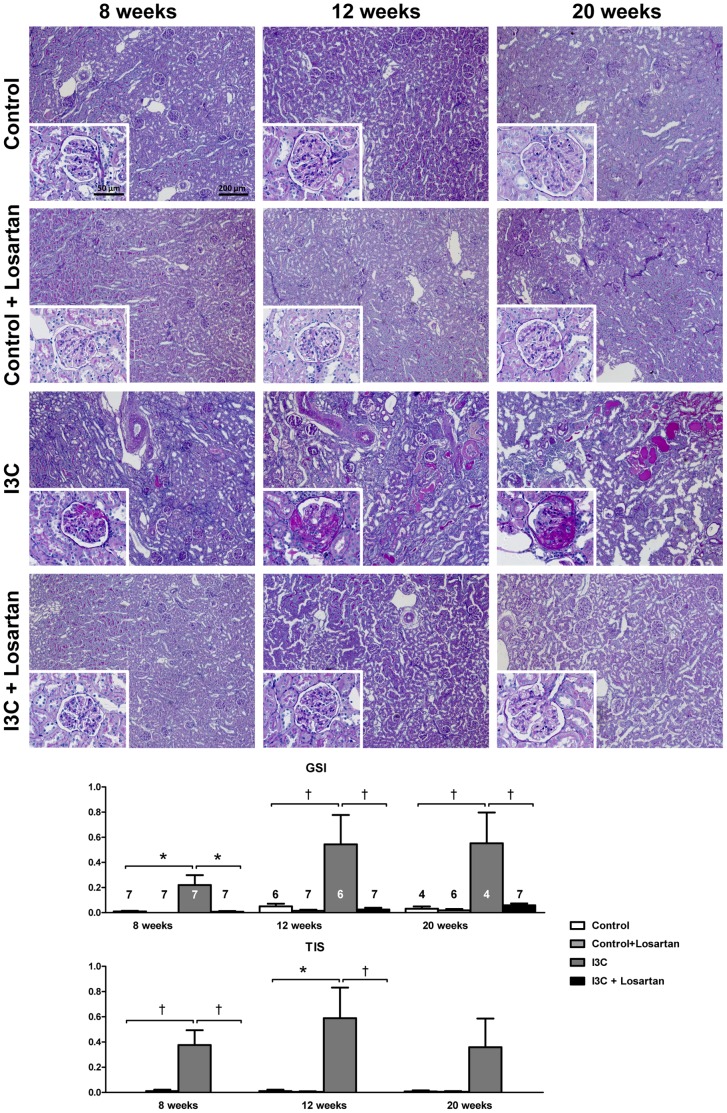
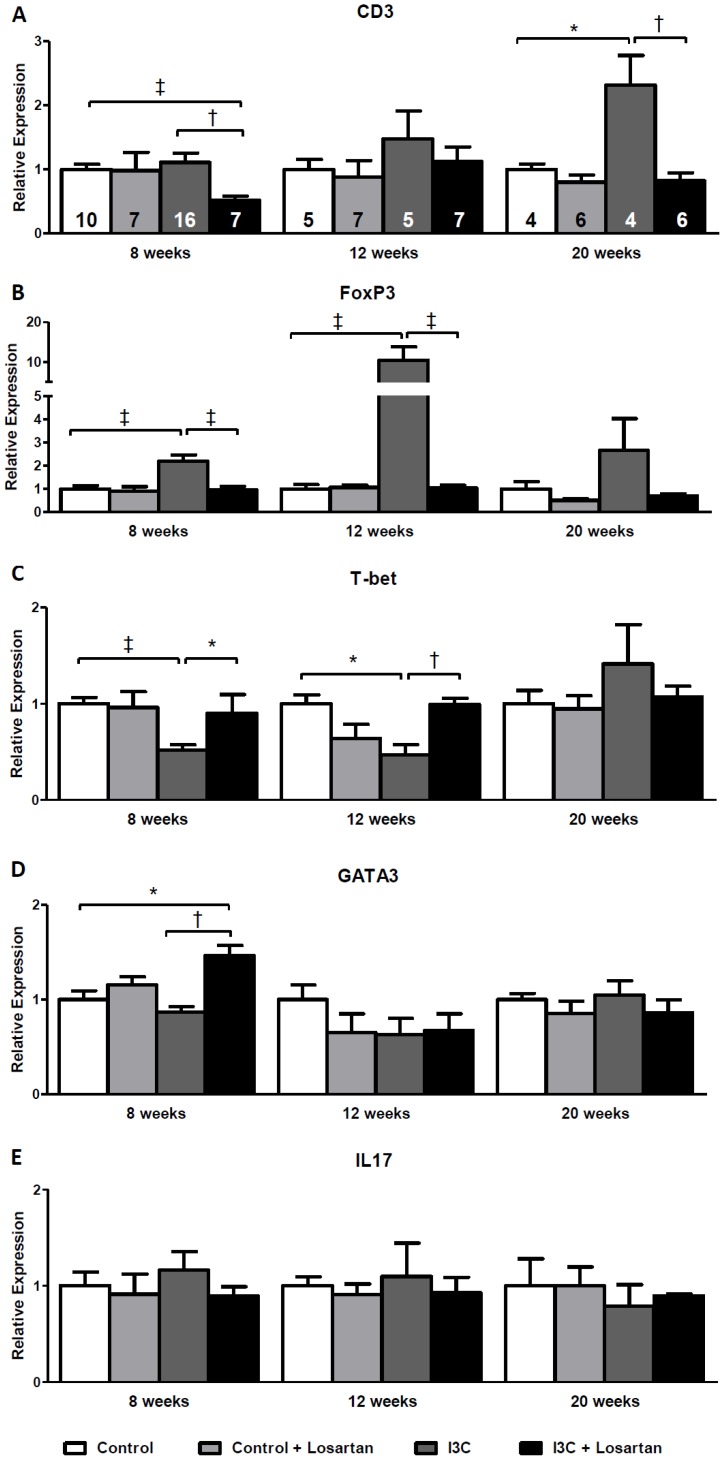
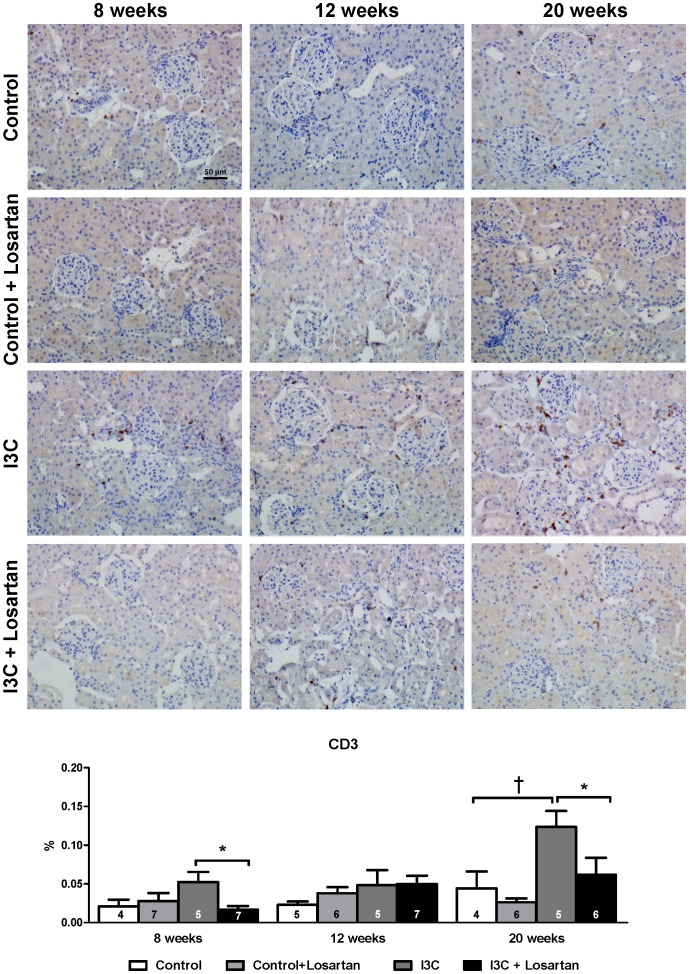
Transient activation of the renin-angiotensin system (RAS) induces irreversible renal damage causing sustained elevation in blood pressure (BP) in Cyp1a1-Ren2 transgenic rats. In our current study we hypothesized that activation of the AT1-receptor (AT1R) leads to a T-cell response causing irreversible impairment of renal function and hypertension. Cyp1a1-Ren2 rats harbor a construct for activation of the RAS by indole-3-carbinol (I3C). Rats were fed a I3C diet between 4-8 weeks of age to induce hypertension. Next, I3C was withdrawn and rats were followed-up for another 12 weeks. Additional groups received losartan (20 mg/kg/day) or hydralazine (100 mg/kg/day) treatment between 4-8 weeks. Rats were placed for 24h in metabolic cages before determining BP at week 8, 12 and 20. At these ages, subsets of animals were sacrificed and the presence of kidney T-cell subpopulations was investigated by immunohistochemistry and molecular marker analysis. The development of sustained hypertension was completely prevented by losartan, whereas hydralazine only caused a partial decrease in BP. Markers of renal damage: KIM-1 and osteopontin were highly expressed in urine and kidney samples of I3C-treated rats, even until 20 weeks of age. Additionally, renal expression of regulatory-T cells (Tregs) was highly increased in I3C-treated rats, whereas the expression of T-helper 1 (Th1) cells demonstrated a strong decrease. Losartan prevented these effects completely, whereas hydralazine was unable to affect these changes. In young Cyp1a1-Ren2 rats AT1R activation leads to induction of an immune response, causing a shift from Th1-cells to Tregs, contributing to the development of irreversible renal damage and hypertension.
肾素-血管紧张素系统(RAS)的短暂激活会导致不可逆的肾损伤,从而使 Cyp1a1-Ren2 转基因大鼠的血压持续升高。在我们目前的研究中,我们假设 AT1 受体(AT1R)的激活会导致 T 细胞反应,从而导致肾功能不可逆转的损害和高血压。Cyp1a1-Ren2 大鼠携带一种通过吲哚-3-甲醇(I3C)激活 RAS 的构建体。大鼠在 4-8 周龄时用 I3C 饮食喂养以诱导高血压。然后,撤回 I3C,并在接下来的 12 周内对大鼠进行随访。其他组在 4-8 周时接受氯沙坦(20mg/kg/天)或肼屈嗪(100mg/kg/天)治疗。在确定第 8、12 和 20 周的血压之前,将大鼠放入代谢笼中 24 小时。在这些年龄时,处死动物亚组,并通过免疫组织化学和分子标志物分析研究肾脏 T 细胞亚群的存在。氯沙坦完全预防了持续性高血压的发展,而肼屈嗪仅导致血压部分降低。肾损伤标志物:KIM-1 和骨桥蛋白在 I3C 处理大鼠的尿液和肾脏样本中高度表达,甚至在 20 周龄时也是如此。此外,I3C 处理大鼠肾脏中调节性 T 细胞(Tregs)的表达高度增加,而 T 辅助 1(Th1)细胞的表达则强烈下降。氯沙坦完全预防了这些作用,而肼屈嗪则无法影响这些变化。在年轻的 Cyp1a1-Ren2 大鼠中,AT1R 的激活导致免疫反应的诱导,导致 Th1 细胞向 Tregs 的转变,导致不可逆的肾损伤和高血压的发展。