School of Biological Sciences, University of Canterbury, Christchurch, New Zealand.
PLoS One. 2013;8(3):e58136. doi: 10.1371/journal.pone.0058136. Epub 2013 Mar 5.
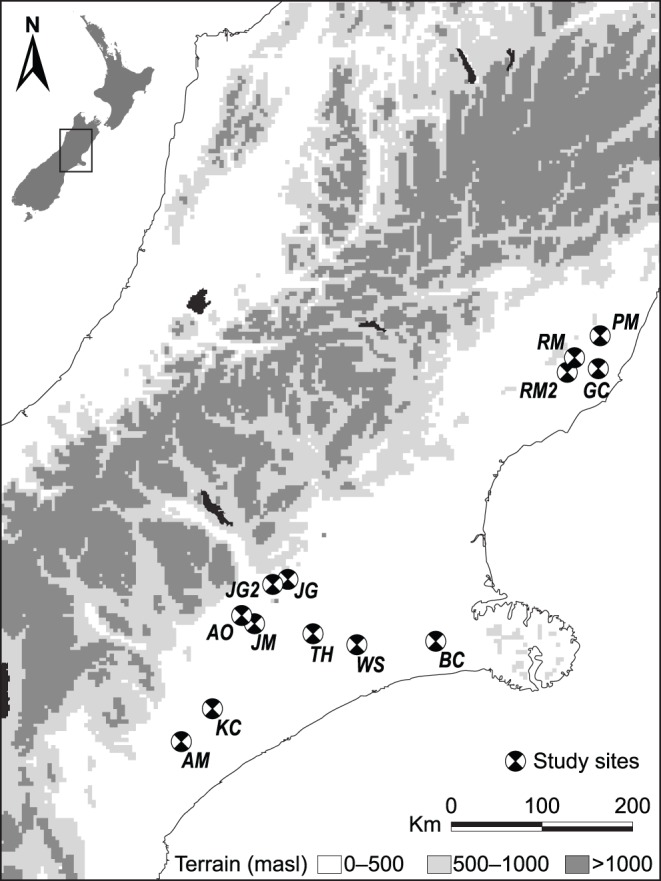
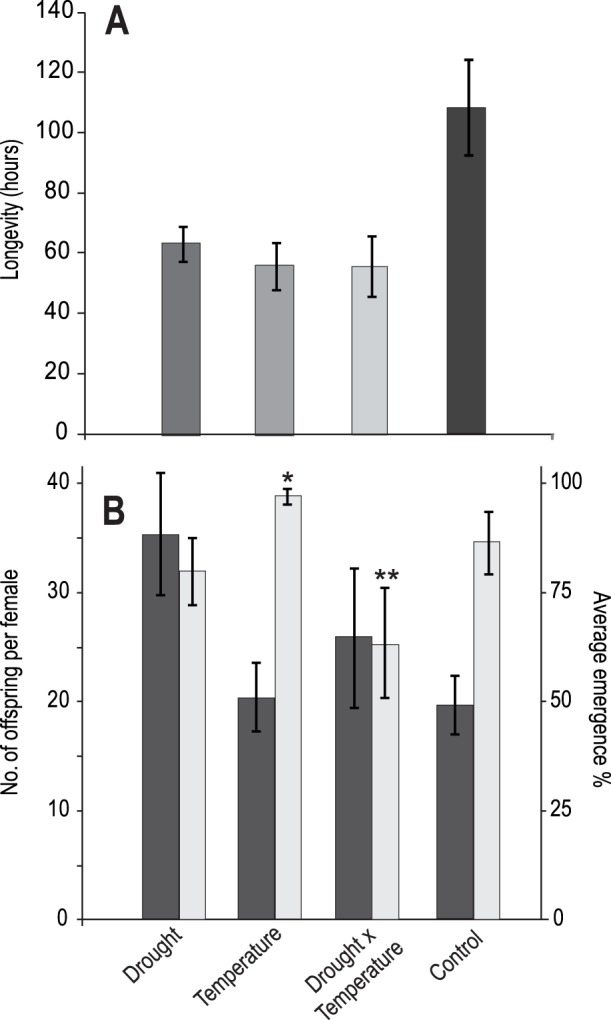
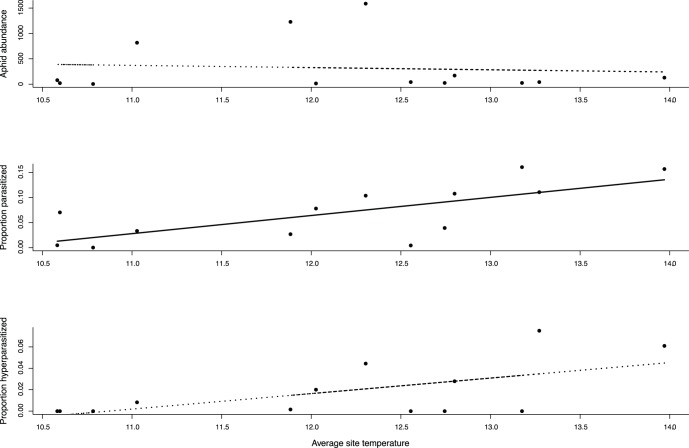
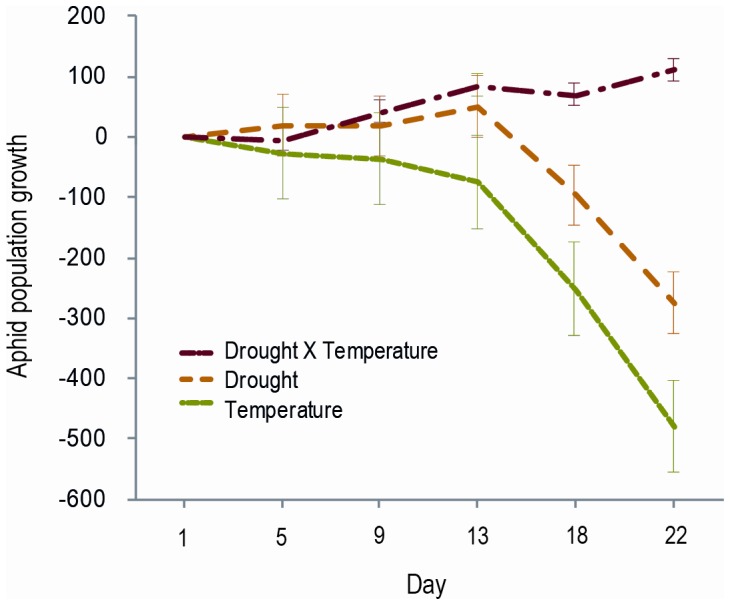
Climate change affects the abundance, distribution and activity of natural enemies that are important for suppressing herbivore crop pests. Moreover, higher mean temperatures and increased frequency of climatic extremes are expected to induce different responses across trophic levels, potentially disrupting predator-prey interactions. Using field observations, we examined the response of an aphid host-parasitoid system to variation in temperature. Temperature was positively associated with attack rates by parasitoids, but also with a non-significant trend towards increased attack rates by higher-level hyperparasitoids. Elevated hyperparasitism could partly offset any benefit of climate warming to parasitoids, and would suggest that higher trophic levels may hamper predictions of predator-prey interactions. Additionally, the mechanisms affecting host-parasitoid dynamics were examined using controlled laboratory experiments that simulated both temperature increase and drought. Parasitoid fitness and longevity responded differently when exposed to each climatic variable in isolation, compared to the interaction of both variables at once. Although temperature increase or drought tended to positively affect the ability of parasitoids to control aphid populations, these effects were significantly reversed when the drivers were expressed in concert. Additionally, separate warming and drought treatments reduced parasitoid longevity, and although temperature increased parasitoid emergence success and drought increased offspring production, combined temperature and drought produced the lowest parasitoid emergence. The non-additive effects of different climate drivers, combined with differing responses across trophic levels, suggest that predicting future pest outbreaks will be more challenging than previously imagined.
气候变化会影响对抑制植食性作物害虫至关重要的天敌的丰度、分布和活动。此外,预计较高的平均温度和气候极端事件的增加频率会在不同的营养水平上引起不同的反应,可能会破坏捕食者-猎物的相互作用。本研究利用野外观察,研究了一个蚜虫-寄生蜂系统对温度变化的响应。温度与寄生蜂的攻击率呈正相关,但与高级次寄生蜂攻击率呈上升趋势的关系不显著。升高的次寄生作用可能部分抵消了气候变暖对寄生蜂的任何益处,并表明较高的营养水平可能会阻碍对捕食者-猎物相互作用的预测。此外,本研究还使用模拟温度升高和干旱的控制实验室实验来检验影响宿主-寄生蜂动态的机制。与两个变量同时相互作用相比,当单独暴露于每个气候变量时,寄生蜂的适合度和寿命表现出不同的反应。尽管温度升高或干旱往往会正面影响寄生蜂控制蚜虫种群的能力,但当这些驱动因素同时表达时,这些影响会显著逆转。此外,单独的升温处理和干旱处理降低了寄生蜂的寿命,虽然温度升高会增加寄生蜂的出蜂成功率,干旱会增加后代的产量,但同时升高温度和降低湿度会导致寄生蜂的出蜂数量最低。不同气候驱动因素的非加性效应,加上不同营养水平的反应,表明预测未来的虫害爆发将比之前想象的更具挑战性。