Charlie Norwood VA Medical Center, Augusta, Georgia, USA.
PLoS One. 2013;8(3):e58207. doi: 10.1371/journal.pone.0058207. Epub 2013 Mar 5.
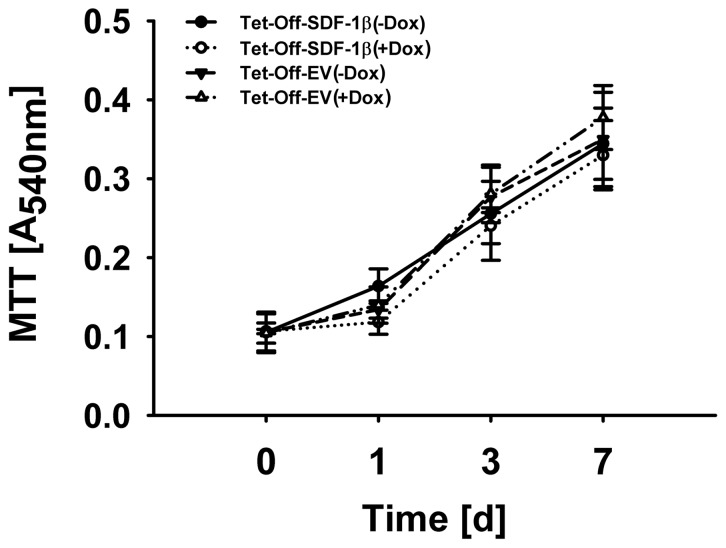
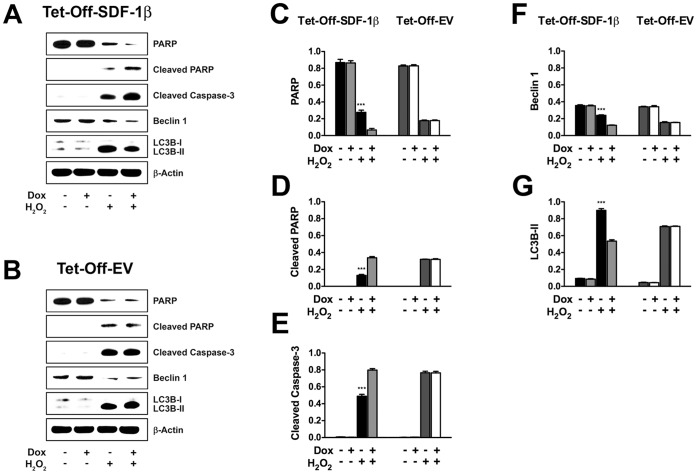
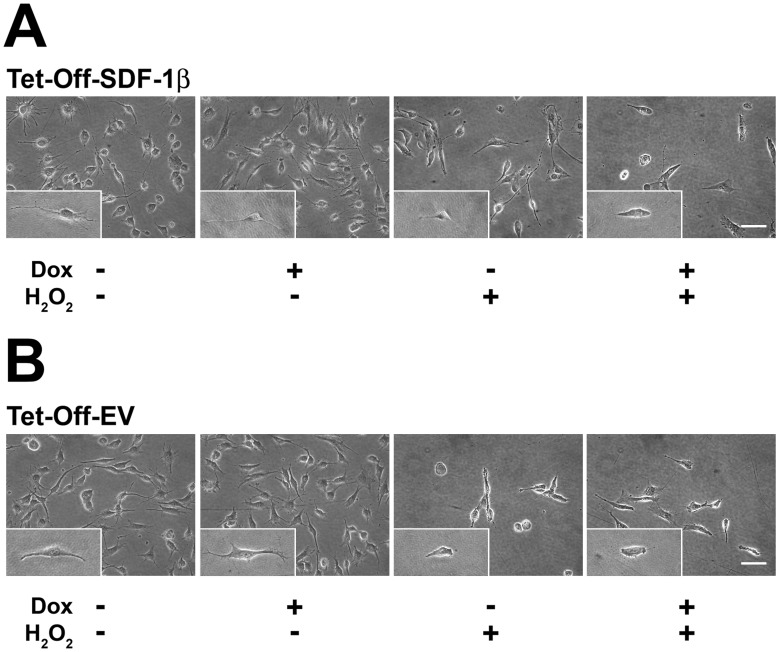
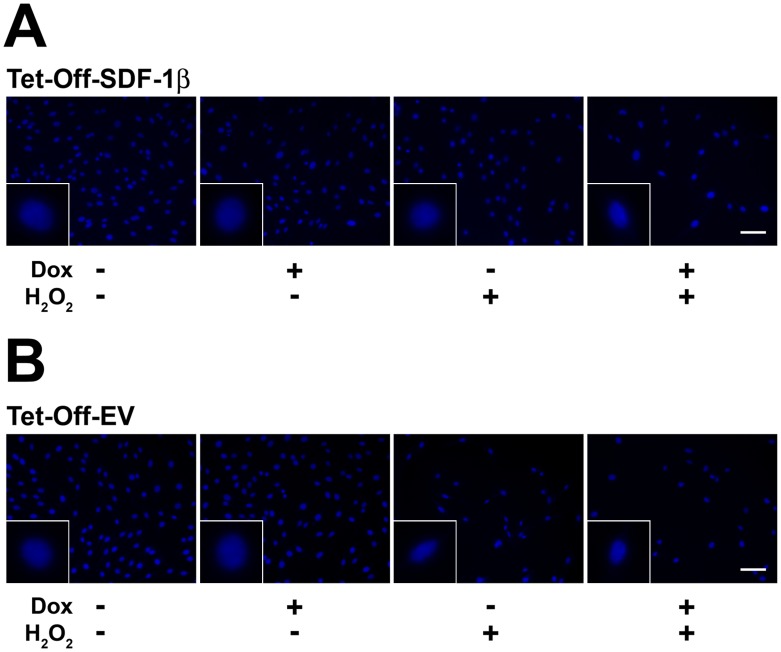
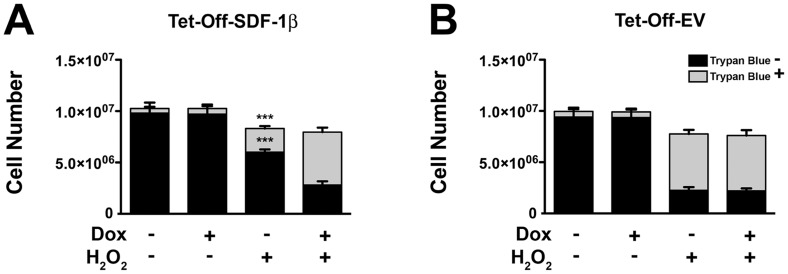
Bone marrow-derived mesenchymal stem/stromal cells (BMSCs) hold great potential for cell-based therapy, yet the therapeutic efficacy remains uncertain. Transplanted BMSCs often fail to engraft within the bone marrow (BM), in part due to the poor survival of donor cells in response to inflammatory reactions, hypoxia, oxidative stress, or nutrient starvation. Two basic cell processes, apoptosis and autophagy, could potentially be responsible for the impaired survival of transplanted BMSCs. However, the functional relationship between apoptosis and autophagy in BMSC homeostasis is complex and not well understood. The stromal cell-derived factor-1 (SDF-1)/CXC chemokine receptor 4 (CXCR4) signaling axis appears to be critical in maintaining proliferation and survival of BM stem cell populations through improving cell proliferation and survival in response to stress; however, the exact mechanisms remain unclear. We recently described novel genetically engineered Tet-Off-SDF-1β BMSCs, which over-express SDF-1β under tight doxycycline-control, thus providing an ideal model system to investigate the isolated effects of SDF-1β. In this study we tested the hypothesis that SDF-1β can mediate cell survival of BMSCs in vitro through increasing autophagy. We found that SDF-1β had no effect on BMSC proliferation; however, SDF-1β significantly protected genetically engineered BMSCs from H2O2-induced cell death through increasing autophagy and decreasing caspase-3-dependent apoptosis. Taken together, we provide novel evidence that the SDF-1/CXCR4 axis, specifically activated by the SDF-1β isoform, plays a critical role in regulating BMSC survival under oxidative stress through increasing autophagy.
骨髓间充质干细胞(BMSCs)在基于细胞的治疗中具有巨大的潜力,但治疗效果仍不确定。移植的 BMSCs 常常不能在骨髓(BM)中植入,部分原因是供体细胞对炎症反应、缺氧、氧化应激或营养饥饿的存活能力差。两种基本的细胞过程,细胞凋亡和自噬,可能是导致移植的 BMSCs 存活能力受损的原因。然而,BMSC 稳态中细胞凋亡和自噬之间的功能关系复杂,目前还不完全清楚。基质细胞衍生因子-1(SDF-1)/CXC 趋化因子受体 4(CXCR4)信号轴似乎在维持 BM 干细胞群体的增殖和存活方面起着关键作用,通过改善细胞在应激下的增殖和存活;然而,确切的机制尚不清楚。我们最近描述了一种新型的基因工程 Tet-Off-SDF-1β BMSCs,它在严格的多西环素控制下过度表达 SDF-1β,因此为研究 SDF-1β 的单独作用提供了一个理想的模型系统。在这项研究中,我们检验了这样一个假设,即 SDF-1β 通过增加自噬来介导 BMSCs 的体外细胞存活。我们发现 SDF-1β 对 BMSC 的增殖没有影响;然而,SDF-1β 通过增加自噬和减少 caspase-3 依赖性凋亡,显著保护基因工程 BMSCs 免受 H2O2 诱导的细胞死亡。总之,我们提供了新的证据,表明 SDF-1/CXCR4 轴,特别是由 SDF-1β 同工型激活,在通过增加自噬来调节 BMSC 在氧化应激下的存活方面起着关键作用。