Primary Care Research Institute, Department of Family Medicine, State University of New York at Buffalo, Buffalo, New York, USA.
J Addict Dis. 2013;32(1):68-78. doi: 10.1080/10550887.2012.759872.
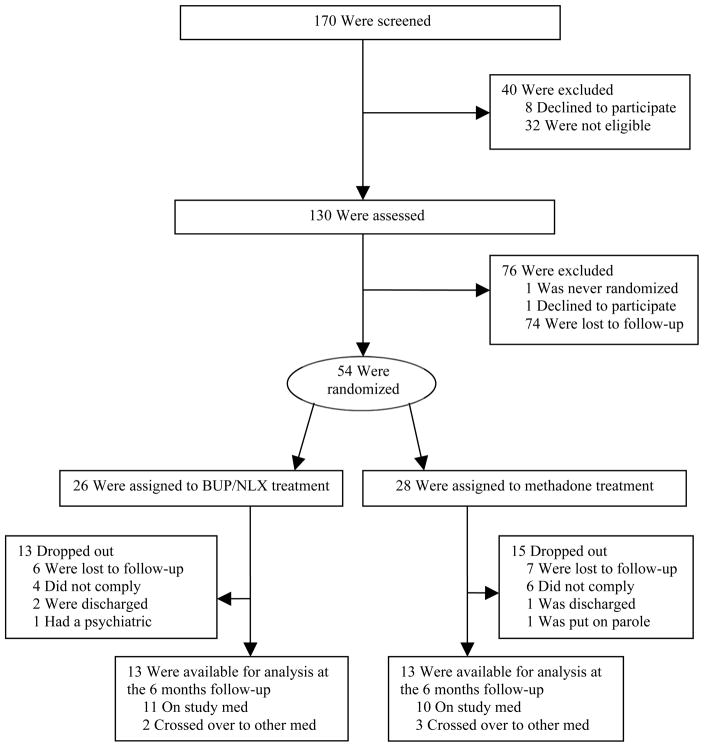
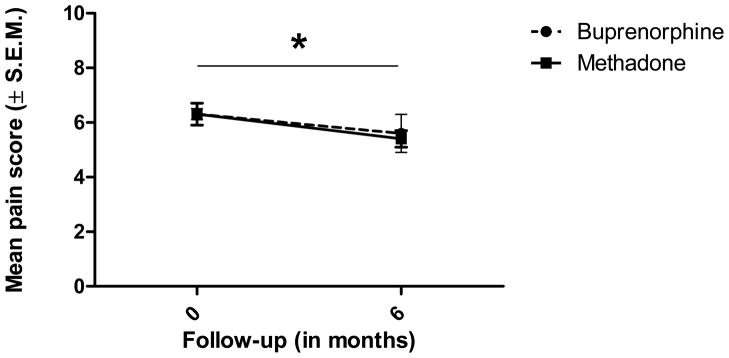
Patients with opioid addiction who receive prescription opioids for treatment of nonmalignant chronic pain present a therapeutic challenge. Fifty-four participants with chronic pain and opioid addiction were randomized to receive methadone or buprenorphine/naloxone. At the 6-month follow-up examination, 26 (48.1%) participants who remained in the study noted a 12.75% reduction in pain (P = 0.043), and no participants in the methadone group compared to 5 in the buprenorphine group reported illicit opioid use (P = 0.039). Other differences between the two conditions were not found. Long-term, low-dose methadone or buprenorphine/naloxone treatment produced analgesia in participants with chronic pain and opioid addiction.
患有阿片类药物成瘾并接受处方阿片类药物治疗非恶性慢性疼痛的患者带来了治疗挑战。54 名患有慢性疼痛和阿片类药物成瘾的参与者被随机分配接受美沙酮或丁丙诺啡/纳洛酮治疗。在 6 个月的随访检查中,26 名(48.1%)仍在研究中的参与者报告疼痛减轻了 12.75%(P=0.043),而美沙酮组没有参与者报告非法使用阿片类药物,而丁丙诺啡组有 5 名参与者报告非法使用阿片类药物(P=0.039)。两种情况下未发现其他差异。长期、低剂量美沙酮或丁丙诺啡/纳洛酮治疗可使慢性疼痛和阿片类药物成瘾患者产生镇痛作用。