Department of Biology, Dalhousie University, Halifax, Nova Scotia, Canada.
PLoS One. 2013;8(3):e57110. doi: 10.1371/journal.pone.0057110. Epub 2013 Mar 6.
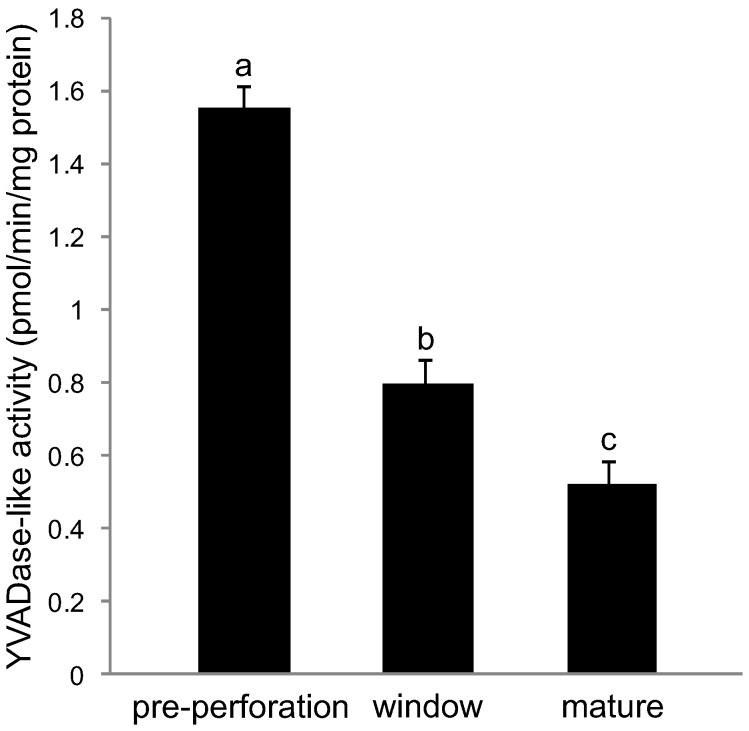
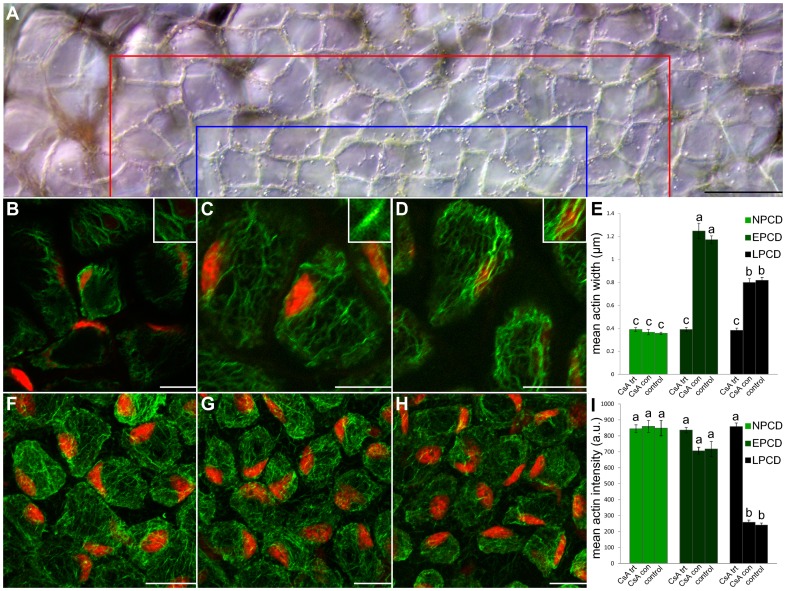
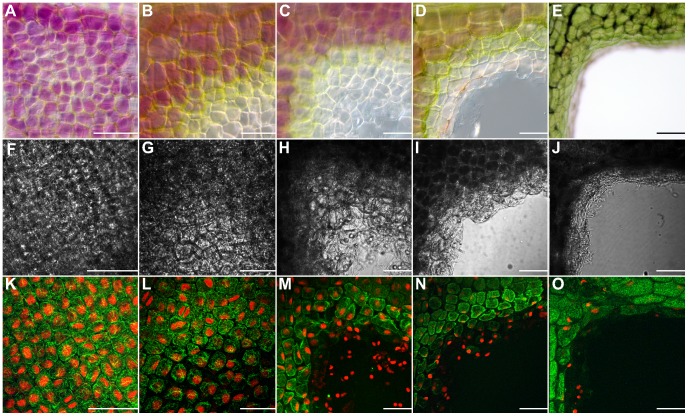
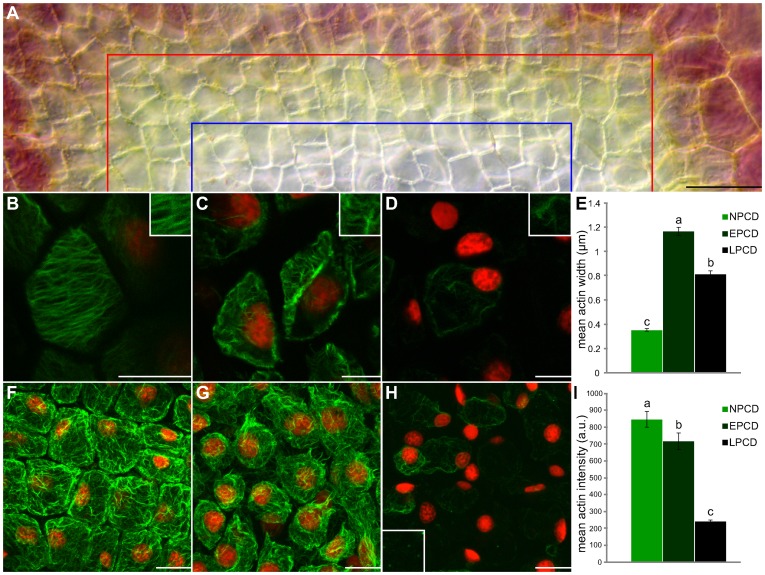
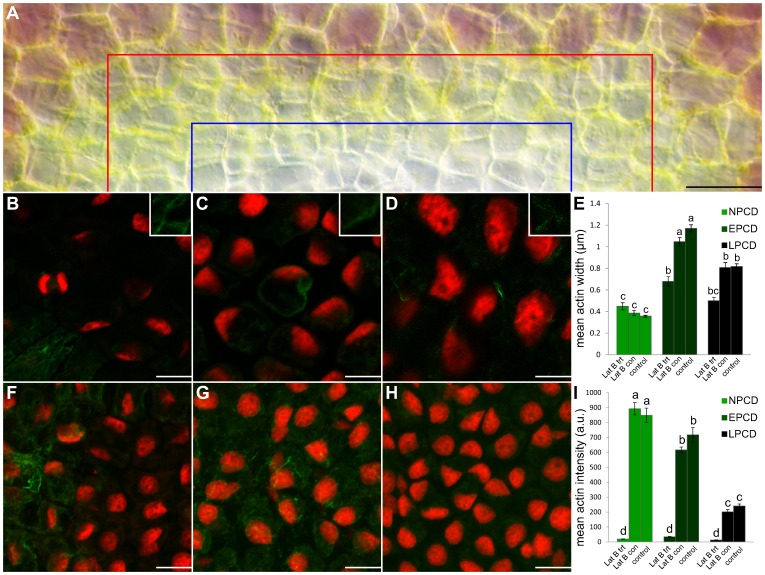
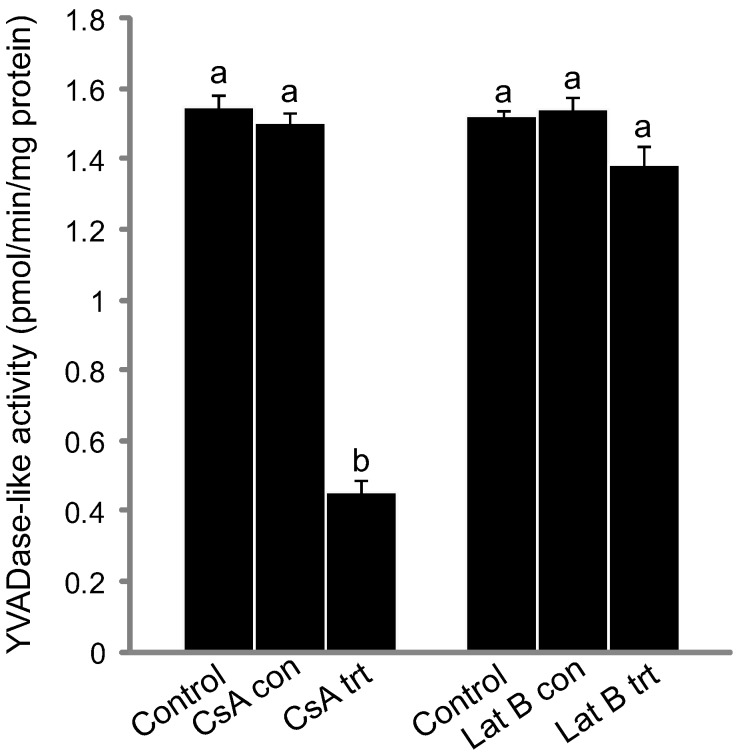
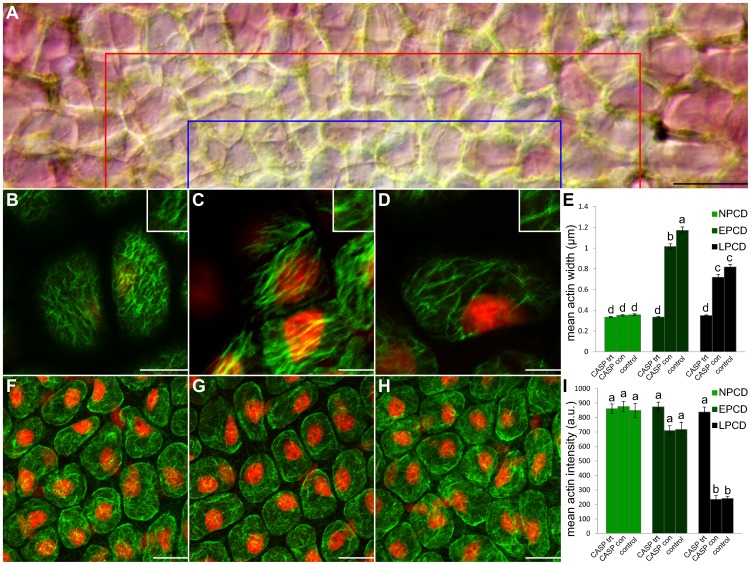
Aponogeton madagascariensis produces perforations over its leaf surface via programmed cell death (PCD). PCD begins between longitudinal and transverse veins at the center of spaces regarded as areoles, and continues outward, stopping several cells from these veins. The gradient of PCD that exists within a single areole of leaves in an early stage of development was used as a model to investigate cellular dynamics during PCD. Mitochondria have interactions with a family of proteases known as caspases, and the actin cytoskeleton during metazoan PCD; less is known regarding these interactions during plant PCD. This study employed the actin stain Alexa Fluor 488 phalloidin, the actin depolymerizer Latrunculin B (Lat B), a synthetic caspase peptide substrate and corresponding specific inhibitors, as well as the mitochondrial pore inhibitor cyclosporine A (CsA) to analyze the role of these cellular constituents during PCD. Results depicted that YVADase (caspase-1) activity is higher during the very early stages of perforation formation, followed by the bundling and subsequent breakdown of actin. Actin depolymerization using Lat B caused no change in YVADase activity. In vivo inhibition of YVADase activity prevented PCD and actin breakdown, therefore substantiating actin as a likely substrate for caspase-like proteases (CLPs). The mitochondrial pore inhibitor CsA significantly decreased YVADase activity, and prevented both PCD and actin breakdown; therefore suggesting the mitochondria as a possible trigger for CLPs during PCD in the lace plant. To our knowledge, this is the first in vivo study using either caspase-1 inhibitor (Ac-YVAD-CMK) or CsA, following which the actin cytoskeleton was examined. Overall, our findings suggest the mitochondria as a possible upstream activator of YVADase activity and implicate these proteases as potential initiators of actin breakdown during perforation formation via PCD in the lace plant.
马达加斯加水蕹通过程序性细胞死亡(PCD)在其叶片表面产生穿孔。PCD 始于被认为是叶窝的中心的纵向和横向叶脉之间,然后向外继续,阻止来自这些叶脉的几个细胞。在发育早期的单个叶窝内存在的 PCD 梯度被用作研究 PCD 过程中细胞动力学的模型。线粒体与一组称为半胱天冬酶的蛋白酶以及真核生物 PCD 中的肌动蛋白细胞骨架相互作用;关于植物 PCD 中这些相互作用的了解较少。本研究采用肌动蛋白染色 Alexa Fluor 488 鬼笔环肽、肌动蛋白解聚剂拉曲库林 B (Lat B)、合成半胱天冬酶肽底物及其相应的特异性抑制剂以及线粒体孔抑制剂环孢菌素 A (CsA) 来分析这些细胞成分在 PCD 中的作用。结果表明,在穿孔形成的早期阶段,YVADase(半胱天冬酶-1)活性更高,随后是肌动蛋白的捆绑和随后的分解。使用 Lat B 进行肌动蛋白解聚不会改变 YVADase 活性。体内抑制 YVADase 活性可防止 PCD 和肌动蛋白分解,因此证实肌动蛋白可能是半胱天冬酶样蛋白酶 (CLPs) 的底物。线粒体孔抑制剂 CsA 显著降低 YVADase 活性,并阻止 PCD 和肌动蛋白分解;因此,这表明线粒体可能是 PCD 过程中 CLPs 的潜在触发因素在花边植物中。据我们所知,这是首次使用半胱天冬酶-1 抑制剂(Ac-YVAD-CMK)或 CsA 进行体内研究,随后检查了肌动蛋白细胞骨架。总的来说,我们的发现表明线粒体可能是 YVADase 活性的上游激活剂,并暗示这些蛋白酶可能是通过 PCD 在花边植物中穿孔形成过程中肌动蛋白分解的潜在启动子。