Department of Oncology, University Hospital Centre (KBC Zagreb), University of Zagreb School of Medicine, Kispaticeva 12, Zagreb HR-10000, Croatia.
World J Surg Oncol. 2013 Mar 5;11:55. doi: 10.1186/1477-7819-11-55.
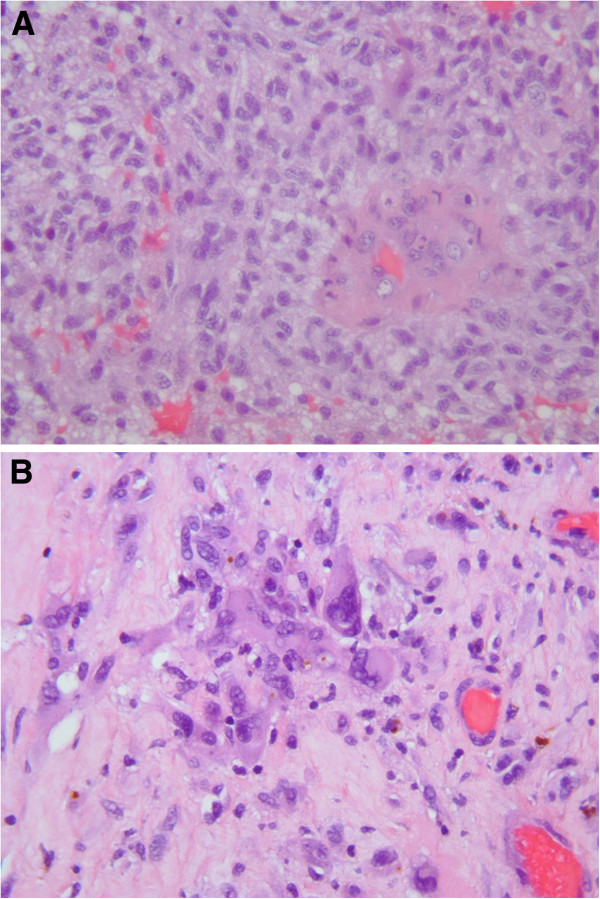
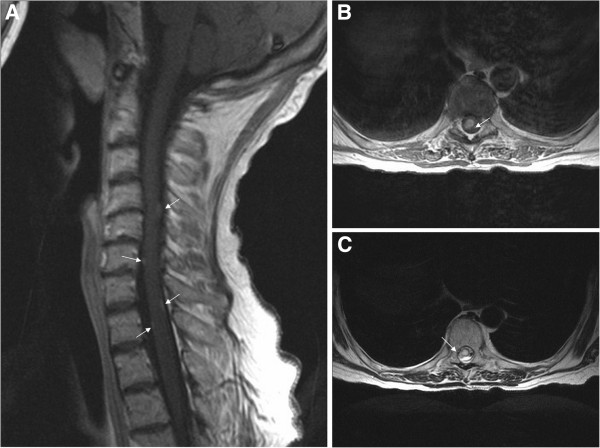
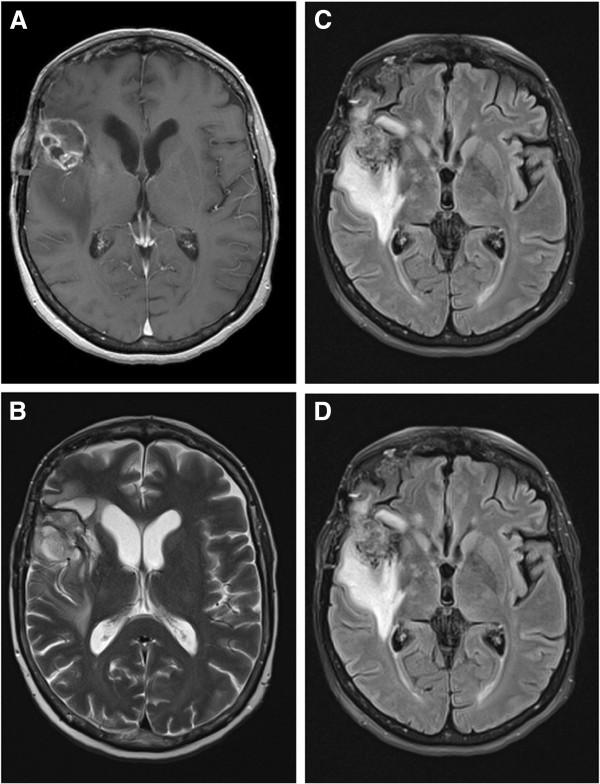
Despite huge advances in medicine, glioblastoma multiforme (GBM) remains a highly lethal, fast-growing tumour that cannot be cured by currently available therapies. However, extracranial and extraneural dissemination of GBM is extremely rare, but is being recognised in different imaging studies. To date, the cause of the GBM metastatic spread still remains under discussion. It probably develops at the time of intracranial progression following a surgical procedure. According to other hypothesis, the metastases are a consequence of spontaneous tumour transdural extension or haematogenous dissemination. We present a case of a 59-year-old woman with symptomatic leptomeningeal and intramedullary metastases of GBM who has been previously surgically treated with primary subtotal resection and underwent a repeated surgery during adjuvant radiotherapy and chemotherapy with temozolomide. Today, the main goal of surgery and chemoradiotherapy is to prevent neurologic deterioration and improve health-related quality of life. With this paper, we want to present this rare entity and emphasise the importance of a multidisciplinary approach, a key function in the management of brain tumour patients. The prognosis is still very poor although prolongation of survival can be obtained. Finally, although rare, our case strongly suggests that clinicians should be familiar with the possibility of the extracranial spread of GBM because as treatment improvements provide better control of the primary tumour and improving survival, metastatic disease will be increasingly encountered.
尽管医学取得了巨大进步,但多形性胶质母细胞瘤(GBM)仍然是一种高度致命、生长迅速的肿瘤,目前可用的治疗方法无法治愈。然而,GBM 的颅外和神经外播散极为罕见,但在不同的影像学研究中得到了证实。迄今为止,GBM 转移扩散的原因仍在讨论中。它可能是在手术后颅内进展时发展起来的。根据其他假说,转移是肿瘤硬膜外扩展或血源性播散的结果。我们报告了一例 59 岁女性,患有症状性软脑膜和 GBM 的髓内转移,该患者曾接受过原发性次全切除术,并在接受替莫唑胺辅助放疗和化疗期间接受了重复手术。如今,手术和放化疗的主要目标是预防神经功能恶化和提高与健康相关的生活质量。通过本文,我们希望介绍这种罕见的实体,并强调多学科方法的重要性,这是脑肿瘤患者管理中的关键功能。尽管可以延长生存时间,但预后仍然非常差。最后,尽管罕见,但我们的病例强烈表明,临床医生应该熟悉 GBM 颅外扩散的可能性,因为随着治疗的改善,更好地控制原发性肿瘤和提高生存率,转移性疾病将越来越多地被遇到。