Laboratory of Radiation Biology, Department of Environmental Veterinary Sciences, Graduate School of Veterinary Medicine, Hokkaido University, Kita 18 Nishi 9, Kita-ku, Sapporo, Hokkaido, Japan.
BMC Cancer. 2013 Mar 8;13:106. doi: 10.1186/1471-2407-13-106.
Glioblastoma is one of the intractable cancers and is highly resistant to ionizing radiation. This radioresistance is partly due to the presence of a hypoxic region which is widely found in advanced malignant gliomas. In the present study, we evaluated the effectiveness of the hypoxic cell sensitizer doranidazole (PR-350) using the C6 rat glioblastoma model, focusing on the status of blood brain barrier (BBB).
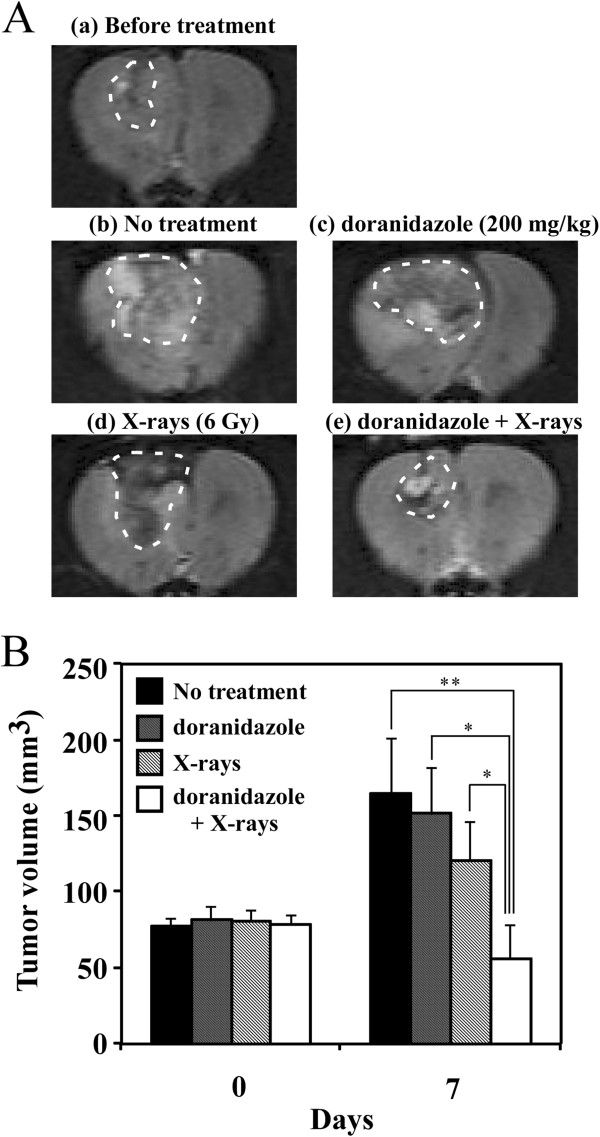
Reproductive cell death in the rat C6 glioma cell line was determined by means of clonogenic assay. An intracranial C6 glioma model was established for the in vivo experiments. To investigate the status of the BBB in C6 glioma bearing brain, we performed the Evans blue extravasation test. Autoradiography with [(14)C]-doranidazole was performed to examine the distribution of doranidazole in the glioma tumor. T2-weighted MRI was employed to examine the effects of X-irradiation and/or doranidazole on tumor growth.
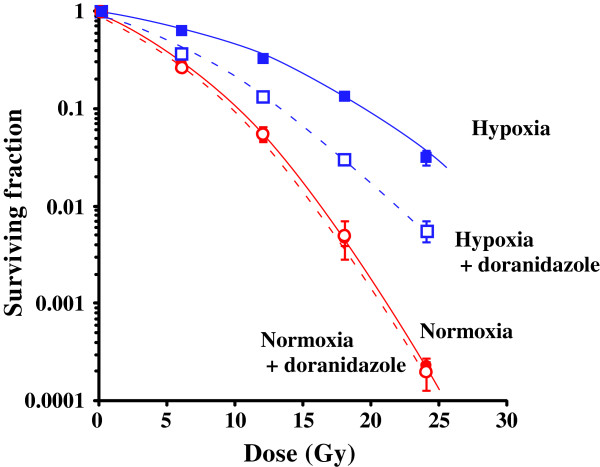
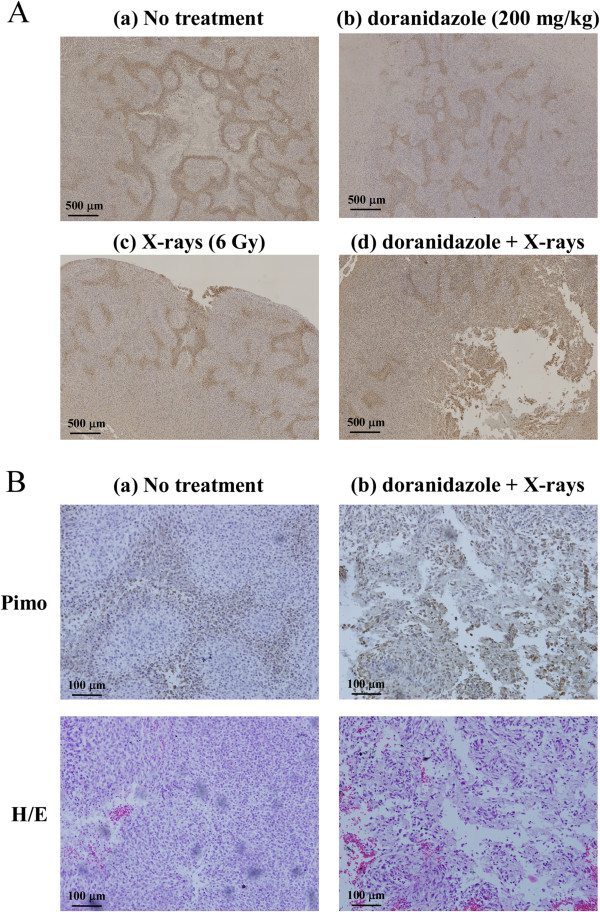
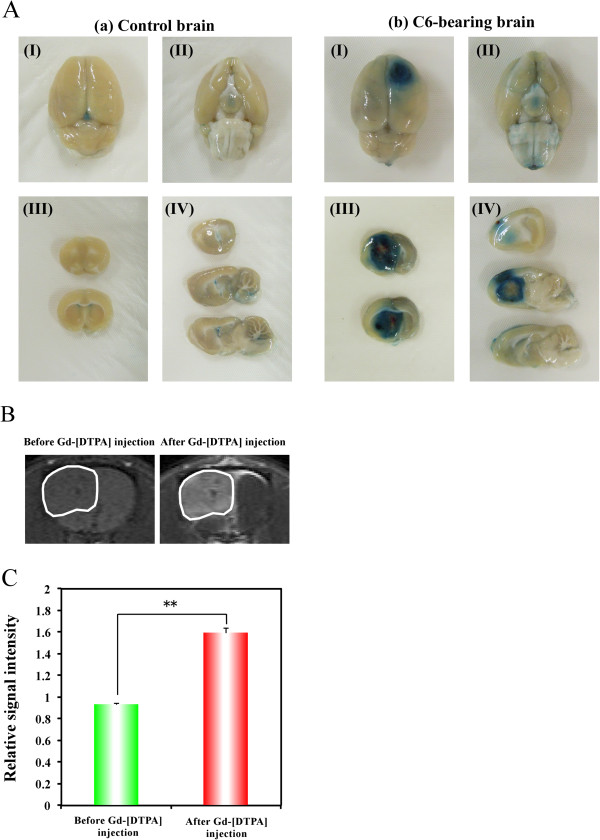
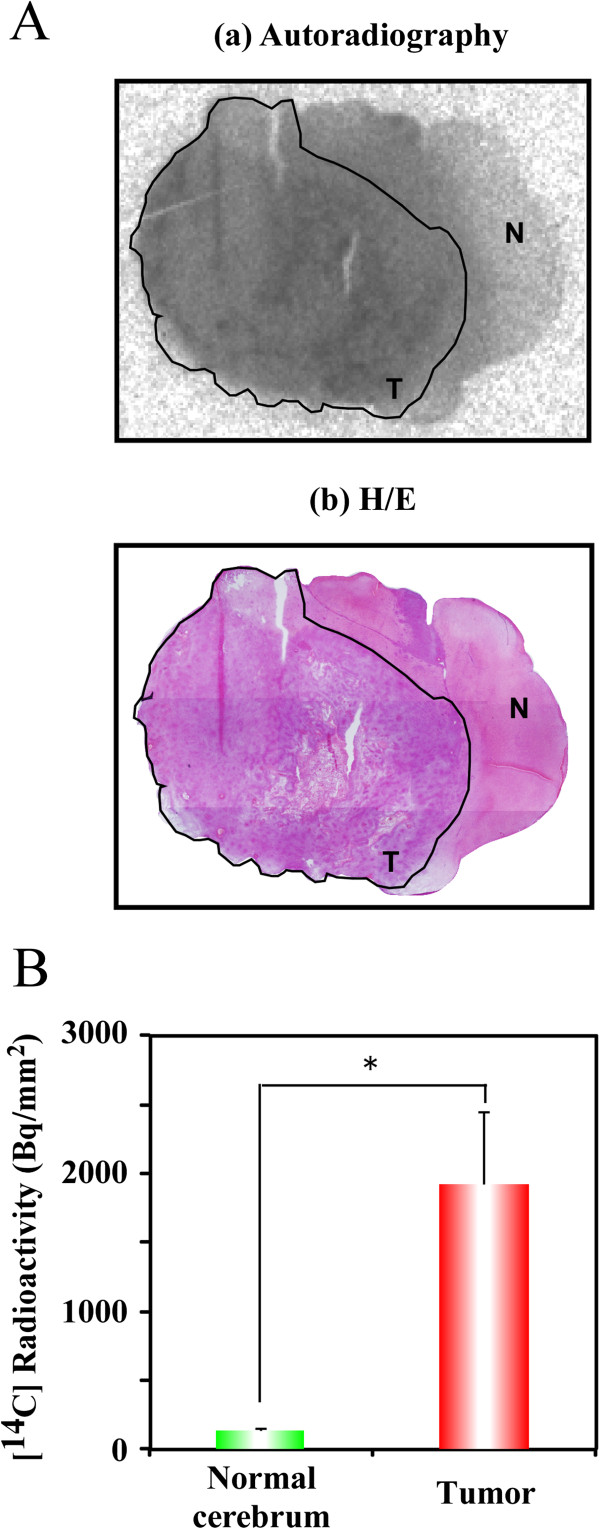
Doranidazole significantly enhanced radiation-induced reproductive cell death in vitro under hypoxia, but not under normoxia. The BBB in C6-bearing brain was completely disrupted and [(14)C]-doranidazole specifically penetrated the tumor regions. Combined treatment with X-irradiation and doranidazole significantly inhibited the growth of C6 gliomas.
Our results revealed that BBB disruption in glioma enables BBB-impermeable radiosensitizers to penetrate and distribute in the target region. This study is the first to propose that in malignant glioma the administration of hydrophilic hypoxic radiosensitizers could be a potent strategy for improving the clinical outcome of radiotherapy without side effects.
神经胶质瘤是一种难治性癌症,对电离辐射具有高度抗性。这种放射抗性部分归因于缺氧区域的存在,该区域在高级恶性神经胶质瘤中广泛存在。在本研究中,我们使用 C6 大鼠神经胶质瘤模型评估了缺氧细胞敏化剂地拉佐胺(PR-350)的有效性,重点关注血脑屏障(BBB)的状态。
通过集落形成试验确定大鼠 C6 神经胶质瘤细胞系中的生殖细胞死亡。建立颅内 C6 神经胶质瘤模型进行体内实验。为了研究 C6 神经胶质瘤脑内 BBB 的状态,我们进行了伊文思蓝外渗试验。进行 [(14)C]-地拉佐胺的放射自显影以检查地拉佐胺在胶质瘤肿瘤中的分布。采用 T2 加权 MRI 检查 X 射线照射和/或地拉佐胺对肿瘤生长的影响。
地拉佐胺在缺氧条件下显著增强了体外辐射诱导的生殖细胞死亡,但在常氧条件下没有。C6 荷瘤脑中的 BBB 完全破坏,[(14)C]-地拉佐胺特异性穿透肿瘤区域。X 射线照射和地拉佐胺联合治疗显著抑制了 C6 神经胶质瘤的生长。
我们的结果表明,胶质瘤中的 BBB 破坏使 BBB 不可渗透的放射增敏剂能够穿透并分布在靶区。这项研究首次提出,在恶性神经胶质瘤中,亲水性缺氧放射增敏剂的给药可能是一种提高放疗临床效果而无副作用的有效策略。