Department of Radiology, The University of Chicago Chicago, IL, USA.
Front Physiol. 2013 Mar 6;4:11. doi: 10.3389/fphys.2013.00011. eCollection 2013.
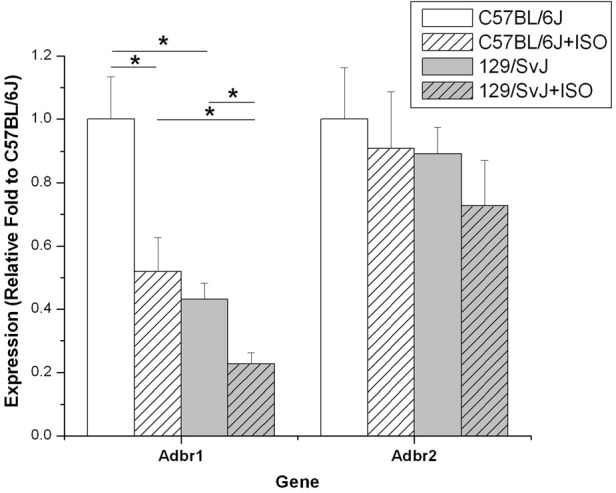
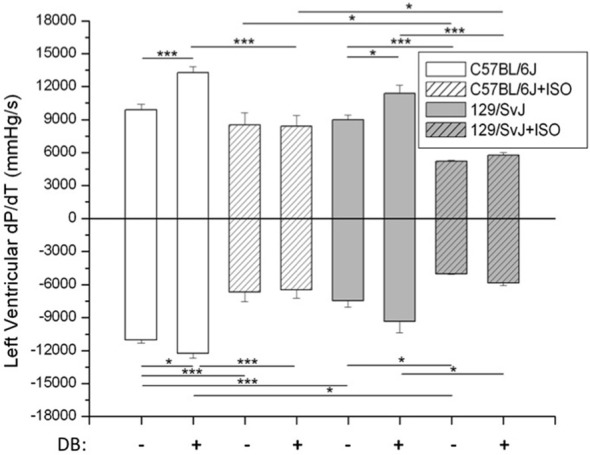
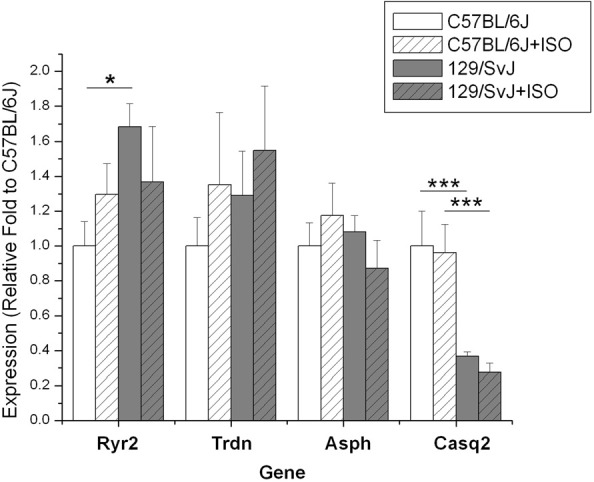
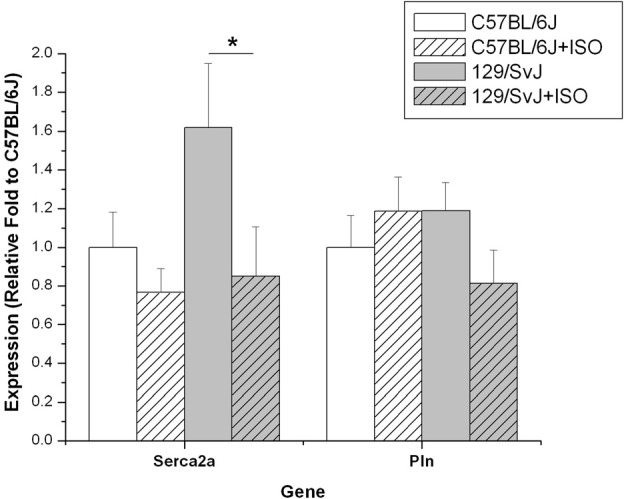
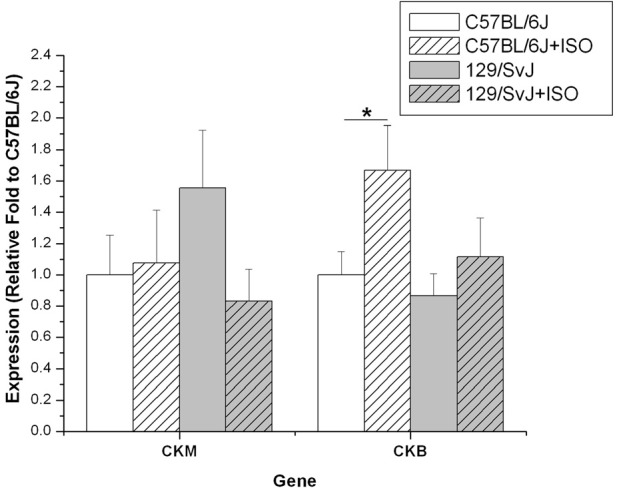
Genetic variability has a profound effect on the development of cardiac hypertrophy in response to stress. Consequently, using a variety of inbred mouse strains with known genetic profiles may be powerful models for studying the response to cardiovascular stress. To explore this approach we looked at male C57BL/6J and 129/SvJ mice. Hemodynamic analyses of left ventricular pressures (LVPs) indicated significant differences in 129/SvJ and C57BL/6J mice that implied altered Ca(2+) handling. Specifically, 129/SvJ mice demonstrated reduced rates of relaxation and insensitivity to dobutamine (Db). We hypothesized that altered expression of genes controlling the influx and efflux of Ca(2+) from the sarcoplasmic reticulum (SR) was responsible and investigated the expression of several genes involved in maintaining the intracellular and sarcoluminal Ca(2+) concentration using quantitative real-time PCR analyses (qRT-PCR). We observed significant differences in baseline gene expression as well as different responses in expression to isoproterenol (ISO) challenge. In untreated control animals, 129/SvJ mice expressed 1.68× more ryanodine receptor 2(Ryr2) mRNA than C57BL/6J mice but only 0.37× as much calsequestrin 2 (Casq2). After treatment with ISO, sarco(endo)plasmic reticulum Ca(2+)-ATPase(Serca2) expression was reduced nearly two-fold in 129/SvJ while expression in C57BL/6J was stable. Interestingly, β (1) adrenergic receptor(Adrb1) expression was lower in 129/SvJ compared to C57BL/6J at baseline and lower in both strains after treatment. Metabolically, the brain isoform of creatine kinase (Ckb) was up-regulated in response to ISO in C57BL/6J but not in 129/SvJ. These data suggest that the two strains of mice regulate Ca(2+) homeostasis via different mechanisms and may be useful in developing personalized therapies in human patients.
遗传变异性对心脏应对压力时发生肥大的发展有着深远的影响。因此,使用具有已知遗传特征的各种近交系小鼠可能是研究心血管应激反应的强大模型。为了探索这种方法,我们观察了雄性 C57BL/6J 和 129/SvJ 小鼠。左心室压力(LVPs)的血流动力学分析表明 129/SvJ 和 C57BL/6J 小鼠之间存在显著差异,这暗示了 Ca(2+)处理的改变。具体而言,129/SvJ 小鼠表现出舒张率降低和对多巴酚丁胺(Db)不敏感。我们假设控制肌浆网(SR)内 Ca(2+)流入和流出的基因表达的改变是负责的,并使用定量实时 PCR 分析(qRT-PCR)研究了参与维持细胞内和肌浆 Ca(2+)浓度的几个基因的表达。我们观察到基线基因表达存在显著差异,以及对异丙肾上腺素(ISO)挑战的反应不同。在未处理的对照动物中,129/SvJ 小鼠的肌浆网 2 型ryanodine 受体(Ryr2)mRNA 表达量比 C57BL/6J 小鼠高 1.68 倍,但肌浆网 2 型钙结合蛋白(Casq2)的表达量仅为 C57BL/6J 小鼠的 0.37 倍。用 ISO 处理后,129/SvJ 中的肌浆(内质)网 Ca(2+)-ATP 酶(Serca2)表达几乎降低了两倍,而 C57BL/6J 中的表达则保持稳定。有趣的是,与 C57BL/6J 相比,β(1)肾上腺素能受体(Adrb1)在 129/SvJ 中的表达在基线时较低,并且在两种品系中处理后表达均较低。代谢上,肌酸激酶同工酶(Ckb)的脑型在 C57BL/6J 中对 ISO 有反应而上调,但在 129/SvJ 中则没有。这些数据表明,两种品系的小鼠通过不同的机制调节 Ca(2+)稳态,并且可能有助于开发人类患者的个性化治疗方法。