Division of Biochemistry, University of Missouri Columbia, MO, USA ; Christopher S. Bond Life Sciences Center, University of Missouri Columbia, MO, USA ; Interdisciplinary Plant Group, University of Missouri Columbia, MO, USA.
Front Plant Sci. 2013 Mar 6;4:33. doi: 10.3389/fpls.2013.00033. eCollection 2013.
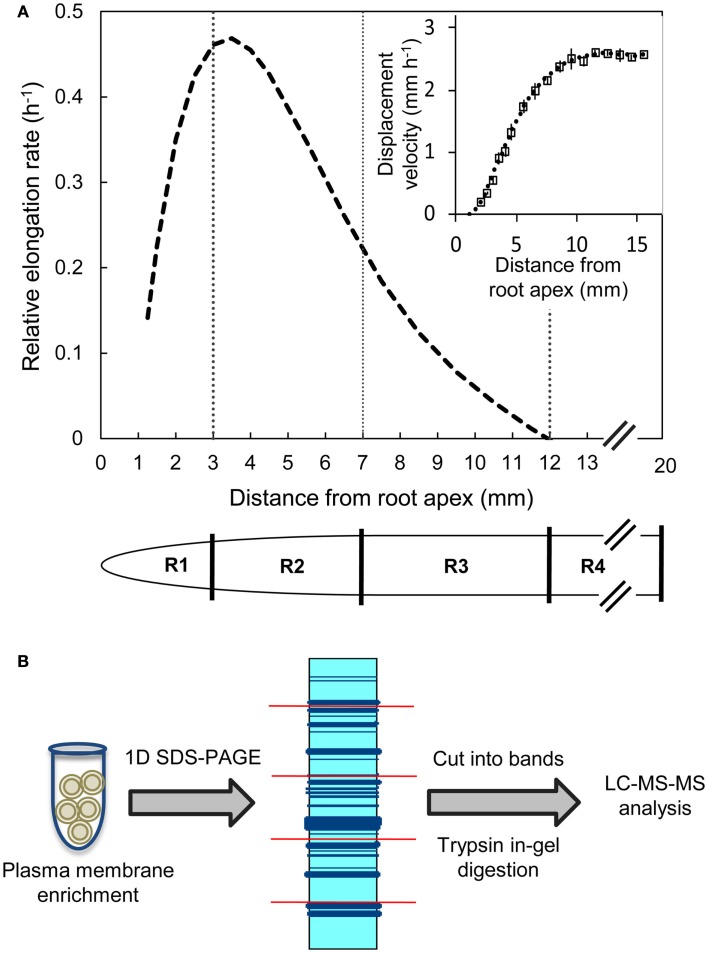
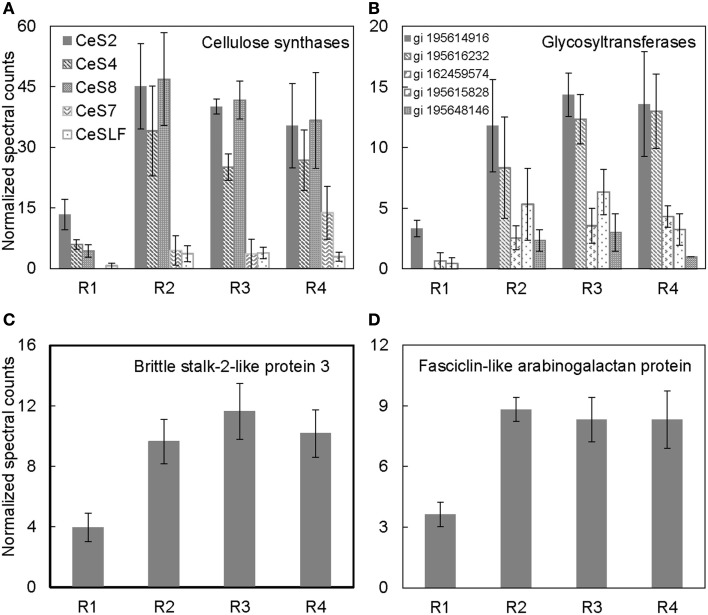
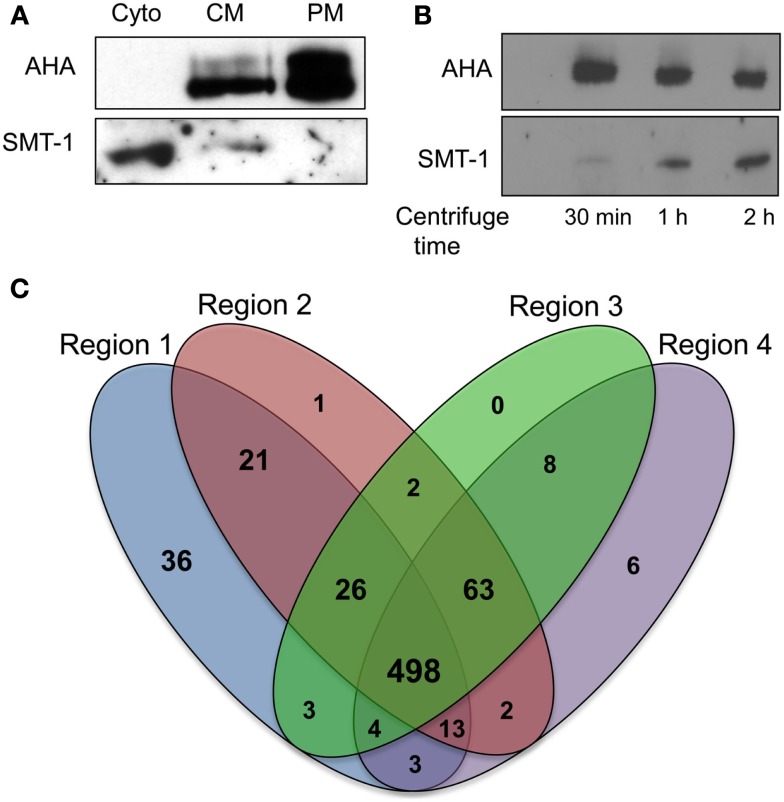
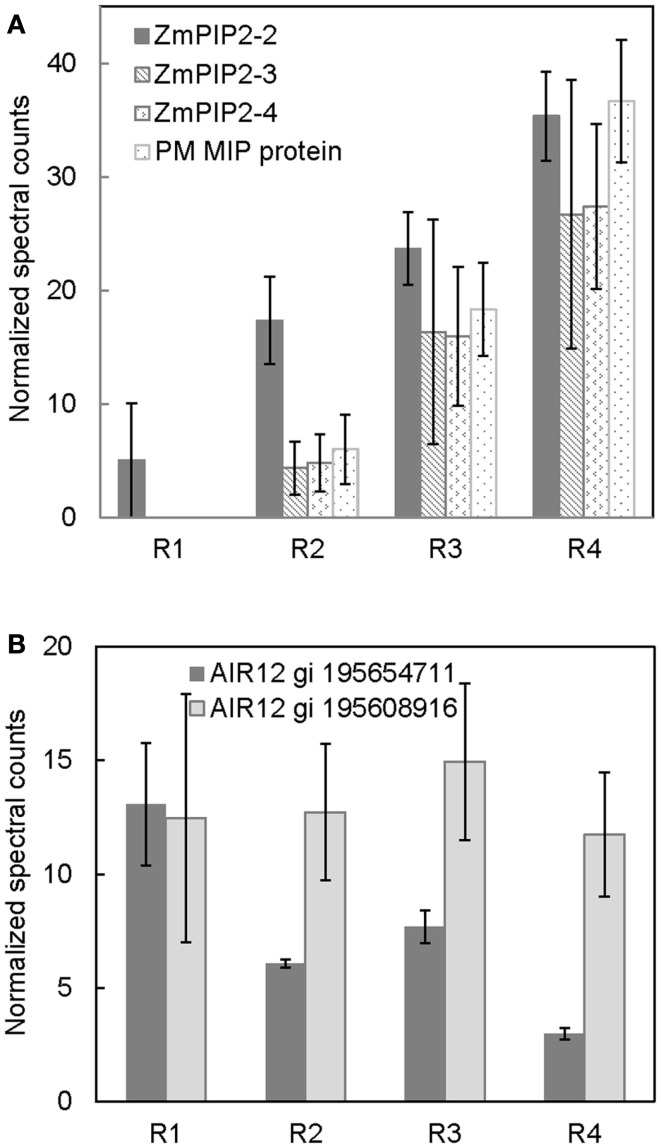
Within the growth zone of the maize primary root, there are well-defined patterns of spatial and temporal organization of cell division and elongation. However, the processes underlying this organization remain poorly understood. To gain additional insights into the differences amongst the defined regions, we performed a proteomic analysis focusing on fractions enriched for plasma membrane (PM) proteins. The PM is the interface between the plant cell and the apoplast and/or extracellular space. As such, it is a key structure involved in the exchange of nutrients and other molecules as well as in the integration of signals that regulate growth and development. Despite the important functions of PM-localized proteins in mediating these processes, a full understanding of dynamic changes in PM proteomes is often impeded by low relative concentrations relative to total proteins. Using a relatively simple strategy of treating microsomal fractions with Brij-58 detergent to enrich for PM proteins, we compared the developmental distribution of proteins within the root growth zone which revealed a number of previously known as well as novel proteins with interesting patterns of abundance. For instance, the quantitative proteomic analysis detected a gradient of PM aquaporin proteins similar to that previously reported using immunoblot analyses, confirming the veracity of this strategy. Cellulose synthases increased in abundance with increasing distance from the root apex, consistent with expected locations of cell wall deposition. The similar distribution pattern for Brittle-stalk-2-like protein implicates that this protein may also have cell wall related functions. These results show that the simplified PM enrichment method previously demonstrated in Arabidopsis can be successfully applied to completely unrelated plant tissues and provide insights into differences in the PM proteome throughout growth and development zones of the maize primary root.
在玉米主根的生长区,细胞分裂和伸长的空间和时间组织具有明确的模式。然而,这种组织背后的过程仍然知之甚少。为了更深入地了解定义区域之间的差异,我们进行了一项蛋白质组学分析,重点关注富含质膜(PM)蛋白的部分。PM 是植物细胞与质外体和/或细胞外空间的界面。因此,它是参与调节生长和发育的营养物质和其他分子交换以及信号整合的关键结构。尽管 PM 定位蛋白在介导这些过程中具有重要功能,但由于其相对浓度相对于总蛋白较低,因此通常会阻碍对 PM 蛋白质组动态变化的全面理解。我们使用相对简单的策略,用 Brij-58 去污剂处理微粒体部分以富集 PM 蛋白,比较了根生长区发育过程中蛋白质的分布,发现了许多以前已知的以及具有有趣丰度模式的新蛋白。例如,定量蛋白质组学分析检测到 PM 水通道蛋白的梯度类似于以前使用免疫印迹分析报告的梯度,证实了该策略的真实性。纤维素合酶的丰度随着与根尖的距离增加而增加,这与细胞壁沉积的预期位置一致。脆性茎-2 样蛋白的相似分布模式表明,该蛋白也可能具有与细胞壁相关的功能。这些结果表明,以前在拟南芥中证明的简化 PM 富集方法可以成功应用于完全不相关的植物组织,并深入了解玉米主根生长和发育区 PM 蛋白质组的差异。