The Salk Institute for Biological Studies La Jolla, CA, USA.
Front Syst Neurosci. 2013 Mar 6;7:2. doi: 10.3389/fnsys.2013.00002. eCollection 2013.
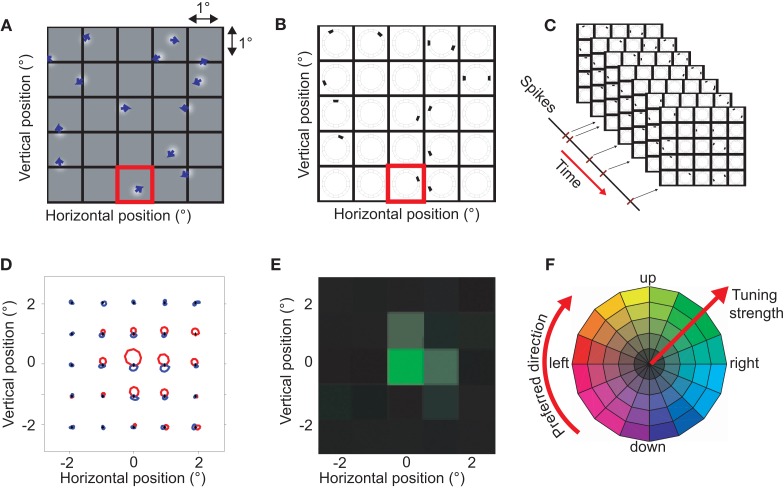
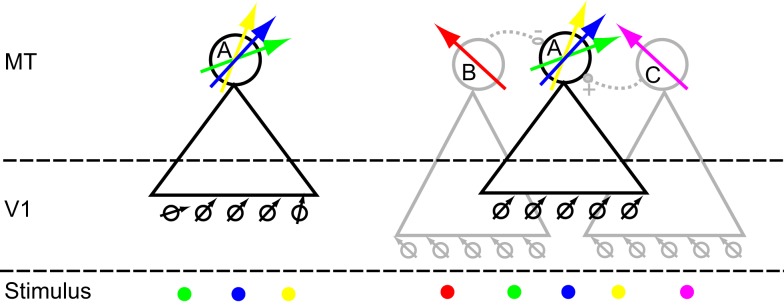
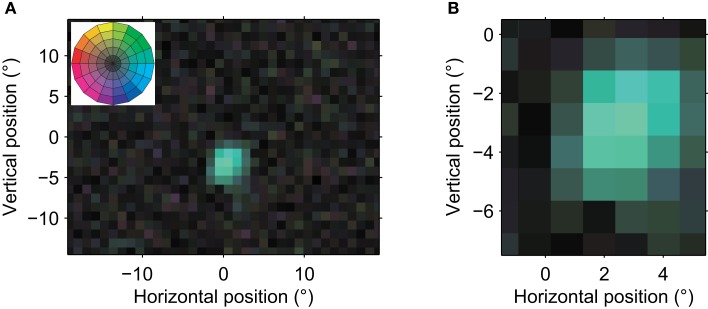
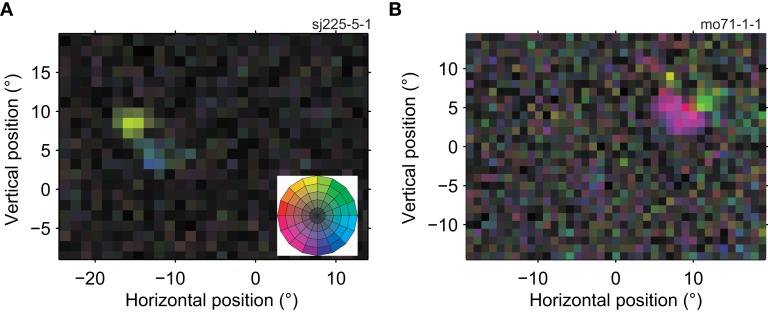
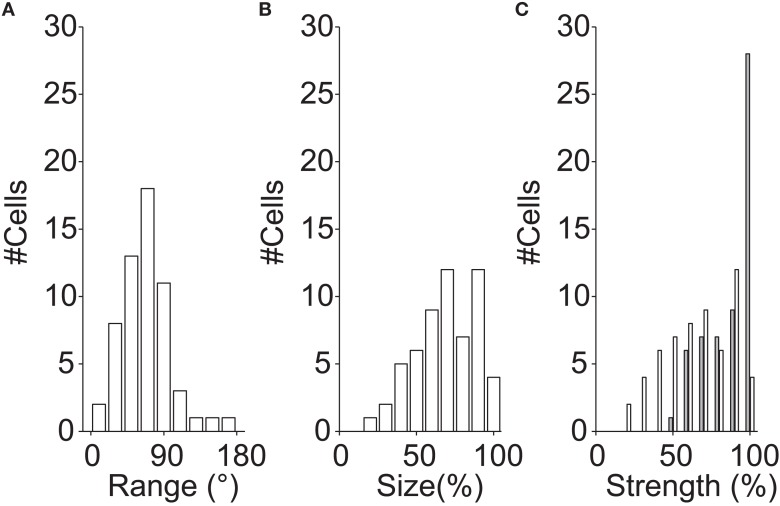
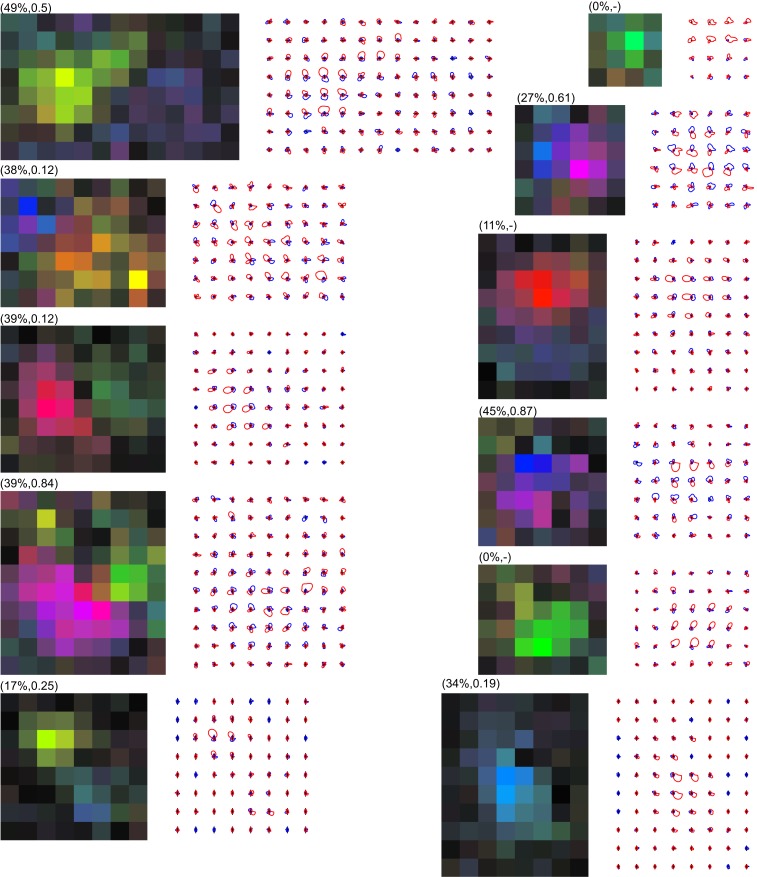
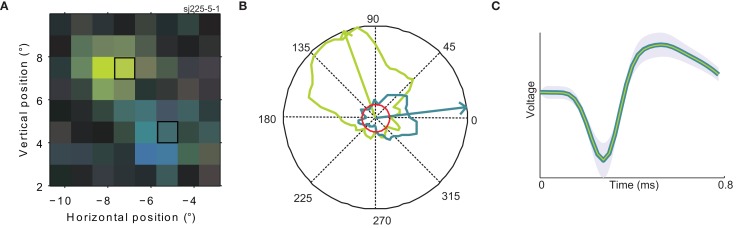
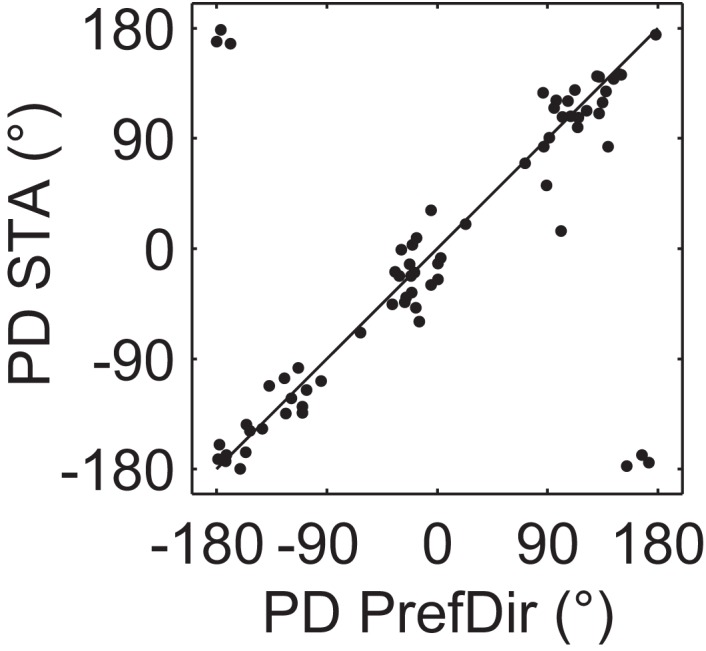
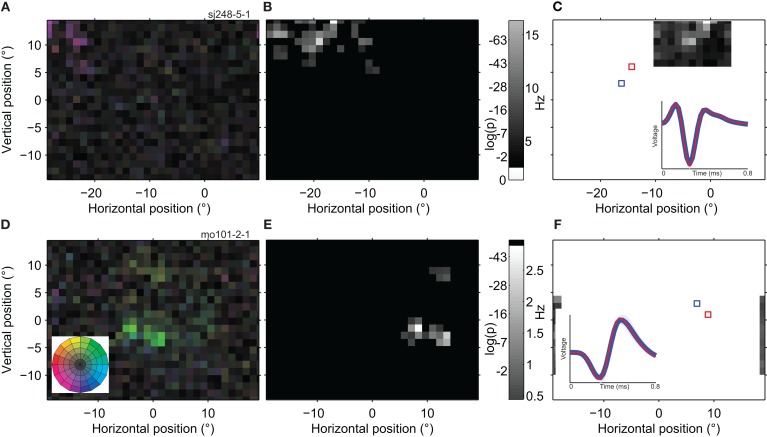
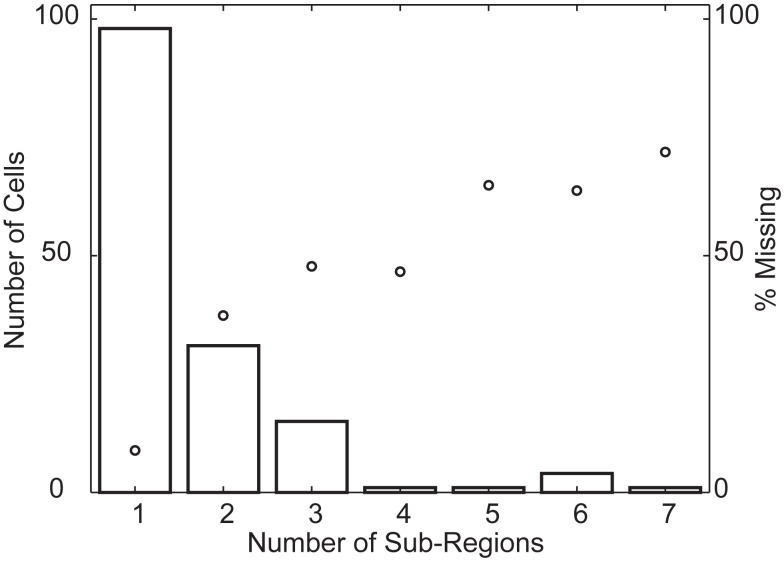
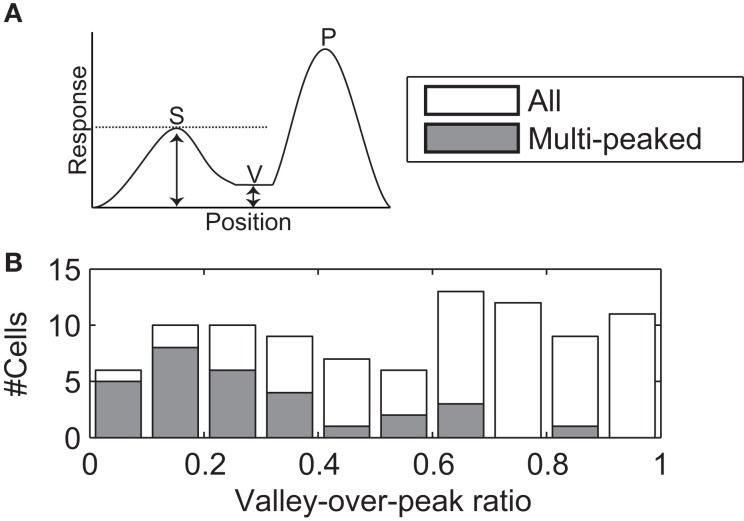
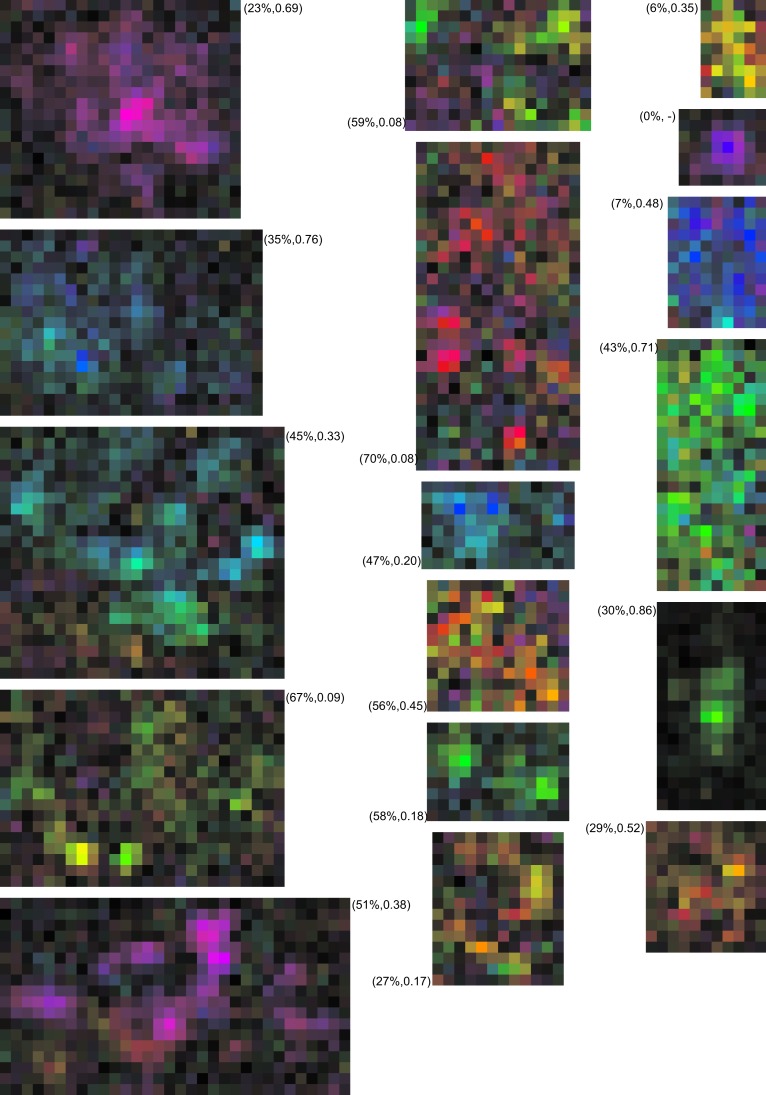
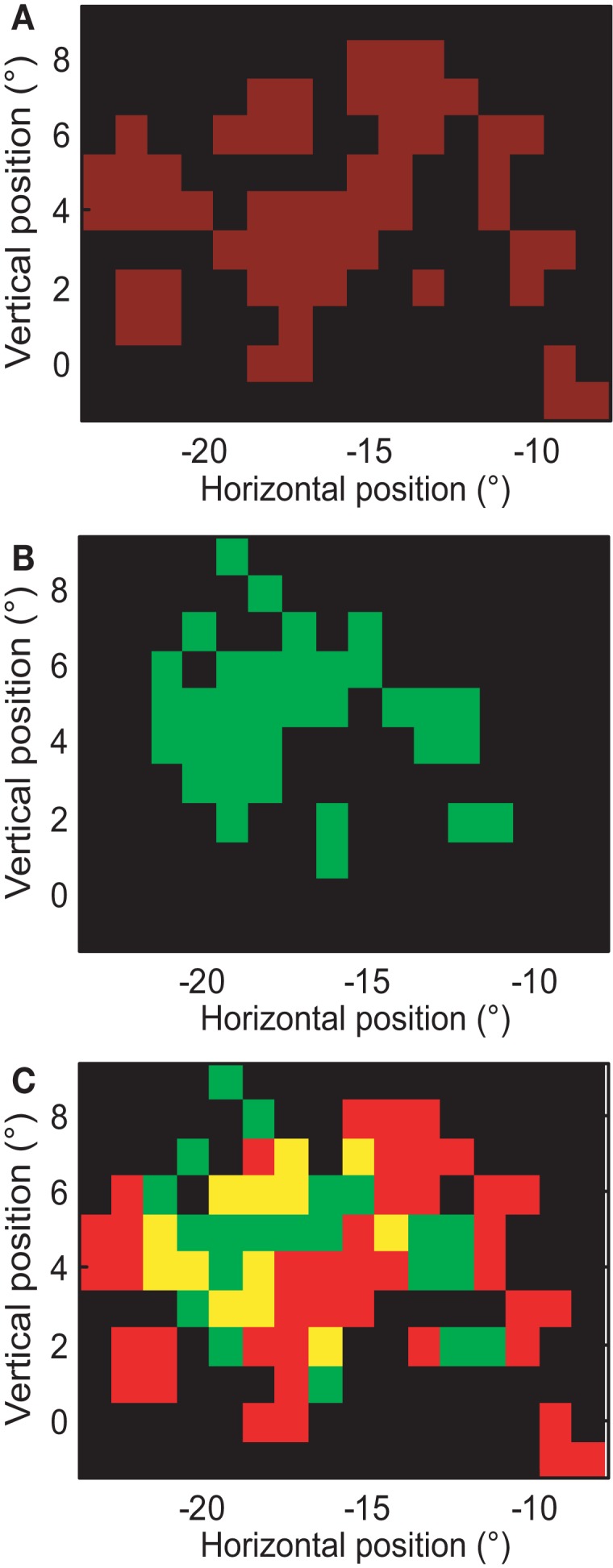
Neurons in the middle temporal area (MT) are often viewed as motion detectors that prefer a single direction of motion in a single region of space. This assumption plays an important role in our understanding of visual processing, and models of motion processing in particular. We used extracellular recordings in area MT of awake, behaving monkeys (M. mulatta) to test this assumption with a novel reverse correlation approach. Nearly half of the MT neurons in our sample deviated significantly from the classical view. First, in many cells, direction preference changed with the location of the stimulus within the receptive field. Second, the spatial response profile often had multiple peaks with apparent gaps in between. This shows that visual motion analysis in MT has access to motion detectors that are more complex than commonly thought. This complexity could be a mere byproduct of imperfect development, but can also be understood as the natural consequence of the non-linear, recurrent interactions among laterally connected MT neurons. An important direction for future research is to investigate whether these in homogeneities are advantageous, how they can be incorporated into models of motion detection, and whether they can provide quantitative insight into the underlying effective connectivity.
颞中区(MT)的神经元通常被视为运动检测器,它们在空间的单一区域中偏爱单一的运动方向。这一假设在我们对视觉处理的理解中,尤其是在运动处理模型中,起着重要的作用。我们使用清醒、行为猴子(M. mulatta)的 MT 区的细胞外记录,使用一种新颖的反向相关方法来检验这一假设。在我们的样本中,近一半的 MT 神经元明显偏离了经典观点。首先,在许多细胞中,方向偏好随刺激在感受野内的位置而变化。其次,空间响应谱通常具有多个峰值,峰之间有明显的间隙。这表明 MT 中的视觉运动分析可以访问比通常认为的更复杂的运动检测器。这种复杂性可能仅仅是不完善发育的副产品,但也可以被理解为横向连接的 MT 神经元之间的非线性、递归相互作用的自然结果。未来研究的一个重要方向是研究这些同质性是否有利,如何将它们纳入运动检测模型,以及它们是否可以为潜在的有效连接提供定量的见解。