School of Chemistry, University of St Andrews, St Andrews, Fife, KY16 9ST, UK.
Sci Rep. 2013;3:1504. doi: 10.1038/srep01504.
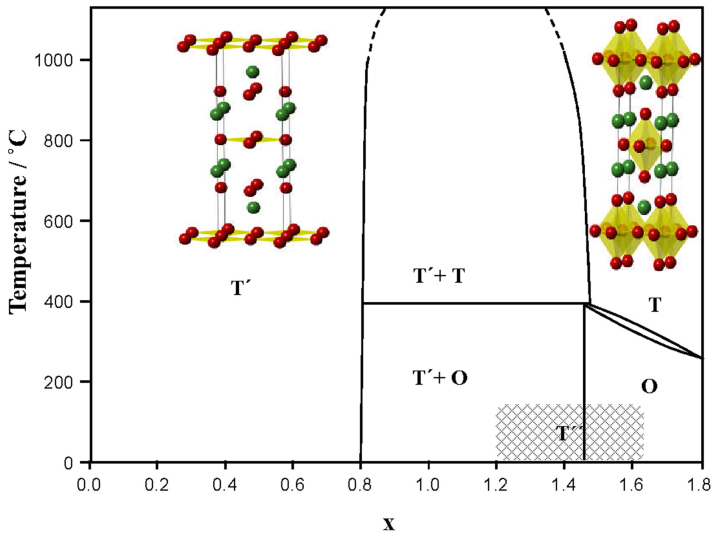
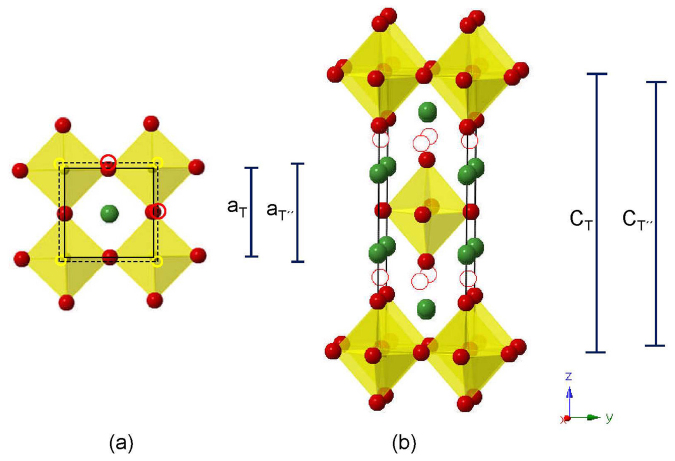
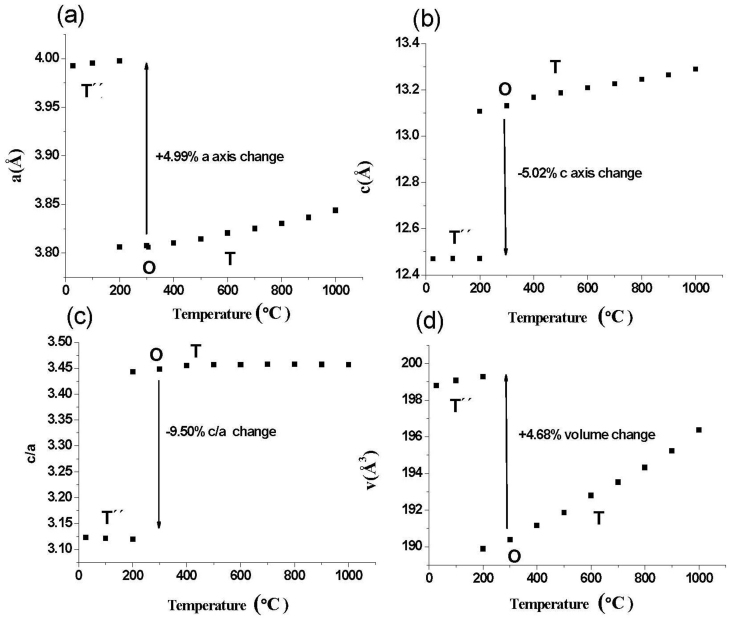
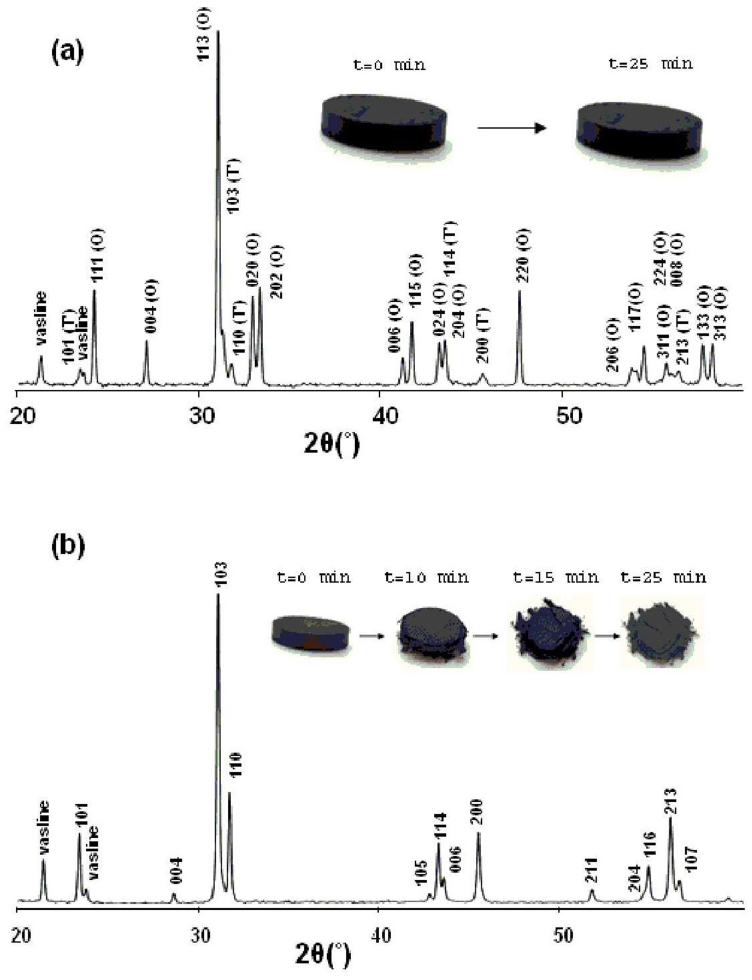
Lanthanide cuprates of formula Ln₂CuO₄ exist in two principal forms, T and T' which are renowned for their exhibition at low temperatures of hole and electronic types of superconductivity, respectively. These structures differ primarily in the arrangement of oxygen between the perovskite layers and also in nature of the copper oxygen planes. The Cu-O distance in the T structure (~1.90 Å) is much shorter than the T' (1.97Å), reflecting a transition between partial Cu⁺and partial Cu³⁺ character. In seeking to find compositions that bridge these two structure/electron carrier types, we observed the transition from a T structure to a T' type structure, resulting in the metastable form T″ with slightly larger volume but similar character to T'. This transition from T to T″ is associated with 5% increase in a and a 5% decrease in c parameters of the tetragonal unit cells, which results in disintegration of ceramic bodies.
镧系铜酸盐的分子式为 Ln₂CuO₄,存在两种主要形式,即 T 和 T',它们以低温下分别展示空穴型和电子型超导性而闻名。这些结构主要在钙钛矿层之间氧的排列方式以及铜氧层的性质上有所不同。T 结构中的 Cu-O 距离(~1.90 Å)比 T'(1.97Å)短得多,反映了 Cu⁺和 Cu³⁺部分特性之间的转变。在试图寻找连接这两种结构/载流子类型的组成时,我们观察到从 T 结构到 T'结构的转变,导致亚稳形式 T″的形成,其体积略大,但与 T'具有相似的性质。这种从 T 到 T″的转变与四方晶胞的 a 参数增加 5%和 c 参数减少 5%有关,这导致陶瓷体的解体。