Department of Neurology, Chinese People's Liberation Army General Hospital, Beijing, China.
PLoS One. 2013;8(3):e58442. doi: 10.1371/journal.pone.0058442. Epub 2013 Mar 14.
Sporadic Creutzfeldt-Jakob disease (sCJD) is a fatal and transmissible neurodegenerative disorder. However, no studies have reported Chinese specific characteristics of sCJD. We aimed to identify differences in sCJD between Chinese patients and patients from other countries.
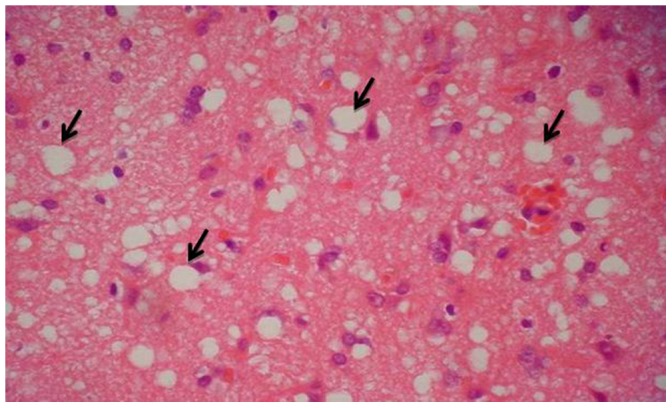
The data from 57 Chinese sCJD patients were retrospectively analyzed, including demographic data, clinical manifestations, laboratory examinations, electroencephalograms (EEGs), diffusion-weighted imaging (DWI) scans, positron emission tomography (PET) scans, and pathological results.
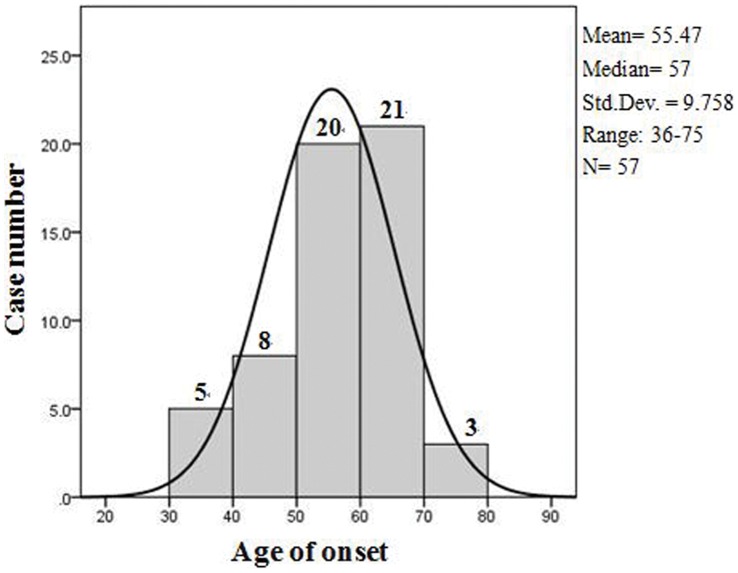
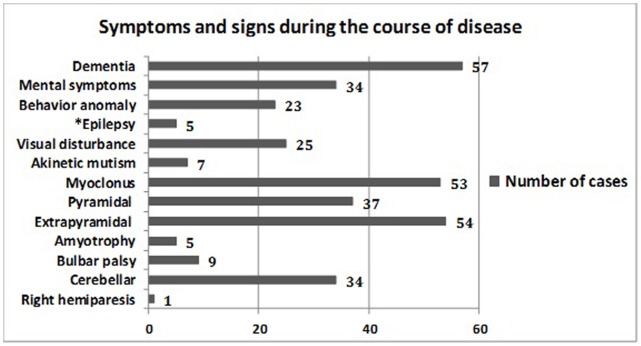
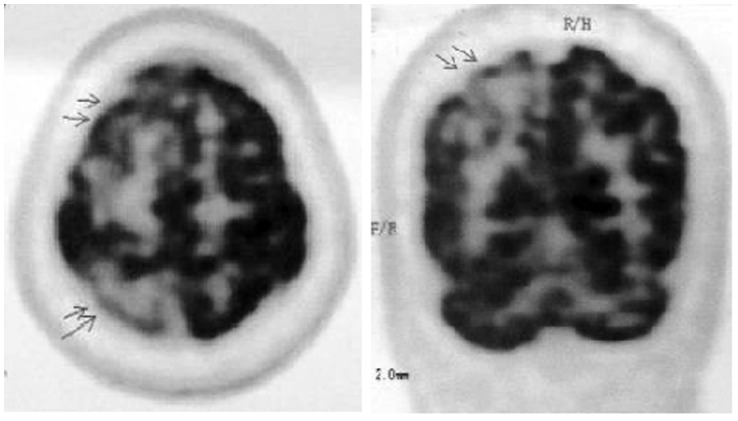
The disease was pathologically confirmed in 11 patients. 39 cases were diagnosed as probable sCJD, and 7 were possible. Of the total cases, 33 were male, and 24 were female. The onset age ranged from 36 to 75 years (mean: 55.5, median: 57). Disease onset before the age of 60 occurred in 57.9% of patients. The disease duration from onset to death ranged 5-22 months (mean: 11.6, median: 11), and 51.9% of patients died 7 to 12 months after disease onset. The majority of patients presented with sub-acute onset with progressive dementia. 3 of the 9 patients who took 14-3-3 protein analysis had positive results (33.3%). The sensitivity of EEG was 79.6% (43/54). For DWI and PET examinations, the sensitivities were 94% (47/50) and 94.1% (16/17), respectively. In seven patients who did not show typical hyper-intensities on the first DWI examination, abnormalities of hypo-metabolism in the cerebral cortex were clearly detected by PET. In 13 out of the 17 patients, PET detected extra abnormal regions in addition to the hyper-intense areas observed in DWI.
This is the first study to indicate that Chinese sCJD patients have a much earlier onset age and a longer disease duration than other populations, which is most likely related to racial differences. The longer disease duration may also be a probable characteristic of Asian populations. PET had high sensitivity for the diagnosis of sCJD.
散发性克雅氏病(sCJD)是一种致命的可传播神经退行性疾病。然而,尚无研究报告 sCJD 在中国人群中的具体特征。我们旨在确定中国患者与其他国家患者 sCJD 之间的差异。
回顾性分析 57 例中国 sCJD 患者的临床资料,包括人口统计学数据、临床表现、实验室检查、脑电图(EEG)、弥散加权成像(DWI)扫描、正电子发射断层扫描(PET)扫描和病理结果。
11 例患者经病理证实。39 例诊断为可能 sCJD,7 例诊断为可能 sCJD。总病例中,男性 33 例,女性 24 例。发病年龄 36-75 岁,平均 55.5 岁,中位数 57 岁。发病年龄<60 岁者占 57.9%。发病至死亡时间 5-22 个月,平均 11.6 个月,发病后 7-12 个月死亡者占 51.9%。多数患者亚急性起病,进行性痴呆。9 例行 14-3-3 蛋白分析患者中 3 例阳性(33.3%)。脑电图敏感性为 79.6%(43/54)。DWI 和 PET 检查敏感性分别为 94%(47/50)和 94.1%(16/17)。7 例首次 DWI 检查未见典型高信号患者,PET 清晰显示皮质代谢低下异常。17 例患者中 13 例 PET 除 DWI 观察到的高信号区外,还检测到额外异常区域。
这是首例表明中国 sCJD 患者发病年龄早于其他人群,病程长于其他人群的研究,这很可能与种族差异有关。较长的病程也可能是亚洲人群的一个特征。PET 对 sCJD 的诊断具有较高的敏感性。