Department of Bioscience, Biotechnologies and Biopharmaceutics and Center of Excellence in Comparative Genomics (CEGBA), University of Bari, Bari, Italy.
PLoS One. 2013;8(3):e58712. doi: 10.1371/journal.pone.0058712. Epub 2013 Mar 8.
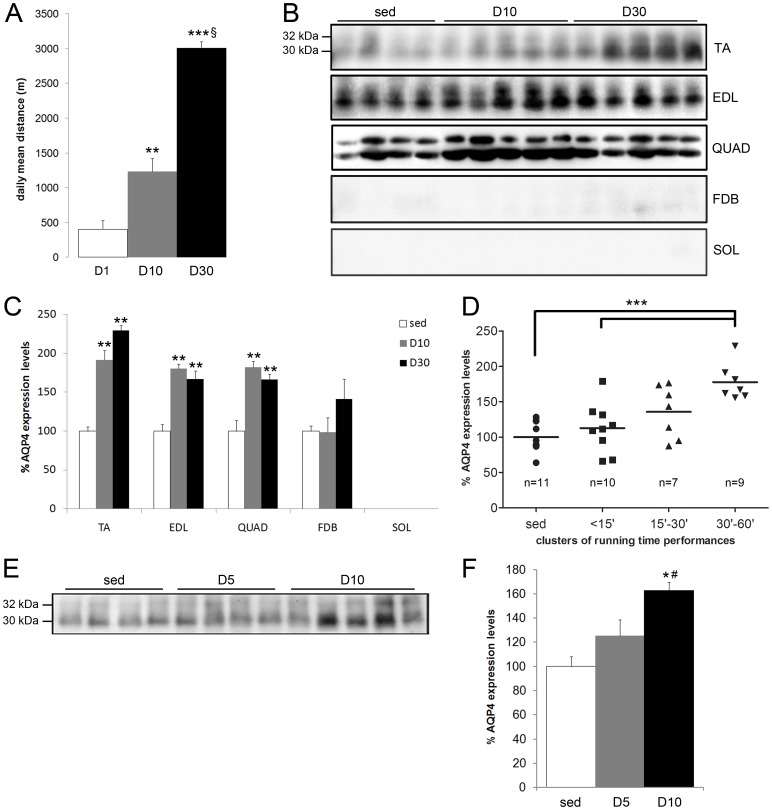
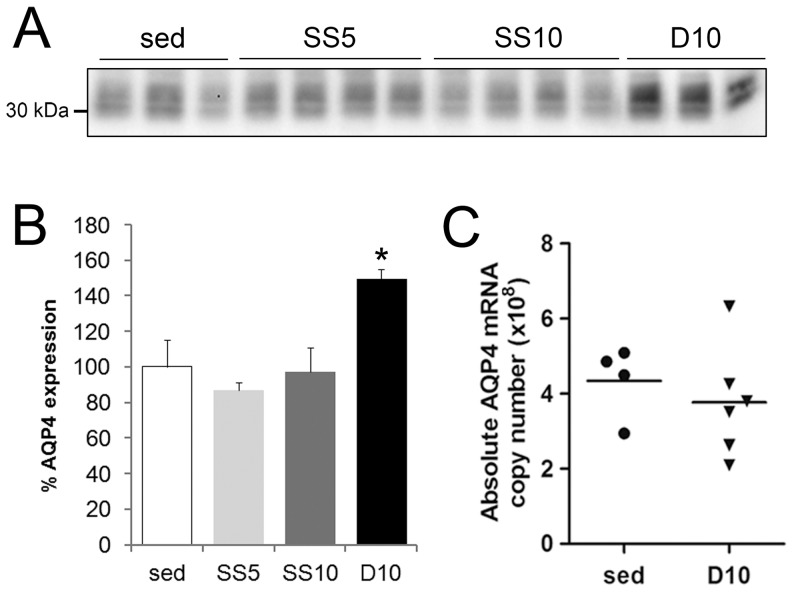
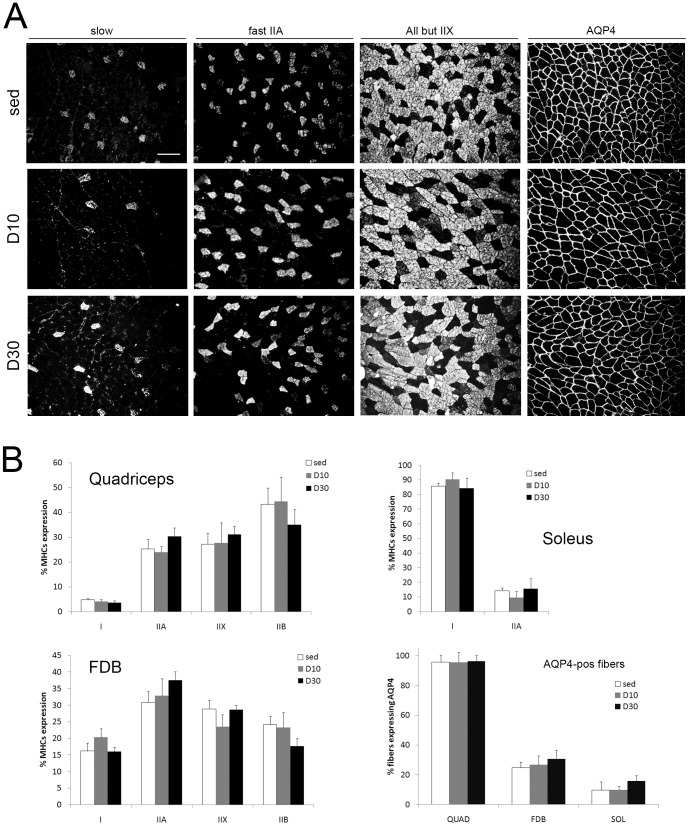
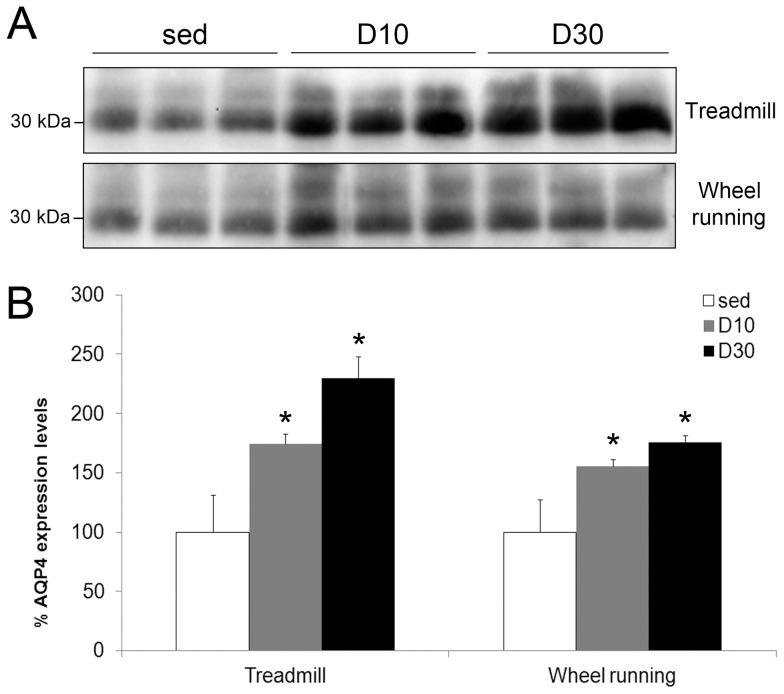
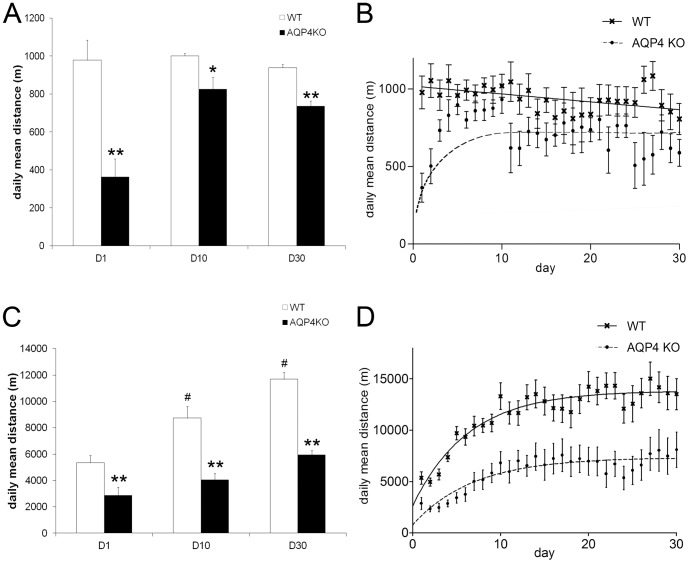
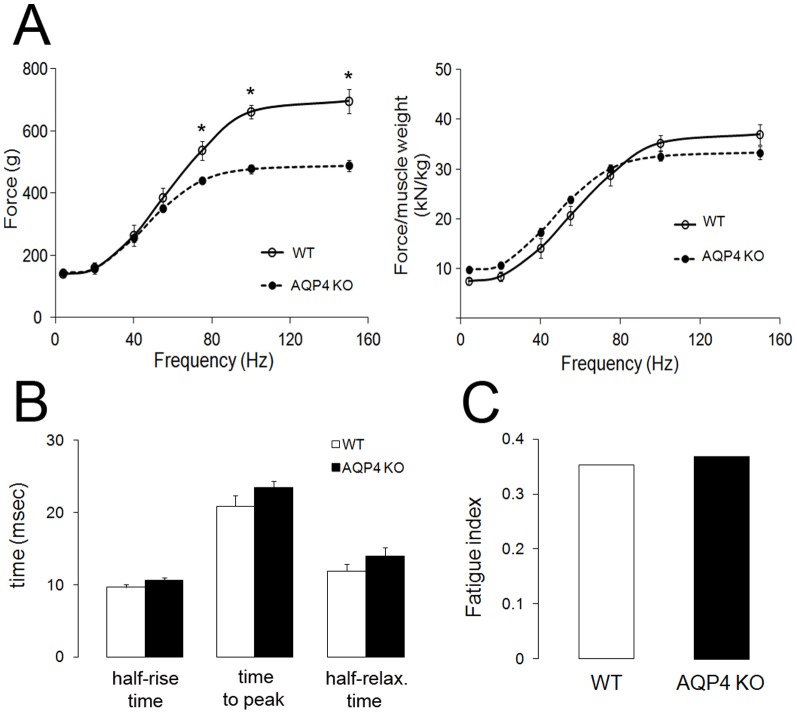
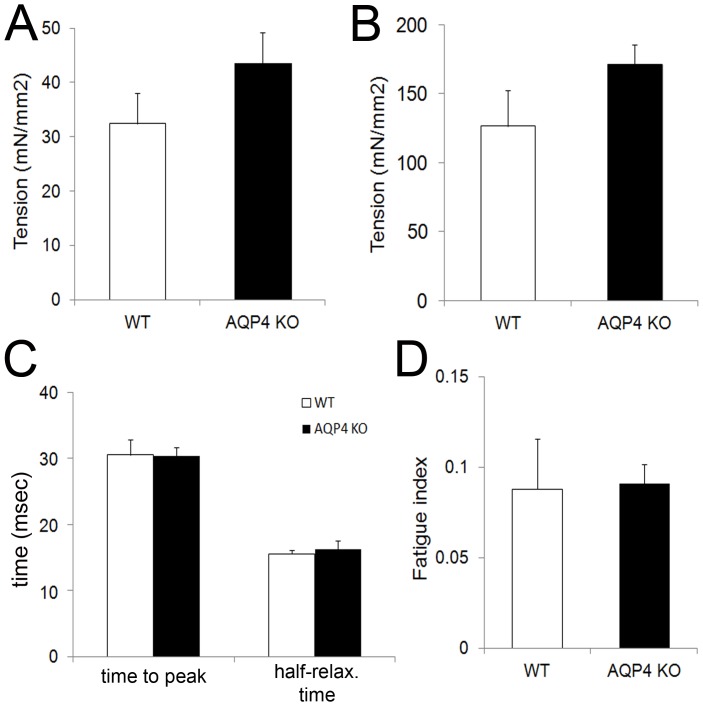
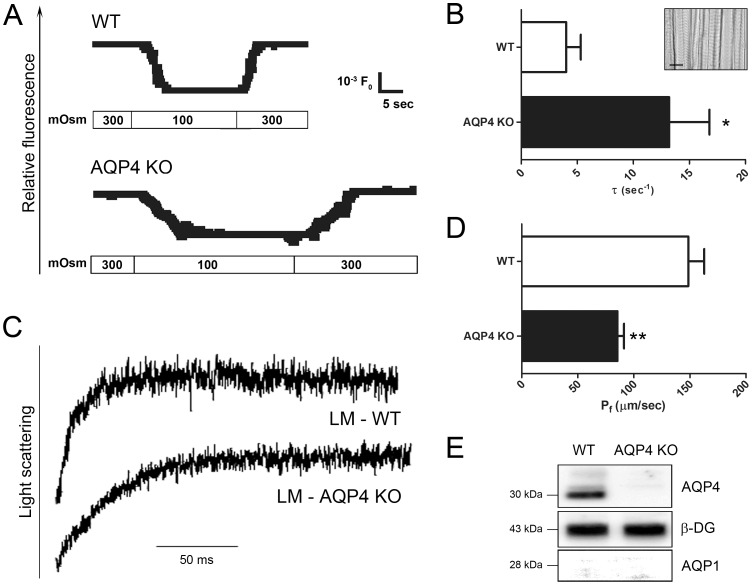
In this study we assess the functional role of Aquaporin-4 (AQP4) in the skeletal muscle by analyzing whether physical activity modulates AQP4 expression and whether the absence of AQP4 has an effect on osmotic behavior, muscle contractile properties, and physical activity. To this purpose, rats and mice were trained on the treadmill for 10 (D10) and 30 (D30) days and tested with exercise to exhaustion, and muscles were used for immunoblotting, RT-PCR, and fiber-type distribution analysis. Taking advantage of the AQP4 KO murine model, functional analysis of AQP4 was performed on dissected muscle fibers and sarcolemma vesicles. Moreover, WT and AQP4 KO mice were subjected to both voluntary and forced activity. Rat fast-twitch muscles showed a twofold increase in AQP4 protein in D10 and D30 rats compared to sedentary rats. Such increase positively correlated with the animal performance, since highest level of AQP4 protein was found in high runner rats. Interestingly, no shift in muscle fiber composition nor an increase in AQP4-positive fibers was found. Furthermore, no changes in AQP4 mRNA after exercise were detected, suggesting that post-translational events are likely to be responsible for AQP4 modulation. Experiments performed on AQP4 KO mice revealed a strong impairment in osmotic responses as well as in forced and voluntary activities compared to WT mice, even though force development amplitude and contractile properties were unvaried. Our findings definitively demonstrate the physiological role of AQP4 in supporting muscle contractile activity and metabolic changes that occur in fast-twitch skeletal muscle during prolonged exercise.
在这项研究中,我们通过分析体力活动是否调节水通道蛋白 4(AQP4)的表达以及 AQP4 缺失是否对渗透行为、肌肉收缩特性和体力活动产生影响,来评估 AQP4 在骨骼肌中的功能作用。为此,我们对大鼠和小鼠进行了 10 天(D10)和 30 天(D30)的跑步机训练,并进行了运动至力竭测试,同时还对肌肉进行了免疫印迹、RT-PCR 和纤维类型分布分析。利用 AQP4 KO 小鼠模型,我们对分离的肌肉纤维和肌浆膜囊泡进行了 AQP4 的功能分析。此外,我们还对 WT 和 AQP4 KO 小鼠进行了自愿和强制活动。与静坐大鼠相比,大鼠快肌在 D10 和 D30 大鼠中 AQP4 蛋白增加了两倍。这种增加与动物的表现呈正相关,因为在高跑步大鼠中发现了最高水平的 AQP4 蛋白。有趣的是,我们没有发现肌肉纤维组成的变化,也没有发现 AQP4 阳性纤维的增加。此外,运动后 AQP4 mRNA 没有变化,这表明 AQP4 的调节可能是通过翻译后事件发生的。在 AQP4 KO 小鼠上进行的实验表明,与 WT 小鼠相比,AQP4 KO 小鼠在渗透反应以及强制和自愿活动方面存在严重障碍,尽管力的发展幅度和收缩特性没有变化。我们的研究结果明确证明了 AQP4 在支持快肌收缩活动和代谢变化方面的生理作用,这些变化发生在长时间运动过程中的快肌中。