Department of Biology, Norwegian University of Science and Technology, Trondheim, Norway.
PLoS One. 2013;8(3):e58722. doi: 10.1371/journal.pone.0058722. Epub 2013 Mar 8.
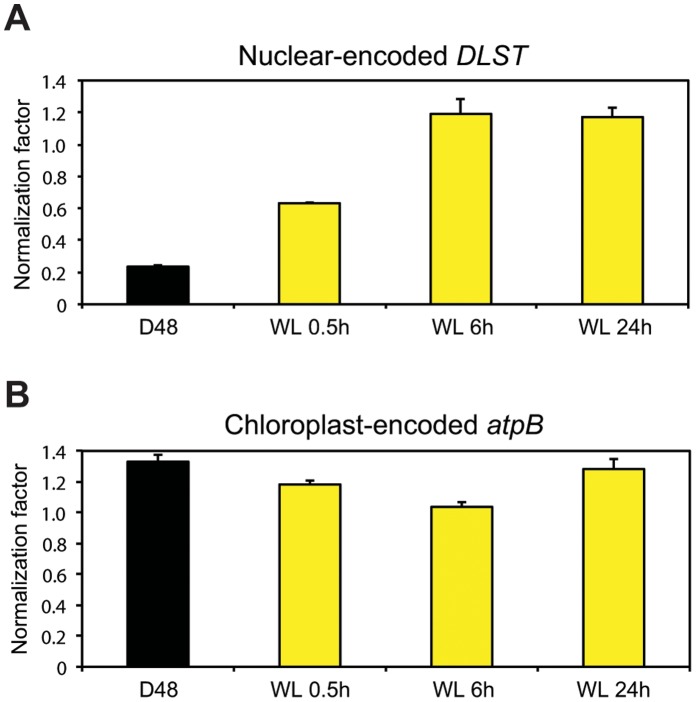
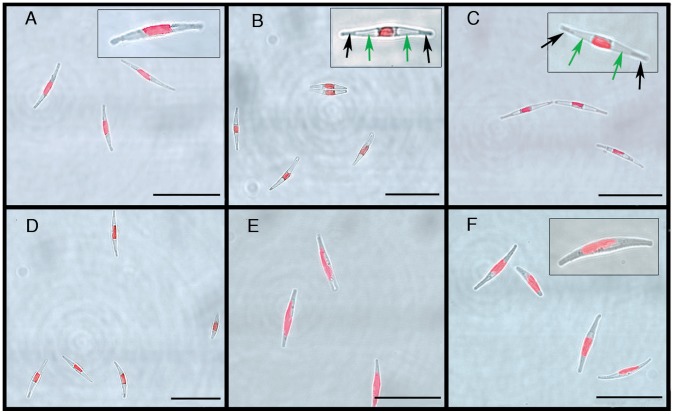
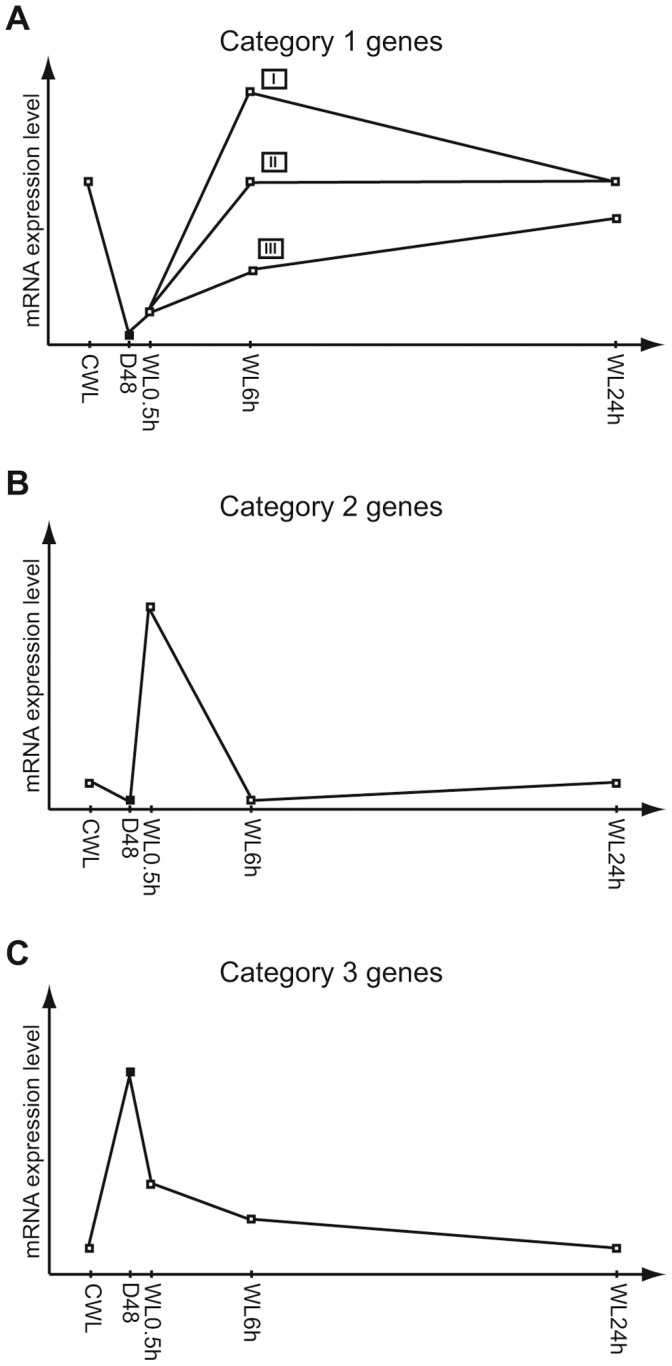
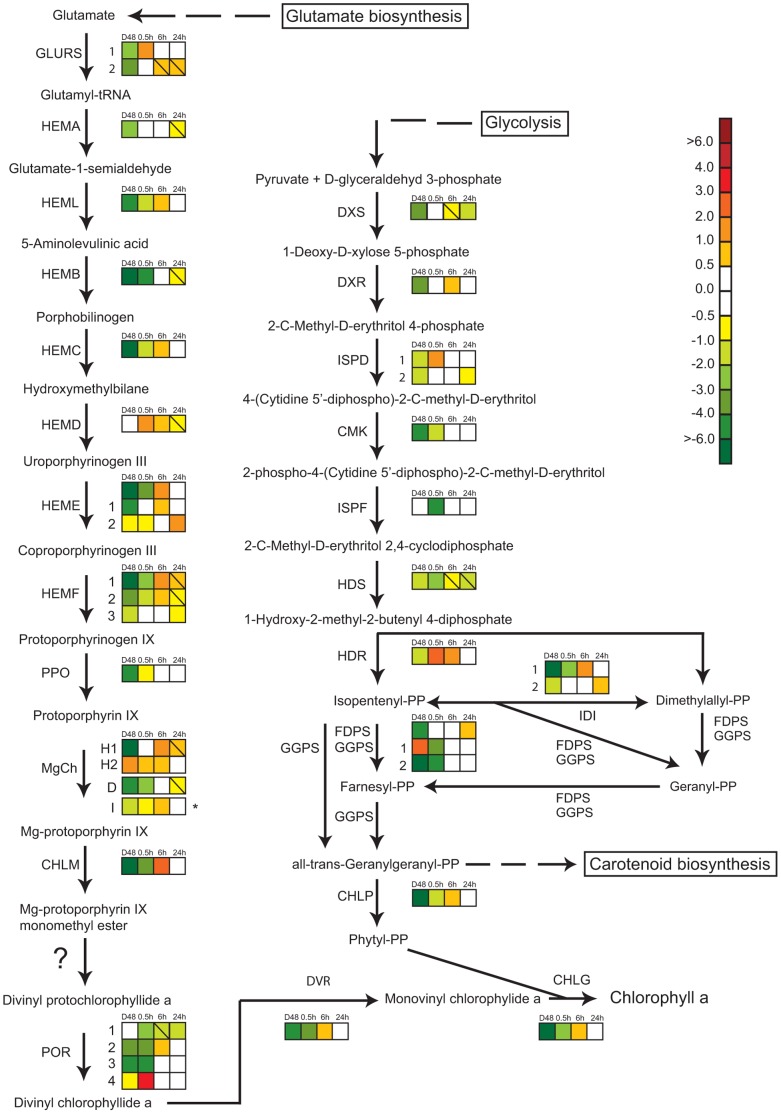
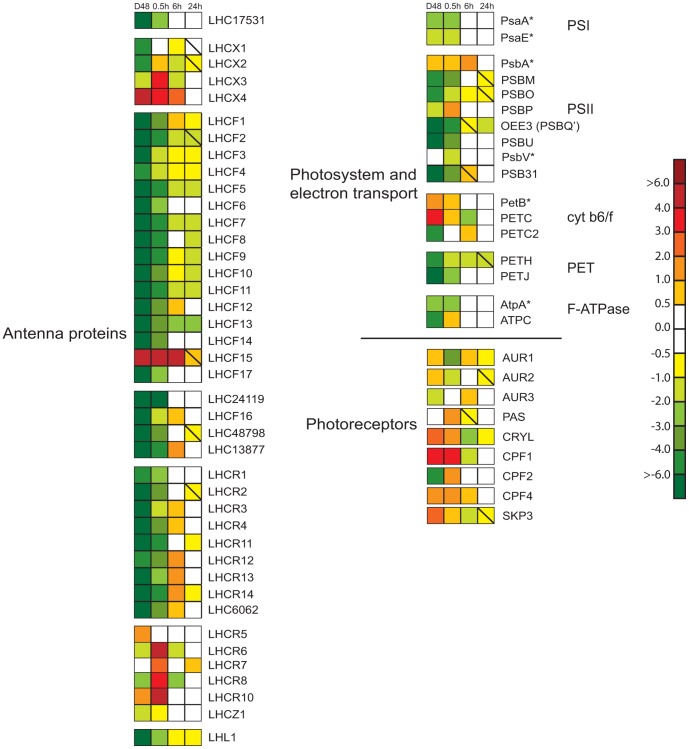
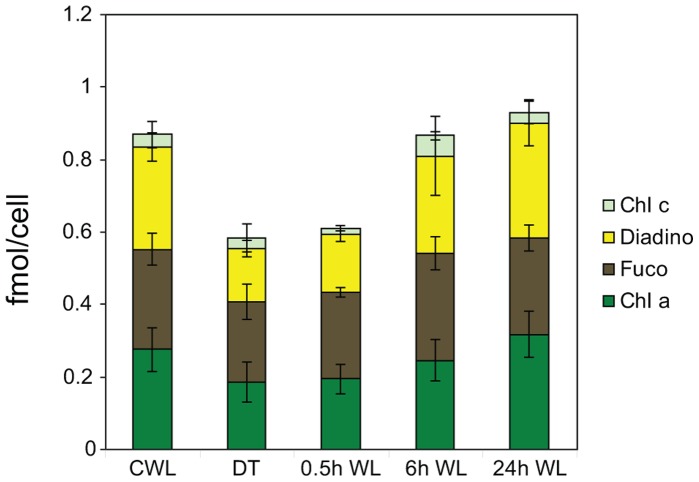
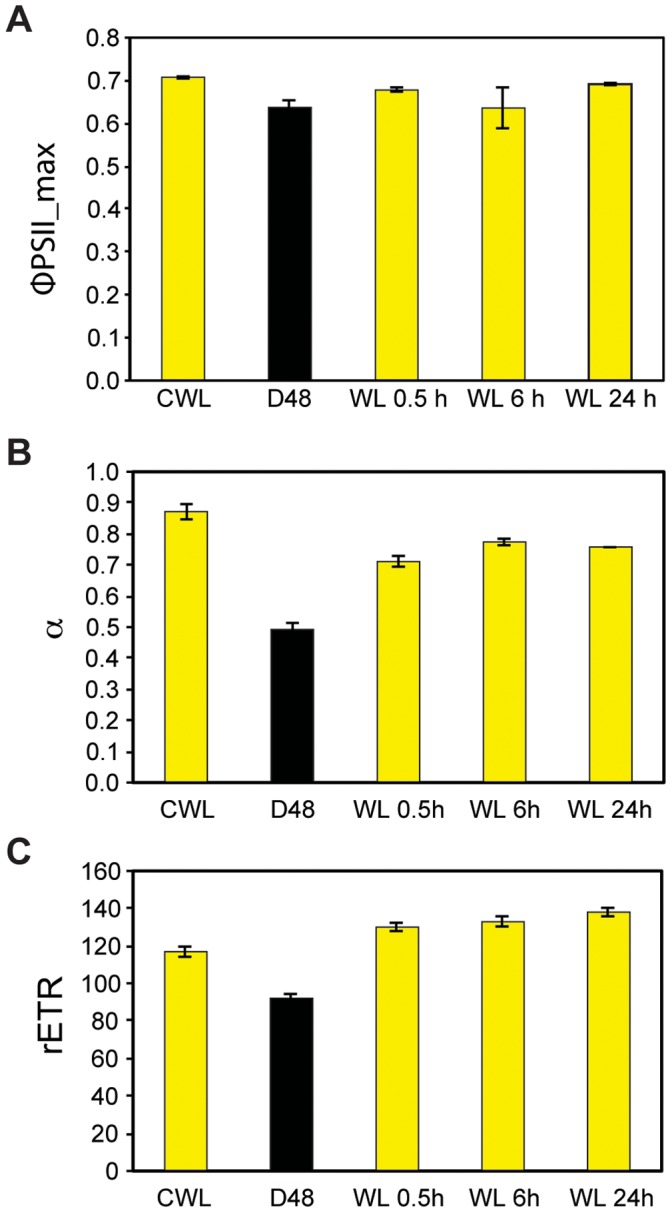
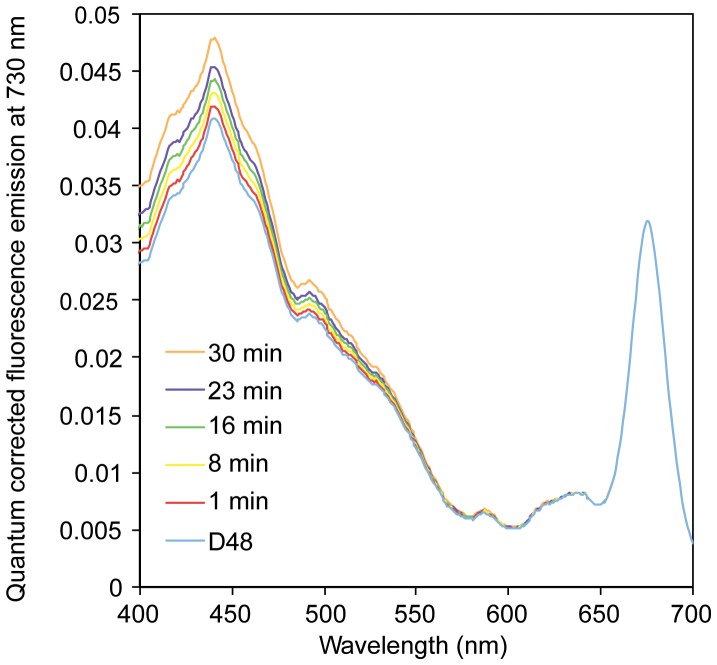
Photosynthetic diatoms that live suspended throughout the water column will constantly be swept up and down by vertical mixing. When returned to the photic zone after experiencing longer periods in darkness, mechanisms exist that enable the diatoms both to survive sudden light exposure and immediately utilize the available energy in photosynthesis and growth. We have investigated both the response to prolonged darkness and the re-acclimation to moderate intensity white irradiance (E = 100 µmol m(-2) s(-1)) in the diatom Phaeodactylum tricornutum, using an integrated approach involving global transcriptional profiling, pigment analyses, imaging and photo-physiological measurements. The responses were studied during continuous white light, after 48 h of dark treatment and after 0.5 h, 6 h, and 24 h of re-exposure to the initial irradiance. The analyses resulted in several intriguing findings. Dark treatment of the cells led to 1) significantly decreased nuclear transcriptional activity, 2) distinct intracellular changes, 3) fixed ratios of the light-harvesting pigments despite a decrease in the total cell pigment pool, and 4) only a minor drop in photosynthetic efficiency (Φ(PSII_max)). Re-introduction of the cells to the initial light conditions revealed 5) distinct expression profiles for nuclear genes involved in photosynthesis and those involved in photoprotection, 6) rapid rise in photosynthetic parameters (α and rETR(max)) within 0.5 h of re-exposure to light despite a very modest de novo synthesis of photosynthetic compounds, and 7) increasingly efficient resonance energy transfer from fucoxanthin chlorophyll a/c-binding protein complexes to photosystem II reaction centers during the first 0.5 h, supporting the observations stated in 6). In summary, the results show that despite extensive transcriptional, metabolic and intracellular changes, the ability of cells to perform photosynthesis was kept intact during the length of the experiment. We conclude that P. tricornutum maintains a functional photosynthetic apparatus during dark periods that enables prompt recovery upon re-illumination.
悬浮在水柱中的光合硅藻会不断地被垂直混合作用上下搅动。当它们在黑暗中经历更长时间后回到光区时,存在一些机制可以使硅藻既能在突然的光照暴露下存活,又能立即利用光合作用和生长中的可用能量。我们使用综合方法,包括全局转录谱分析、色素分析、成像和光生理测量,研究了硅藻三角褐指藻在长时间黑暗和适度强度白光辐照度(E=100μmol m(-2) s(-1))下的再适应过程。这些反应在连续白光下、黑暗处理 48 小时后以及重新暴露于初始辐照度 0.5、6 和 24 小时后进行了研究。分析得出了一些有趣的发现。细胞的黑暗处理导致 1)核转录活性显著降低,2)细胞内发生明显变化,3)尽管总细胞色素库减少,但光捕获色素的固定比例,和 4)光合作用效率(Φ(PSII_max))仅略有下降。细胞重新引入初始光照条件后,发现 5)参与光合作用和光保护的核基因的表达谱明显不同,6)重新暴露于光后 0.5 小时内光合作用参数(α和 rETR(max))迅速上升,尽管光合作用化合物的从头合成非常少,和 7)在最初的 0.5 小时内,从叶黄素叶绿素 a/c 结合蛋白复合物到光系统 II 反应中心的共振能量转移效率越来越高,这支持了第 6 点的观察结果。总之,结果表明,尽管经历了广泛的转录、代谢和细胞内变化,但细胞在实验过程中保持了光合作用的能力。我们得出结论,三角褐指藻在黑暗期维持一个功能性的光合作用装置,使其能够在重新光照时迅速恢复。