Department of Biology and Center for Applied Tropical Ecology and Conservation, University of Puerto Rico, Rio Piedras, Puerto Rico.
PLoS One. 2013;8(3):e57033. doi: 10.1371/journal.pone.0057033. Epub 2013 Mar 22.
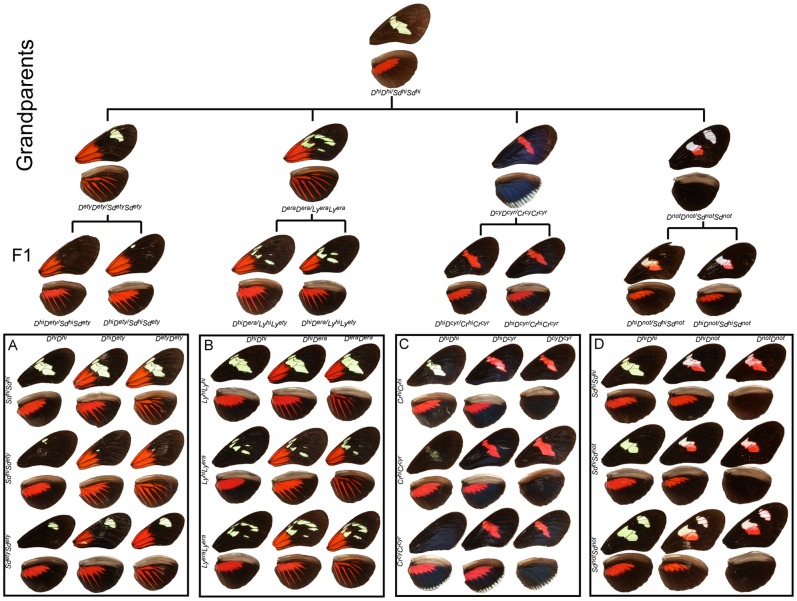
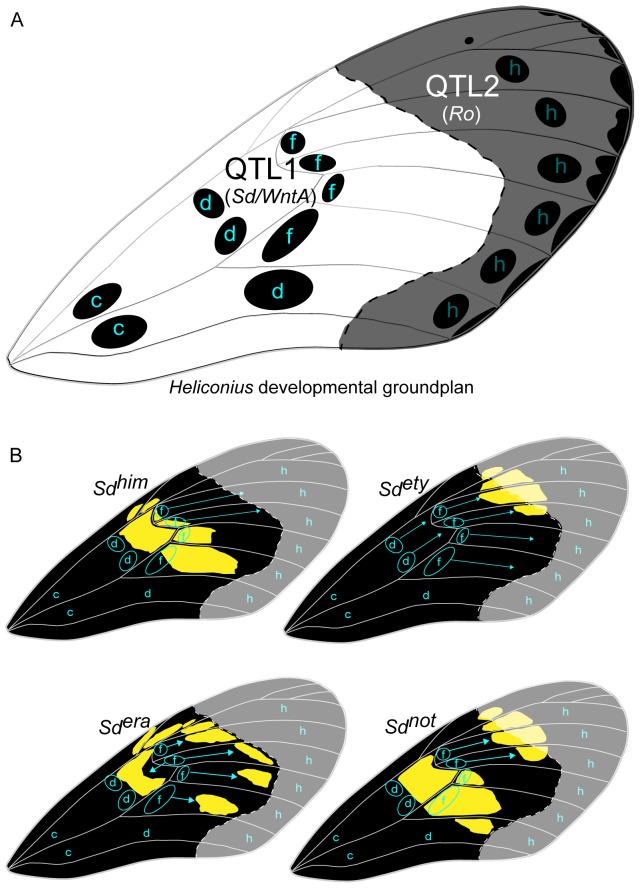
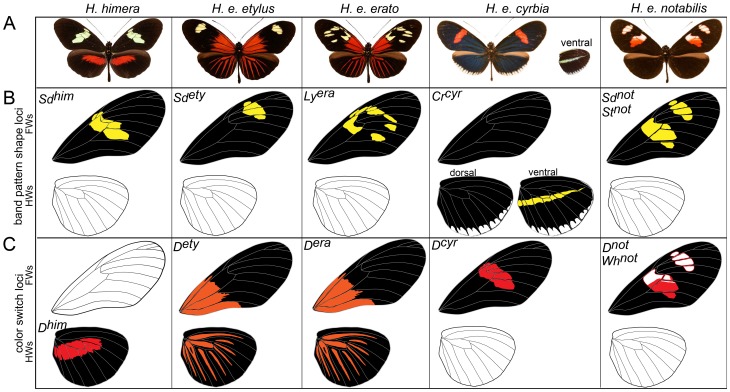
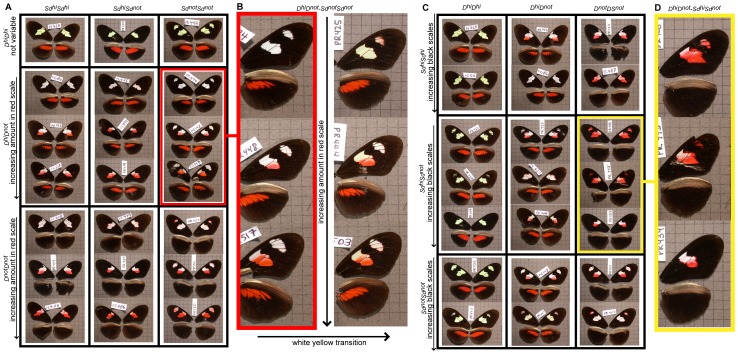
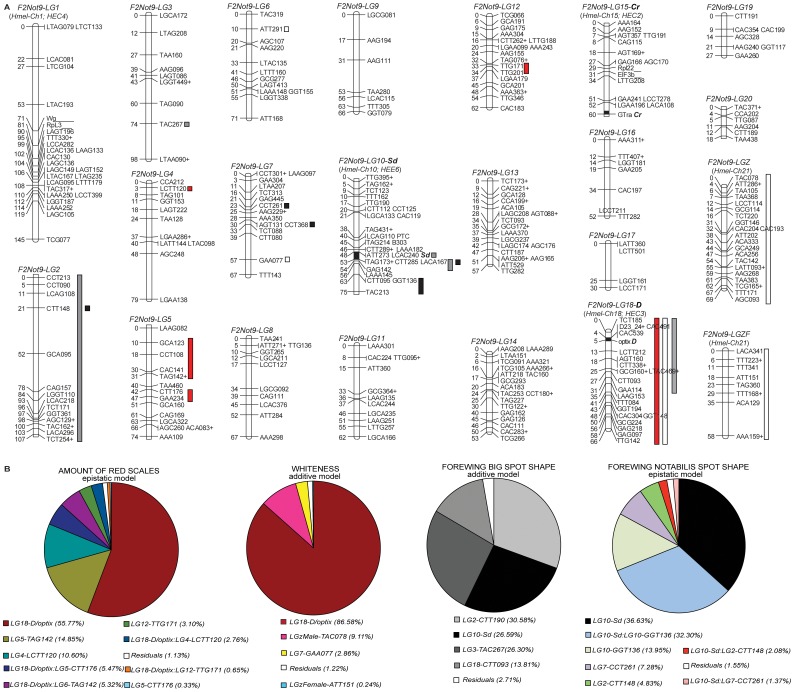
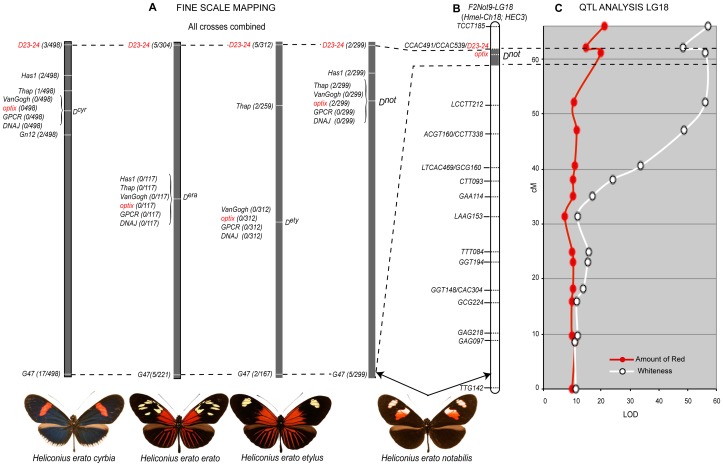
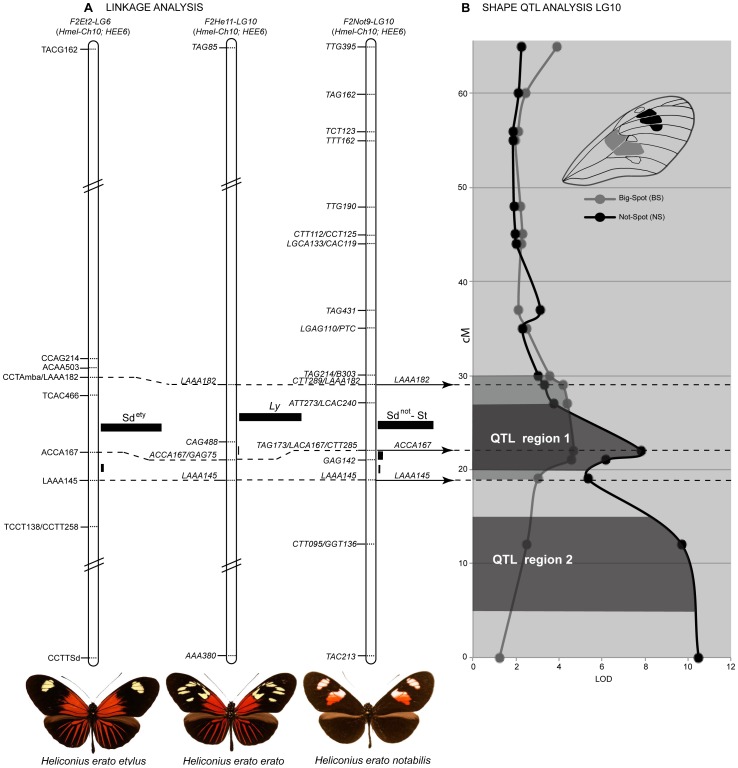
Recent studies indicate that relatively few genomic regions are repeatedly involved in the evolution of Heliconius butterfly wing patterns. Although this work demonstrates a number of cases where homologous loci underlie both convergent and divergent wing pattern change among different Heliconius species, it is still unclear exactly how many loci underlie pattern variation across the genus. To address this question for Heliconius erato, we created fifteen independent crosses utilizing the four most distinct color pattern races and analyzed color pattern segregation across a total of 1271 F2 and backcross offspring. Additionally, we used the most variable brood, an F2 cross between H. himera and the east Ecuadorian H. erato notabilis, to perform a quantitative genetic analysis of color pattern variation and produce a detailed map of the loci likely involved in the H. erato color pattern radiation. Using AFLP and gene based markers, we show that fewer major genes than previously envisioned control the color pattern variation in H. erato. We describe for the first time the genetic architecture of H. erato wing color pattern by assessing quantitative variation in addition to traditional linkage mapping. In particular, our data suggest three genomic intervals modulate the bulk of the observed variation in color. Furthermore, we also identify several modifier loci of moderate effect size that contribute to the quantitative wing pattern variation. Our results are consistent with the two-step model for the evolution of mimetic wing patterns in Heliconius and support a growing body of empirical data demonstrating the importance of major effect loci in adaptive change.
最近的研究表明,在蝴蝶翅膀图案的进化中,只有相对较少的基因组区域反复涉及。虽然这项工作证明了在不同的 Heliconius 物种中,同源基因座在趋同和发散的翅膀图案变化中都有作用,但仍然不清楚究竟有多少基因座是导致整个属的图案变化的基础。为了解决这个问题,我们利用四个最独特的颜色图案品种创建了十五个独立的杂交,并分析了总共 1271 个 F2 和回交后代的颜色图案分离。此外,我们利用最具变异性的卵群(H. himera 和东厄瓜多尔的 H. erato notabilis 之间的 F2 杂交),对颜色图案变化进行了定量遗传分析,并制作了一张可能涉及到 H. erato 颜色图案辐射的基因座的详细图谱。我们使用 AFLP 和基于基因的标记,表明控制 H. erato 颜色图案变化的主要基因比以前想象的要少。我们首次通过评估传统连锁图谱之外的数量变化来描述 H. erato 翅膀颜色图案的遗传结构。特别是,我们的数据表明,三个基因组区间调节了观察到的颜色的大部分变化。此外,我们还鉴定出几个中等效应大小的修饰基因座,这些基因座对数量性状的翅膀图案变化有贡献。我们的结果与 Heliconius 中拟态翅膀图案进化的两步模型一致,并支持越来越多的经验数据,证明了主要效应基因座在适应性变化中的重要性。