PlantVax Corporation, Rockville, Maryland, United States of America.
PLoS One. 2013;8(3):e58724. doi: 10.1371/journal.pone.0058724. Epub 2013 Mar 22.
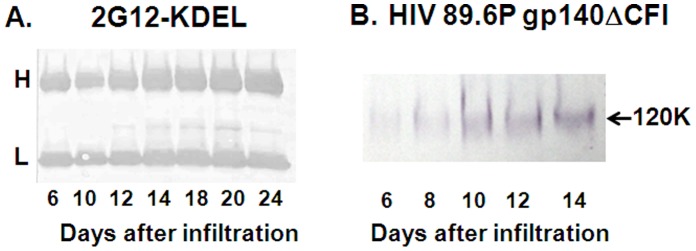
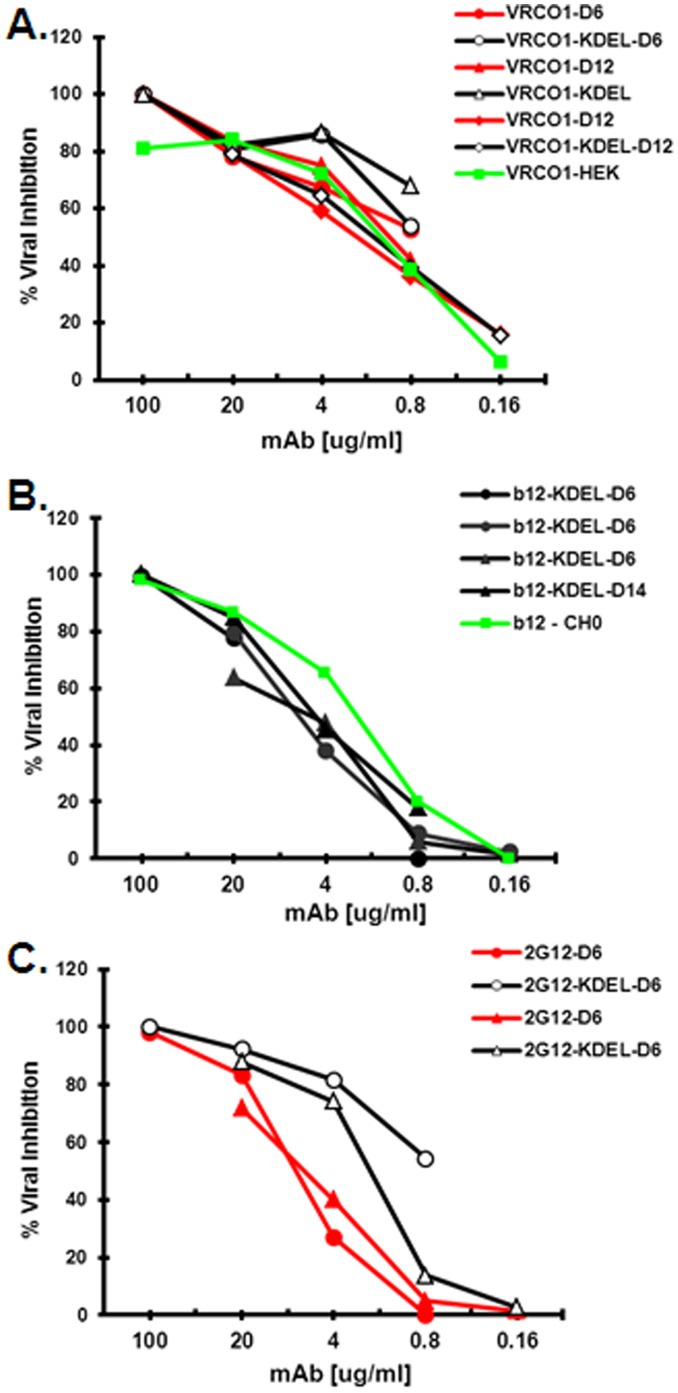
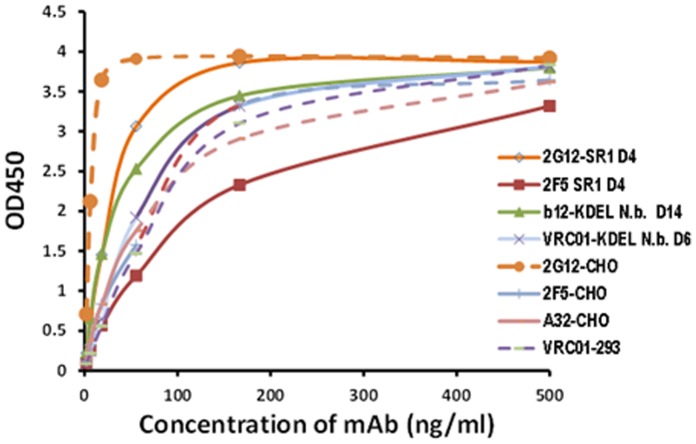
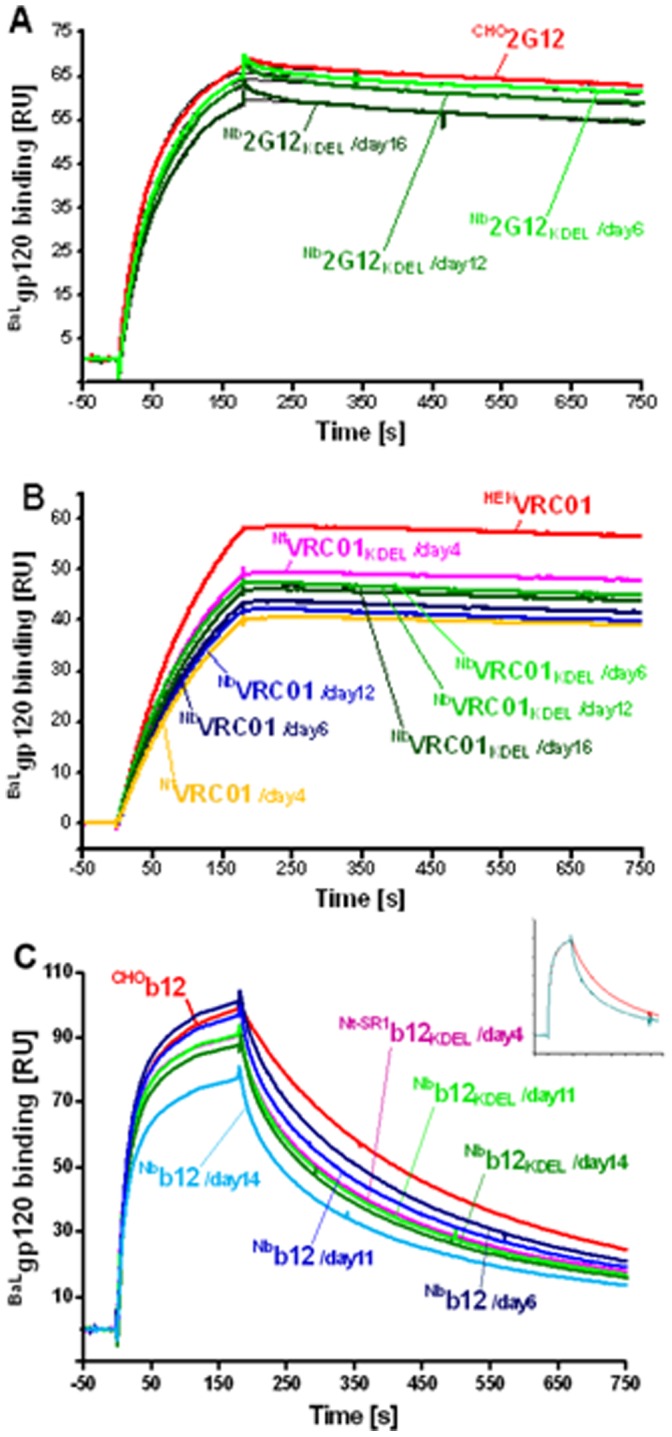
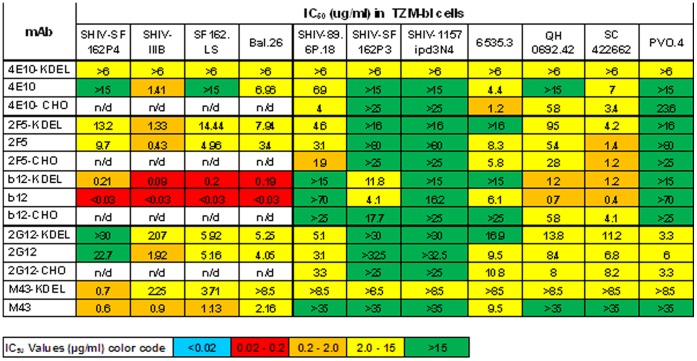
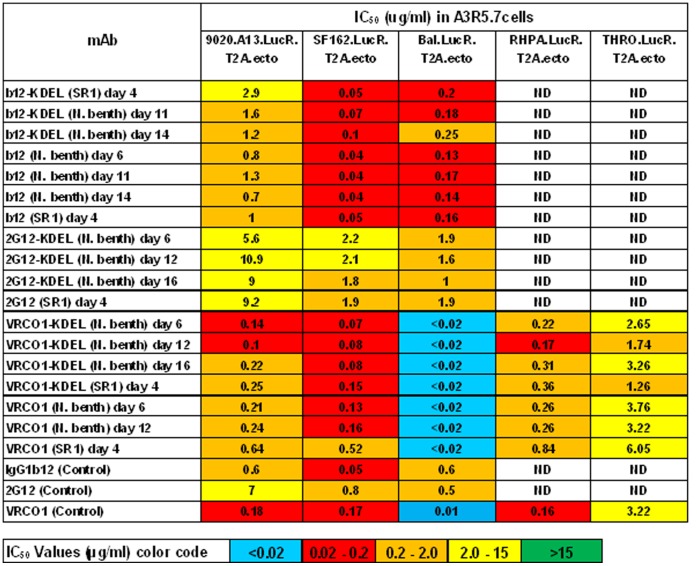
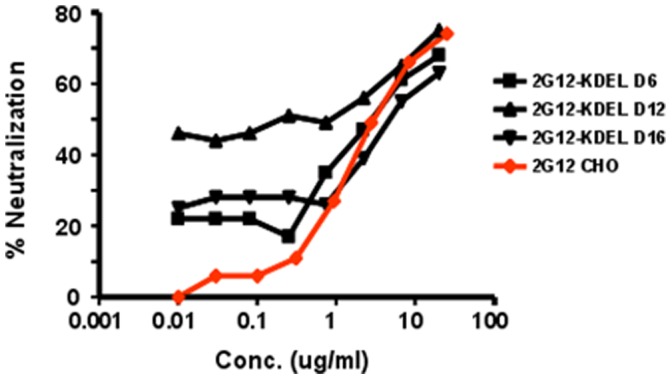
Passive immunotherapy using anti-HIV broadly neutralizing monoclonal antibodies (mAbs) has shown promise as an HIV treatment, reducing mother-to-child-transmission (MTCT) of simian/human immunodeficiency virus (SHIV) in non-human primates and decreasing viral rebound in patients who ceased receiving anti-viral drugs. In addition, a cocktail of potent mAbs may be useful as mucosal microbicides and provide an effective therapy for post-exposure prophylaxis. However, even highly neutralizing HIV mAbs used today may lose their effectiveness if resistance occurs, requiring the rapid production of new or engineered mAbs on an ongoing basis in order to counteract the viral resistance or the spread of a certain HIV-1 clade in a particular region or patient. Plant-based expression systems are fast, inexpensive and scalable and are becoming increasingly popular for the production of proteins and monoclonal antibodies. In the present study, Agrobacterium-mediated transient transfection of plants, utilizing two species of Nicotiana, have been tested to rapidly produce high levels of an HIV 89.6PΔ140env and several well-studied anti-HIV neutralizing monoclonal antibodies (b12, 2G12, 2F5, 4E10, m43, VRC01) or a single chain antibody construct (m9), for evaluation in cell-based viral inhibition assays. The protein-A purified plant-derived antibodies were intact, efficiently bound HIV envelope, and were equivalent to, or in one case better than, their counterparts produced in mammalian CHO or HEK-293 cells in both neutralization and antibody dependent viral inhibition assays. These data indicate that transient plant-based transient expression systems are very adaptable and could rapidly generate high levels of newly identified functional recombinant HIV neutralizing antibodies when required. In addition, they warrant detailed cost-benefit analysis of prolonged incubation in plants to further increase mAb production.
使用抗 HIV 广谱中和单克隆抗体(mAbs)的被动免疫疗法已显示出作为 HIV 治疗的潜力,可降低非人类灵长类动物中猴/人免疫缺陷病毒(SHIV)的母婴传播(MTCT),并减少停止接受抗病毒药物的患者中的病毒反弹。此外,强效 mAbs 鸡尾酒可能可用作粘膜杀微生物剂,并为暴露后预防提供有效治疗。然而,即使是当今使用的高度中和的 HIV mAbs 如果发生耐药性也可能失去效力,因此需要持续快速生产新的或工程化的 mAbs,以抵抗病毒耐药性或特定 HIV-1 谱系在特定地区或患者中的传播。植物表达系统快速、廉价且可扩展,越来越多地用于生产蛋白质和单克隆抗体。在本研究中,利用两种烟草属植物,通过农杆菌介导的植物瞬时转染,已被测试用于快速生产高水平的 HIV 89.6PΔ140env 和几种经过充分研究的抗 HIV 中和单克隆抗体(b12、2G12、2F5、4E10、m43、VRC01)或单链抗体构建体(m9),以用于基于细胞的病毒抑制测定中进行评估。蛋白 A 纯化的植物来源抗体是完整的,能够有效地结合 HIV 包膜,并且在中和和抗体依赖性病毒抑制测定中与在哺乳动物 CHO 或 HEK-293 细胞中产生的对应物等效,在某些情况下甚至更好。这些数据表明,瞬时植物瞬时表达系统非常适应性强,当需要时,可以快速产生高水平的新鉴定的功能性重组 HIV 中和抗体。此外,它们需要对植物中延长孵育进行详细的成本效益分析,以进一步提高 mAb 的产量。