Hotung Molecular Immunology Unit, Institute for Infection & Immunity, St George's University of London, Cranmer Terrace, London, SW17 0RE, UK.
Department of Chemistry, University of Natural Resources and Applied Life Sciences, Vienna, Austria.
Retrovirology. 2021 Jun 28;18(1):17. doi: 10.1186/s12977-021-00560-6.
HIV remains one of the most important health issues worldwide, with almost 40 million people living with HIV. Although patients develop antibodies against the virus, its high mutation rate allows evasion of immune responses. Some patients, however, produce antibodies that are able to bind to, and neutralise different strains of HIV. One such 'broadly neutralising' antibody is 'N6'. Identified in 2016, N6 can neutralise 98% of HIV-1 isolates with a median IC of 0.066 µg/mL. This neutralisation breadth makes N6 a very promising therapeutic candidate.
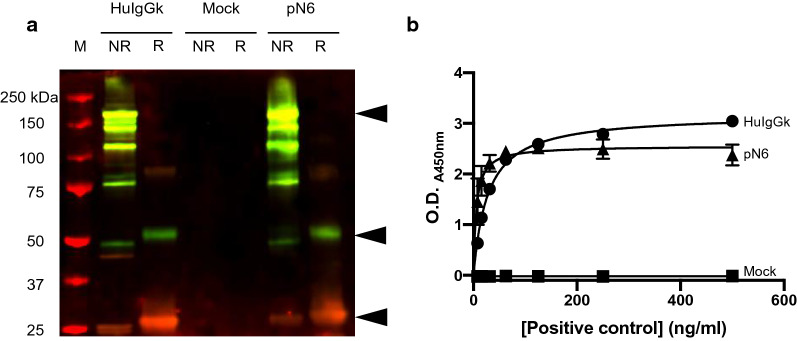
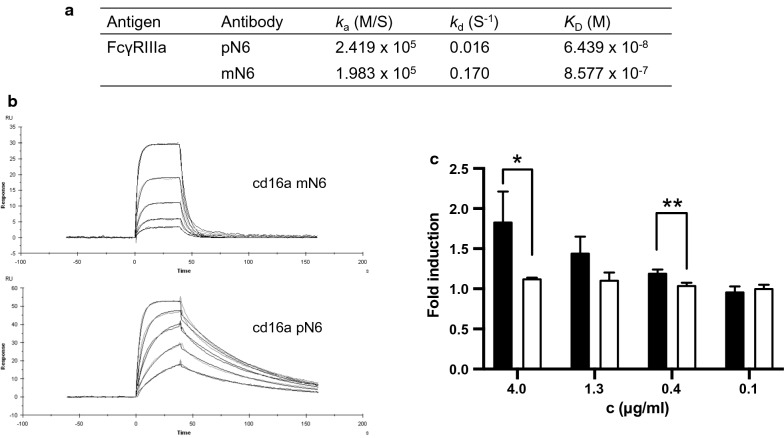
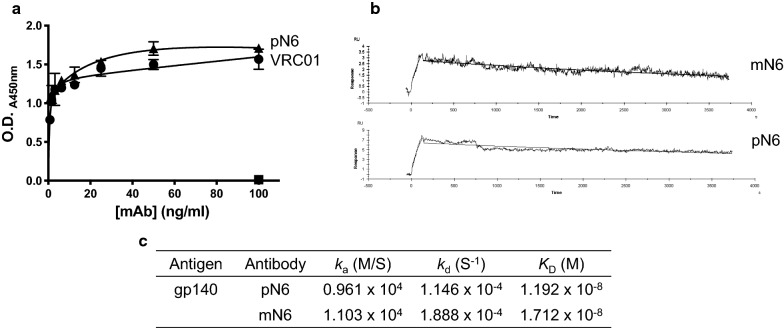
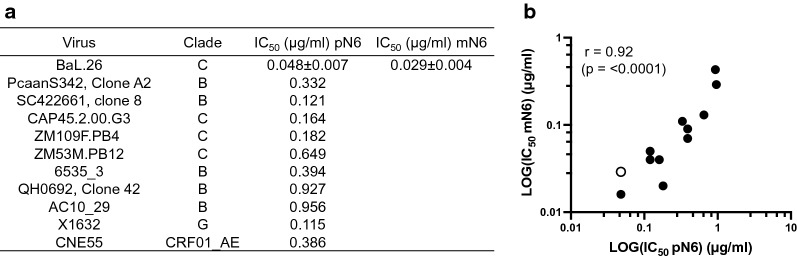
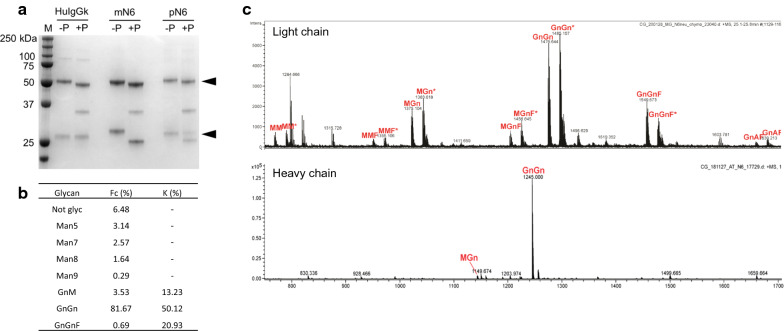
N6 was expressed in a glycoengineered line of N. benthamiana plants (pN6) and compared to the mammalian cell-expressed equivalent (mN6). Expression at 49 mg/kg (fresh leaf tissue) was achieved in plants, although extraction and purification are more challenging than for most plant-expressed antibodies. N-glycoanalysis demonstrated the absence of xylosylation and a reduction in α(1,3)-fucosylation that are typically found in plant glycoproteins. The N6 light chain contains a potential N-glycosylation site, which was modified and displayed more α(1,3)-fucose than the heavy chain. The binding kinetics of pN6 and mN6, measured by surface plasmon resonance, were similar for HIV gp120. pN6 had a tenfold higher affinity for FcγRIIIa, which was reflected in an antibody-dependent cellular cytotoxicity assay, where pN6 induced a more potent response from effector cells than that of mN6. pN6 demonstrated the same potency and breadth of neutralisation as mN6, against a panel of HIV strains.
The successful expression of N6 in tobacco supports the prospect of developing a low-cost, low-tech production platform for a monoclonal antibody cocktail to control HIV in low-to middle income countries.
HIV 仍然是全球最重要的健康问题之一,全球约有 4000 万人感染 HIV。尽管患者会产生针对该病毒的抗体,但该病毒的高突变率使其能够逃避免疫反应。然而,一些患者会产生能够与不同株 HIV 结合并中和的抗体。其中一种“广谱中和”抗体是“N6”。N6 于 2016 年被发现,能够中和 98%的 HIV-1 分离株,其半数抑制浓度(IC)为 0.066μg/ml。这种中和广度使 N6 成为一种很有前途的治疗候选药物。
N6 在经过糖基工程改造的 N. benthamiana 植物系(pN6)中表达,并与哺乳动物细胞表达的等效物(mN6)进行了比较。植物中达到了 49mg/kg(新鲜叶片组织)的表达量,尽管提取和纯化比大多数植物表达的抗体更具挑战性。N-糖基分析表明,与植物糖蛋白中通常存在的木糖基化和 α(1,3)-岩藻糖基化缺失。N6 轻链含有一个潜在的 N-糖基化位点,该位点被修饰后显示出比重链更多的 α(1,3)-岩藻糖。通过表面等离子体共振测量,pN6 和 mN6 与 HIV gp120 的结合动力学相似。pN6 对 FcγRIIIa 的亲和力高出 10 倍,这在抗体依赖的细胞毒性测定中得到了反映,其中 pN6 诱导效应细胞产生的反应比 mN6 更强。pN6 对一组 HIV 株的中和效力和广度与 mN6 相同。
N6 在烟草中的成功表达支持了在中低收入国家开发低成本、低技术生产平台来控制 HIV 的单克隆抗体鸡尾酒的前景。