Sidler M, Fouché N, Meth I, von Hahn F, von Rechenberg B, Kronen Pw
Musculoskeletal Research Unit (MSRU), Equine Hospital, Vetsuisse Faculty, University of Zurich, Switzerland ; Veterinary Anaesthesia Services International, Winterthur, Switzerland.
Open Orthop J. 2013;7:57-66. doi: 10.2174/1874325001307010057. Epub 2013 Mar 5.
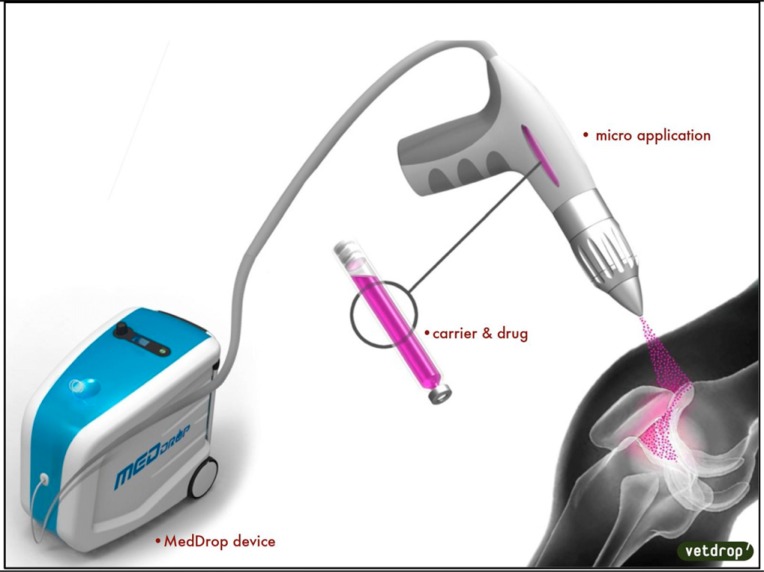
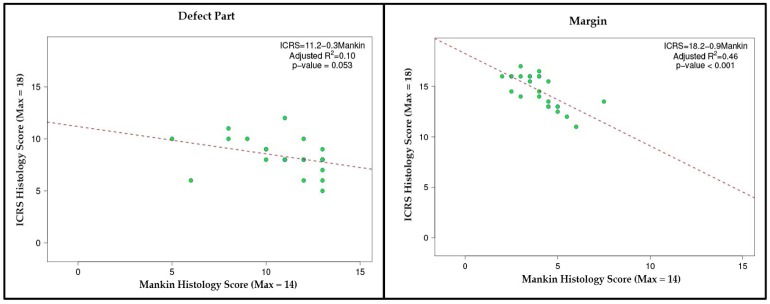
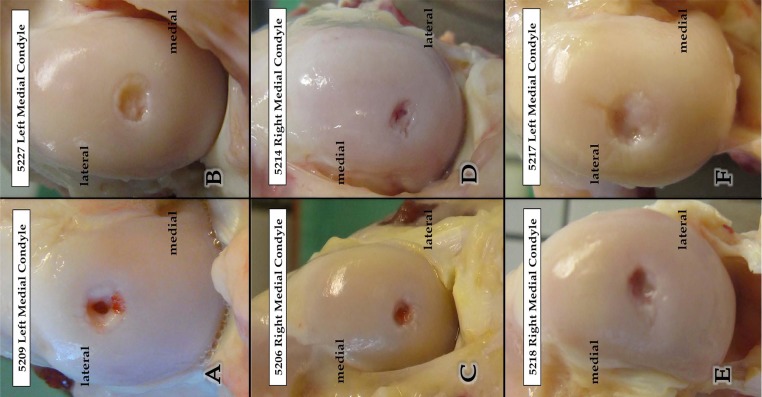
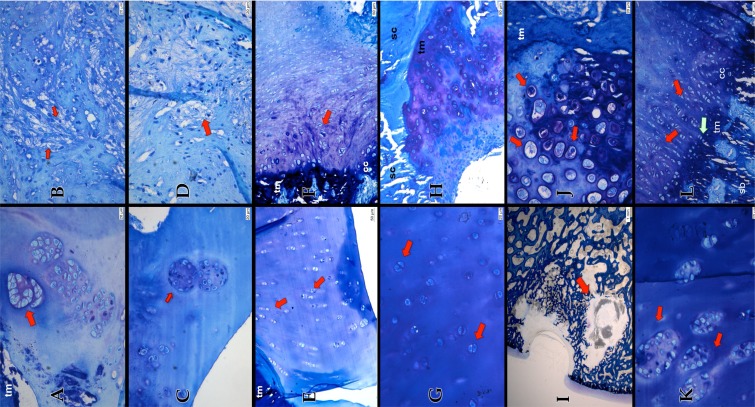
The significance of the adjacent cartilage in cartilage defect healing is not yet completely understood. Furthermore, it is unknown if the adjacent cartilage can somehow be influenced into responding after cartilage damage. The present study was undertaken to investigate whether the adjacent cartilage can be better sustained after microfracturing in a cartilage defect model in the stifle joint of sheep using a transcutaneous treatment concept (Vetdrop(®)). Carprofen and chito-oligosaccharids were added either as single components or as a mixture to a vehicle suspension consisting of a herbal carrier oil in a water-in-oil phase. This mixture was administered onto the skin with the aid of a specific applicator during 6 weeks in 28 sheep, allocated into 6 different groups, that underwent microfracturing surgery either on the left or the right medial femoral condyle. Two groups served as control and were either treated intravenously or sham treated with oxygen only. Sheep were sacrificed and their medial condyle histologically evaluated qualitatively and semi-quantitatively according to 4 different scoring systems (Mankin, ICRS, Little and O'Driscoll). The adjacent cartilage of animals of group 4 treated transcutaneously with vehicle, chito-oligosaccharids and carprofen had better histological scores compared to all the other groups (Mankin 3.3±0.8, ICRS 15.7±0.7, Little 9.0±1.4). Complete defect filling was absent from the transcutaneous treatment groups. The experiment suggests that the adjacent cartilage is susceptible to treatment and that the combination of vehicle, chitooligosaccharids and carprofen may sustain the adjacent cartilage during the recovery period.
相邻软骨在软骨缺损愈合中的意义尚未完全明确。此外,尚不清楚相邻软骨在软骨损伤后是否能以某种方式受到影响而产生反应。本研究旨在探讨在绵羊膝关节软骨缺损模型中,采用经皮治疗概念(Vetdrop®)进行微骨折术后,相邻软骨是否能得到更好的维持。将卡洛芬和壳寡糖单独或混合添加到由油包水相的草本载体油组成的赋形剂混悬液中。在6周内,借助特定涂抹器将该混合物涂抹于28只绵羊的皮肤上,这些绵羊被分为6个不同组,在左或右内侧股骨髁进行微骨折手术。两组作为对照,分别接受静脉治疗或仅用氧气进行假治疗。处死绵羊后,根据4种不同评分系统(曼金、国际软骨修复协会、利特尔和奥德里斯科尔)对其内侧髁进行组织学定性和半定量评估。与所有其他组相比,经皮给予赋形剂、壳寡糖和卡洛芬治疗的第4组动物的相邻软骨组织学评分更好(曼金评分3.3±0.8,国际软骨修复协会评分15.7±0.7,利特尔评分9.0±1.4)。经皮治疗组均未出现完全缺损填充。该实验表明,相邻软骨易于接受治疗,赋形剂、壳寡糖和卡洛芬的组合可能在恢复期维持相邻软骨。