Department of Biochemistry, Faculty of Medicine, Hacettepe University, Ankara, Turkey.
Int J Oncol. 2013 May;42(5):1709-15. doi: 10.3892/ijo.2013.1865. Epub 2013 Mar 27.
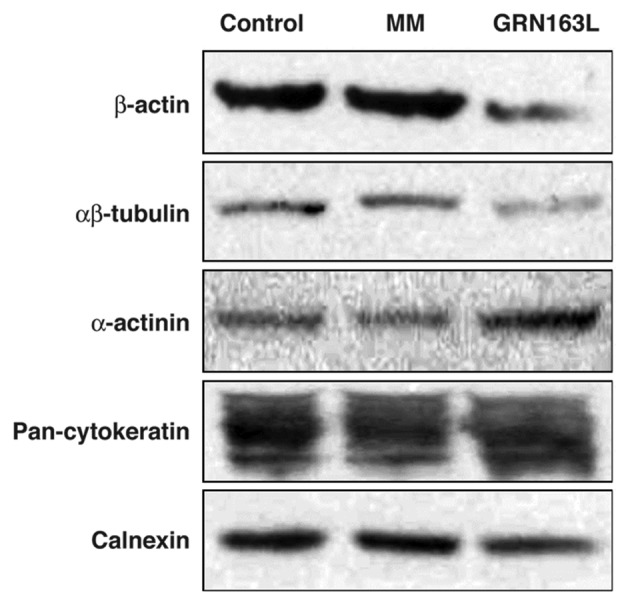
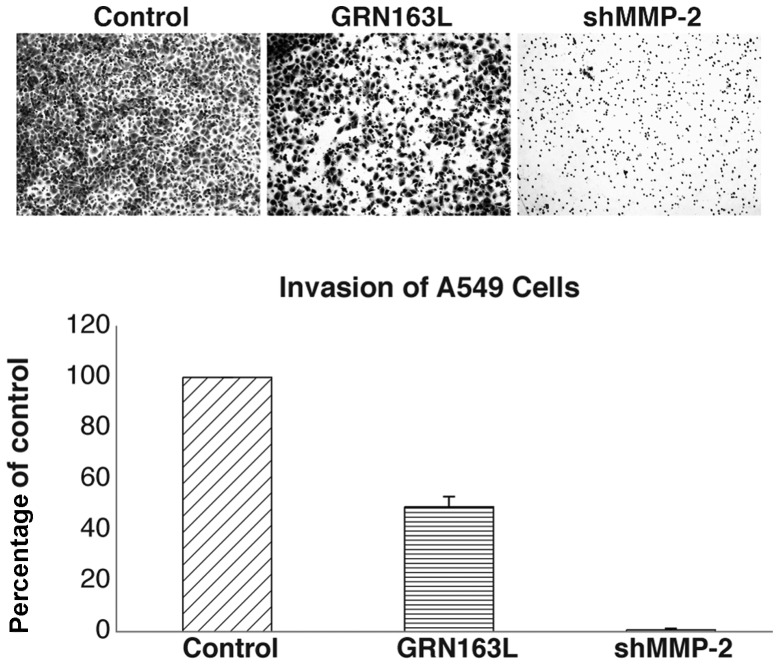
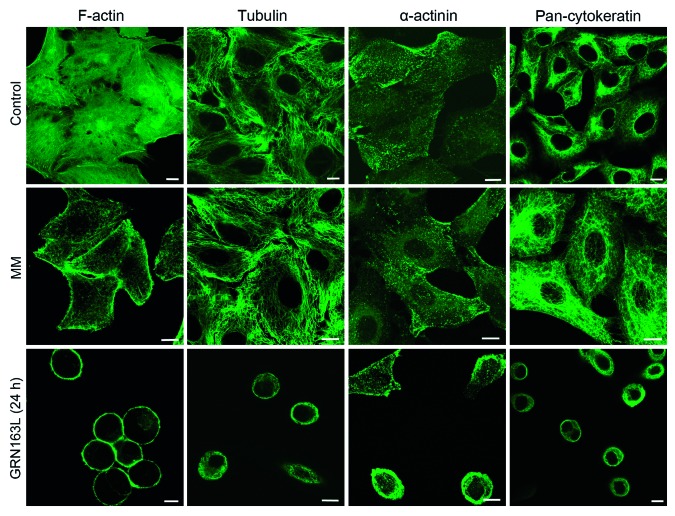
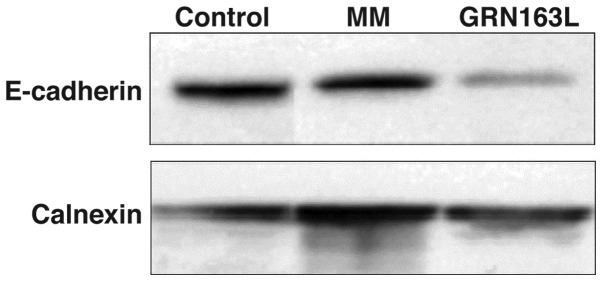
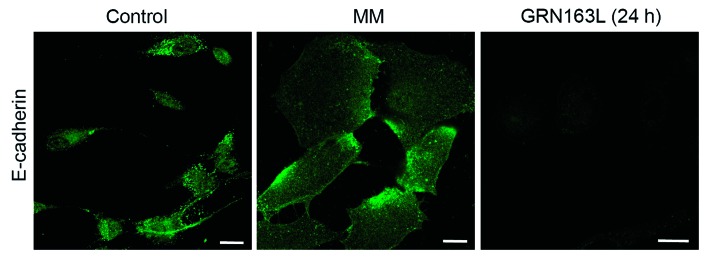
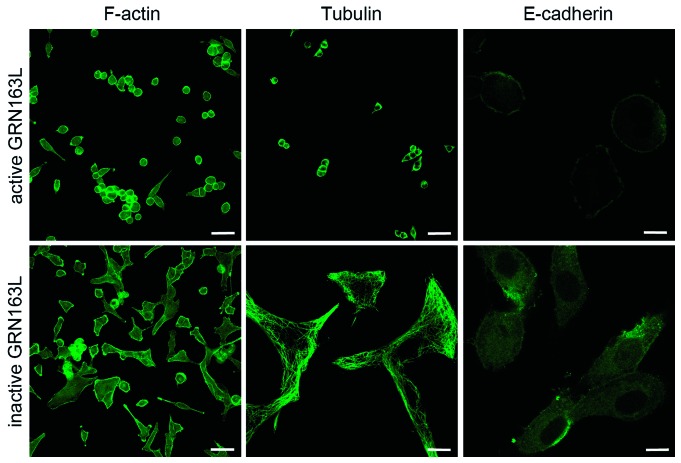
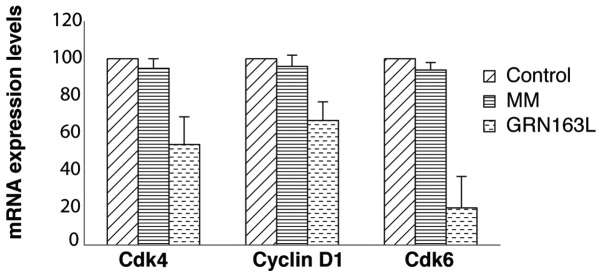
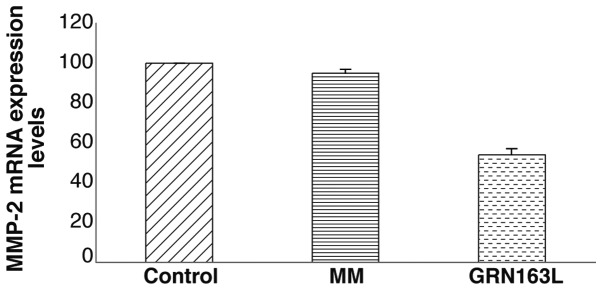
Telomerase is a cellular ribonucleoprotein reverse transcriptase that plays a crucial role in telomere maintenance. This enzyme is expressed in approximately 90% of human tumors, but not in the majority of normal somatic cells. imetelstat sodium (GRN163L), is a 13-mer oligonucleotide N3'→P5' thio-phosphoramidate lipid conjugate, which represents the latest generation of telomerase inhibitors targeting the template region of the human functional telomerase RNA (hTR) subunit. In preclinical trials, this compound has been found to inhibit telomerase activity in multiple cancer cell lines, as well as in vivo xenograft mouse models. Currently, GRN163L is being investigated in several clinical trials, including a phase II human non‑small cell lung cancer clinical trial, in a maintenance setting following standard doublet chemotherapy. In addition to the inhibition of telomerase activity in cancer cell lines, GRN163L causes morphological cell rounding changes, independent of hTR expression or telomere length. This leads to the loss of cell adhesion properties; however, the mechanism underlying this effect is not yet fully understood. In the present study, we observed that GRN163L treatment leads to the loss of adhesion in A549 lung cancer cells, due to decreased E-cadherin expression, leading to the disruption of the cytoskeleton through the alteration of actin, tubulin and intermediate filament organization. Consequently, the less adherent cancer cells initially cease to proliferate and are arrested in the G1 phase of the cell cycle, accompanied by decreased matrix metalloproteinase-2 (MMP-2) expression. These effects of GRN163L are independent of its telomerase catalytic activity and may increase the therapeutic efficacy of GRN163L by decreasing the adhesion, proliferation and metastatic potential of cancer cells in vivo.
端粒酶是一种细胞核糖核蛋白逆转录酶,在端粒维持中起着至关重要的作用。这种酶在大约 90%的人类肿瘤中表达,但在大多数正常体细胞中不表达。imetelstat 钠(GRN163L)是一种 13 个碱基的寡核苷酸 N3'→P5'硫代磷酸酰胺脂质缀合物,代表了靶向人类功能性端粒酶 RNA(hTR)亚单位模板区域的最新一代端粒酶抑制剂。在临床前试验中,这种化合物已被发现可抑制多种癌细胞系以及体内异种移植小鼠模型中的端粒酶活性。目前,GRN163L 正在多项临床试验中进行研究,包括一项针对非小细胞肺癌的 II 期临床试验,以及在标准双联化疗后进行的维持治疗。除了抑制癌细胞系中的端粒酶活性外,GRN163L 还会导致细胞形态发生圆化变化,这与 hTR 表达或端粒长度无关。这会导致细胞黏附特性丧失;然而,这种效应的机制尚未完全清楚。在本研究中,我们观察到 GRN163L 处理会导致 A549 肺癌细胞丧失黏附能力,这是由于 E-钙黏蛋白表达降低,导致细胞骨架通过改变肌动蛋白、微管和中间丝组织而受到破坏。因此,最初不太黏附的癌细胞停止增殖并被阻滞在细胞周期的 G1 期,同时伴随基质金属蛋白酶-2(MMP-2)表达降低。GRN163L 的这些作用与其端粒酶催化活性无关,可能通过降低体内癌细胞的黏附性、增殖能力和转移潜能来增加 GRN163L 的治疗效果。