Sharma Ashish Kumar, Sharma Akash, Kumari Rita, Kishore Kunal, Sharma Divya, Srinivasan Bharthu Parthsarthi, Sharma Ashok, Singh Santosh Kumar, Gaur Samir, Jatav Vijay Singh, Sharma Prashant, Srivastava Varnika, Joshi Sneha, Joshi Megha, Dhakad Prashant Kumar, Kanawat Davender Singh, Mishra Akanksha, Sharma Anil, Singh Dharmendra, Singh Ravinder Pal, Chawda Himmat Singh, Singh Rambir, Raikwar Sachin Kumar, Kurmi Muneem Kumar, Khatri Pankaj, Agarwal Ashutosh, Munajjam Arshee
Department of Pharmacology, Gyan Vihar School of Pharmacy, Suresh Gyan Vihar University, Jagatpura, Jaipur (Rajasthan) 302025, India;
J Biomed Res. 2012 May;26(3):200-10. doi: 10.7555/JBR.26.20110054. Epub 2012 May 9.
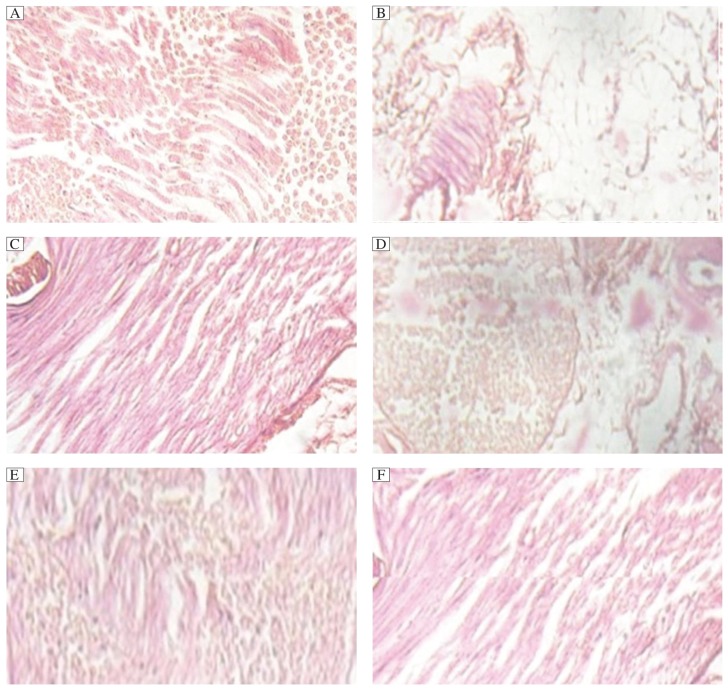
Diabetic neuropathies are a family of nerve disorders caused by diabetes. Symptoms of the disease include nerve palsy, mononeuropathy, mononeuropathy multiplex, diabetic amyotrophy, painful polyneuropathy, autonomic neuropathy, and thoracoabdominal neuropathy. In this study, type 2 diabetes in rats was induced with nicotinamide-streptozotocin. Drug treatment was initiated on the d 15, with the combination regimen of metformin, pioglitazone and glimipiride or metformin and sitagliptin or sitagliptin, amitriptyline and sitagliptin and led to significantly improved glycemic control, increased grip strength and paw jumping response on d 21, 28 and 35 (P < 0.001). Significant increases in blood protein levels and decreases in urinary protein levels were observed in the animals treated with the different regimens on d 21, 28 and 35 (P < 0.001). Combined treatment of streptozotocin and nicotinamide caused marked degeneration of nerve cells, while administration of metformin and sitagliptin showed tissue regeneration and no body weight gain. In conclusion, treatment with sitagliptin and sitagliptin combined with metformin or amitriptyline results in no body weight gain, but causes an increase in grip strength and pain sensitivity, exhibits neural protection, and reverses the alteration of biochemical parameters in rats with streptozotocin-nicotinamide induced type 2 diabetes.
糖尿病性神经病变是一类由糖尿病引起的神经紊乱疾病。该疾病的症状包括神经麻痹、单神经病变、多灶性单神经病变、糖尿病性肌萎缩、疼痛性多发性神经病变、自主神经病变以及胸腹神经病变。在本研究中,使用烟酰胺-链脲佐菌素诱导大鼠患2型糖尿病。在第15天开始药物治疗,采用二甲双胍、吡格列酮和格列美脲联合用药方案,或二甲双胍与西格列汀联合用药方案,或西格列汀、阿米替林与西格列汀联合用药方案,结果显示在第21、28和35天时血糖控制显著改善,握力和爪跳跃反应增强(P<0.001)。在第21、28和35天时,观察到不同用药方案治疗的动物血蛋白水平显著升高,尿蛋白水平降低(P<0.001)。链脲佐菌素和烟酰胺联合治疗导致神经细胞明显退化,而二甲双胍与西格列汀联合用药显示有组织再生且体重未增加。总之,西格列汀以及西格列汀与二甲双胍或阿米替林联合治疗不会导致体重增加,但会使握力和疼痛敏感性增加,具有神经保护作用,并能逆转链脲佐菌素-烟酰胺诱导的2型糖尿病大鼠的生化参数改变。