Department of Morphological Sciences, State University of Maringá, Paraná, Brazil.
Department of Biochemistry, State University of Maringá, Maringá, Paraná, Brazil.
PLoS One. 2018 Jun 20;13(6):e0199479. doi: 10.1371/journal.pone.0199479. eCollection 2018.
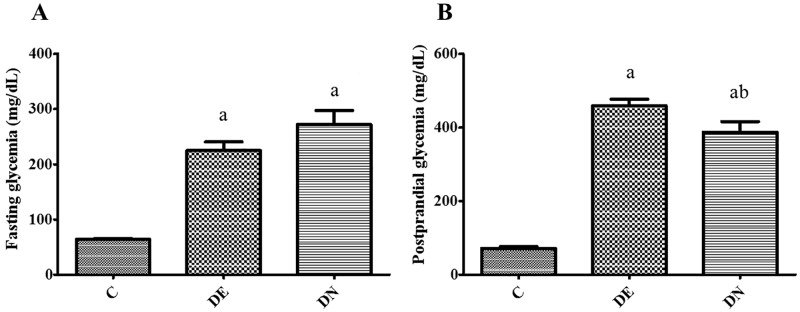
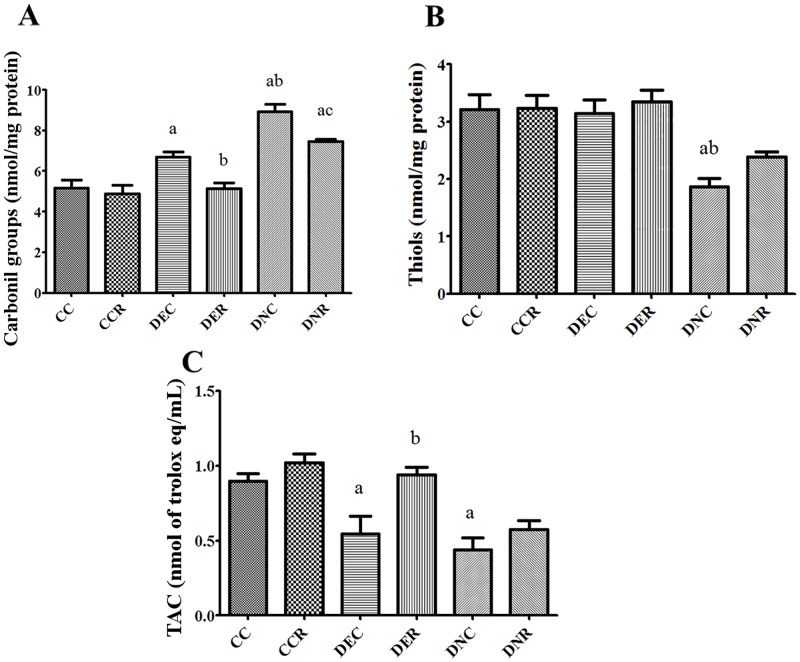
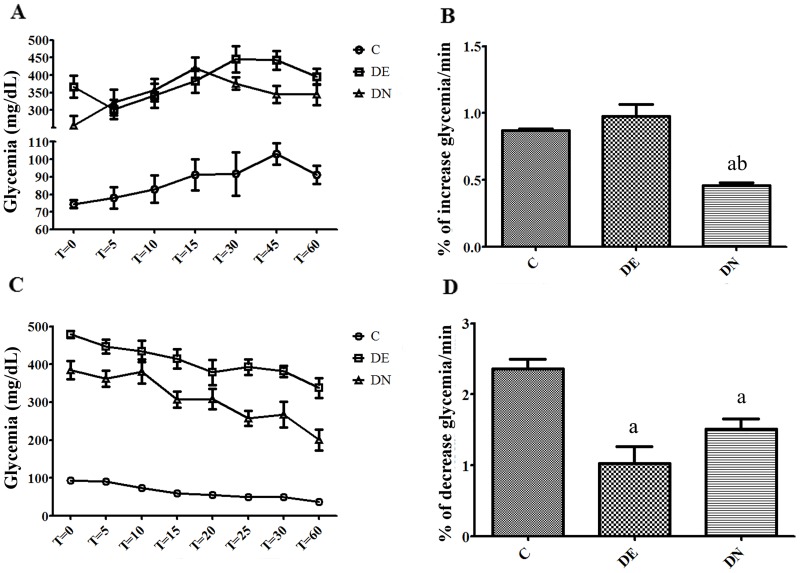
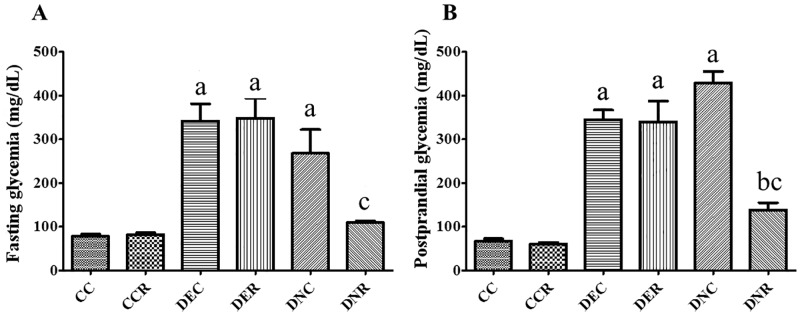
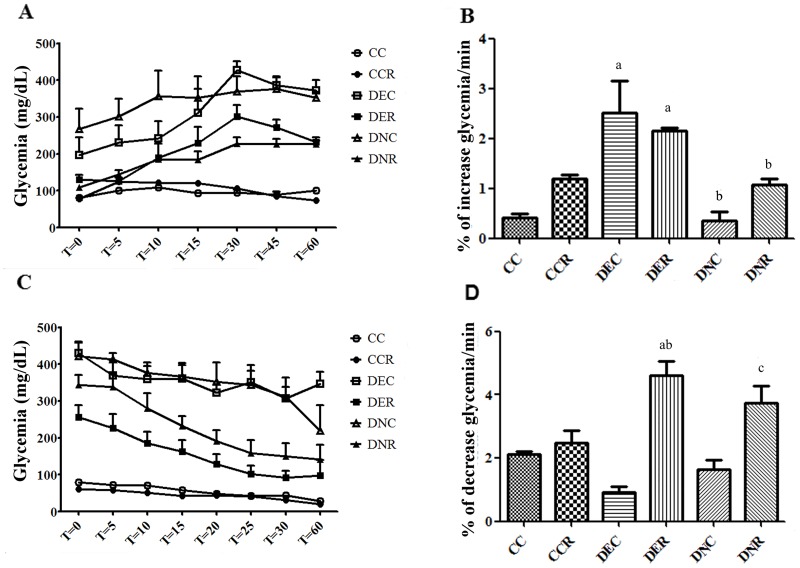
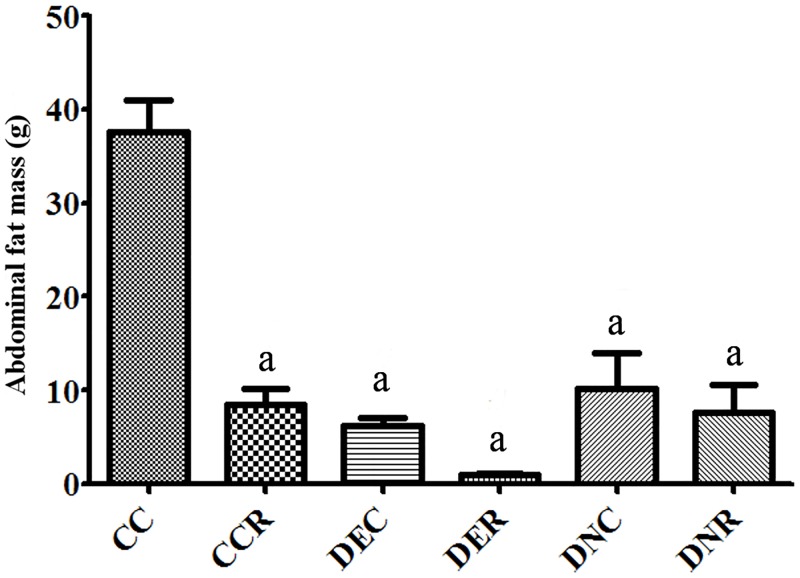
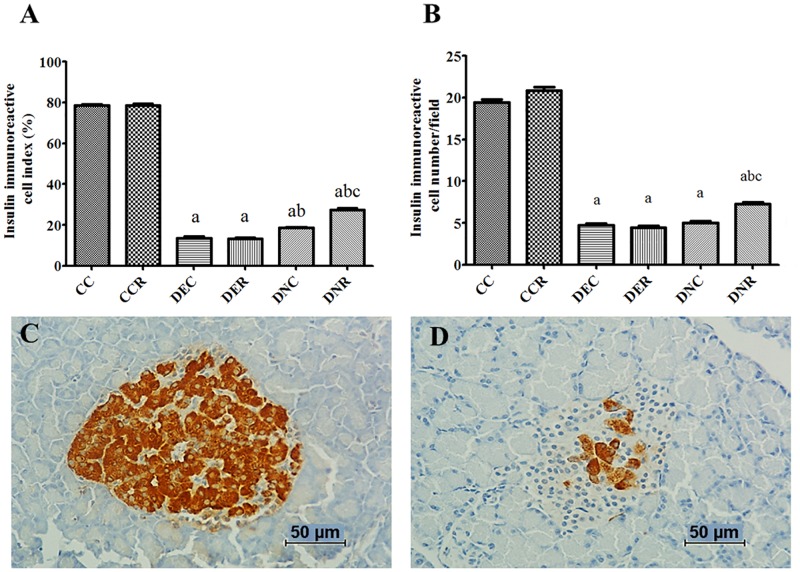
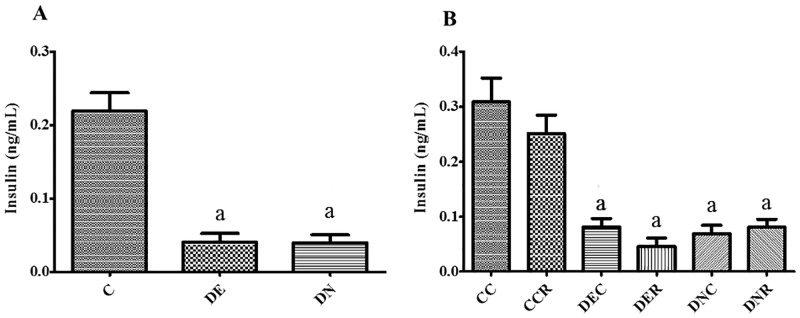
There are several animal models of type 2 diabetes mellitus induction but the comparison between models is scarce. Food restriction generates benefits, such as reducing oxidative stress, but there are few studies on its effects on diabetes. The objective of this study is to evaluate the differences in physiological and biochemical parameters between diabetes models and their responses to food restriction. For this, 30 male Wistar rats were distributed in 3 groups (n = 10/group): control (C); diabetes with streptozotocin and cafeteria-style diet (DE); and diabetes with streptozotocin and nicotinamide (DN), all treated for two months (pre-food restriction period). Then, the 3 groups were subdivided into 6, generating the groups CC (control), CCR (control+food restriction), DEC (diabetic+standard diet), DER (diabetic+food restriction), DNC (diabetic+standard diet) and DNR (diabetic+food restriction), treated for an additional two months (food restriction period). The food restriction (FR) used was 50% of the average daily dietary intake of group C. Throughout the treatment, physiological and biochemical parameters were evaluated. At the end of the treatment, serum biochemical parameters, oxidative stress and insulin were evaluated. Both diabetic models produced hyperglycemia, polyphagia, polydipsia, insulin resistance, high fructosamine, hepatic damage and reduced insulin, although only DE presented human diabetes-like alterations, such as dyslipidemia and neuropathy symptoms. Both DEC and DNC diabetic groups presented higher levels of protein carbonyl groups associated to lower antioxidant capacity in the plasma. FR promoted improvement of glycemia in DNR, lipid profile in DER, and insulin resistance and hepatic damage in both diabetes models. FR also reduced the protein carbonyl groups of both DER and DNR diabetic groups, but the antioxidant capacity was improved only in the plasma of DER group. It is concluded that FR is beneficial for diabetes but should be used in conjunction with other therapies.
有几种 2 型糖尿病动物模型,但模型之间的比较很少。饮食限制会产生益处,例如降低氧化应激,但关于其对糖尿病影响的研究较少。本研究旨在评估糖尿病模型之间在生理和生化参数方面的差异及其对饮食限制的反应。为此,将 30 只雄性 Wistar 大鼠分为 3 组(每组 n = 10):对照组(C);链脲佐菌素和 cafeteria 饮食诱导的糖尿病(DE);和链脲佐菌素和烟酰胺诱导的糖尿病(DN),所有组均治疗两个月(饮食限制前)。然后,3 组进一步分为 6 组,生成对照组 CC(对照)、CCR(对照+饮食限制)、DEC(糖尿病+标准饮食)、DER(糖尿病+饮食限制)、DNC(糖尿病+标准饮食)和 DNR(糖尿病+饮食限制),再治疗两个月(饮食限制期)。饮食限制(FR)使用为组 C 平均每日饮食摄入量的 50%。在整个治疗过程中,评估生理和生化参数。治疗结束时,评估血清生化参数、氧化应激和胰岛素。两种糖尿病模型均导致高血糖、多食、多饮、胰岛素抵抗、高果糖胺、肝损伤和胰岛素减少,尽管只有 DE 表现出类似人类糖尿病的改变,如血脂异常和神经病变症状。DEC 和 DNC 糖尿病组的血浆蛋白羰基水平升高,抗氧化能力降低。FR 促进 DNR 的血糖改善、DER 的血脂谱改善以及两种糖尿病模型的胰岛素抵抗和肝损伤改善。FR 还降低了 DER 和 DNR 糖尿病组的蛋白羰基水平,但仅在 DER 组的血浆中改善了抗氧化能力。结论是,FR 对糖尿病有益,但应与其他治疗方法联合使用。