Department of Pediatrics, University of Colorado School of Medicine, Aurora, Colorado, United States of America.
PLoS One. 2013;8(3):e59594. doi: 10.1371/journal.pone.0059594. Epub 2013 Mar 15.
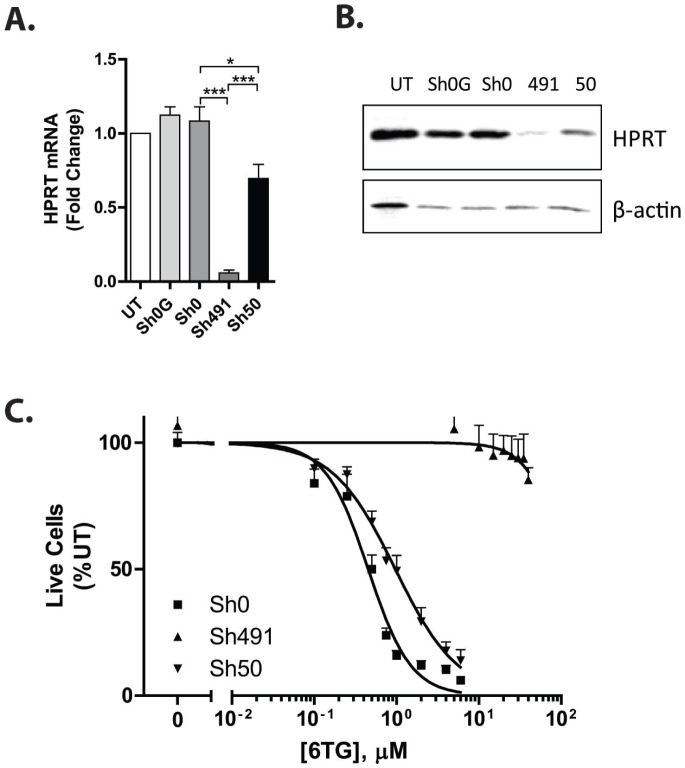
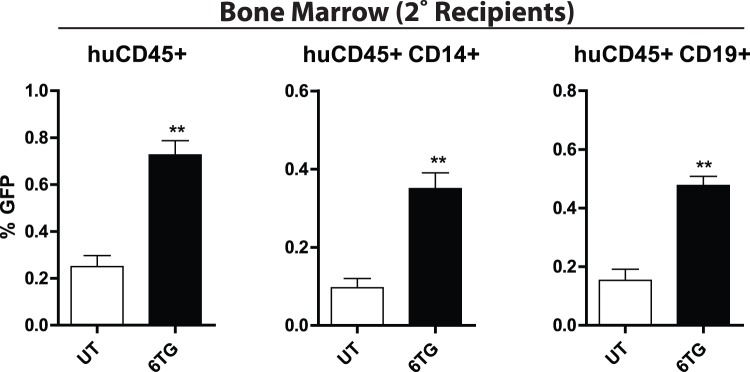
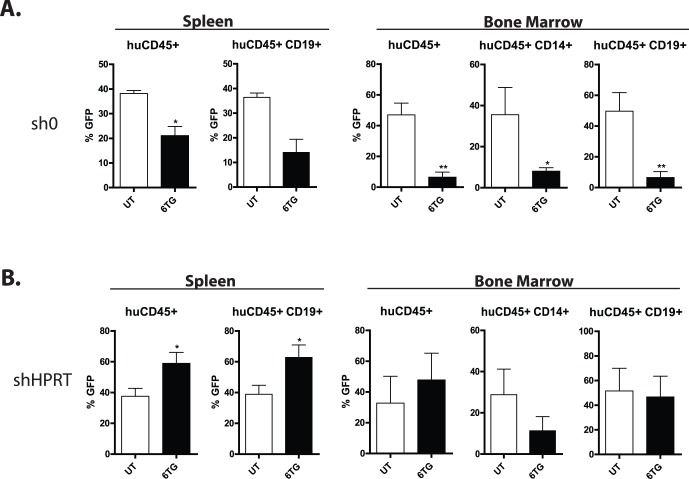
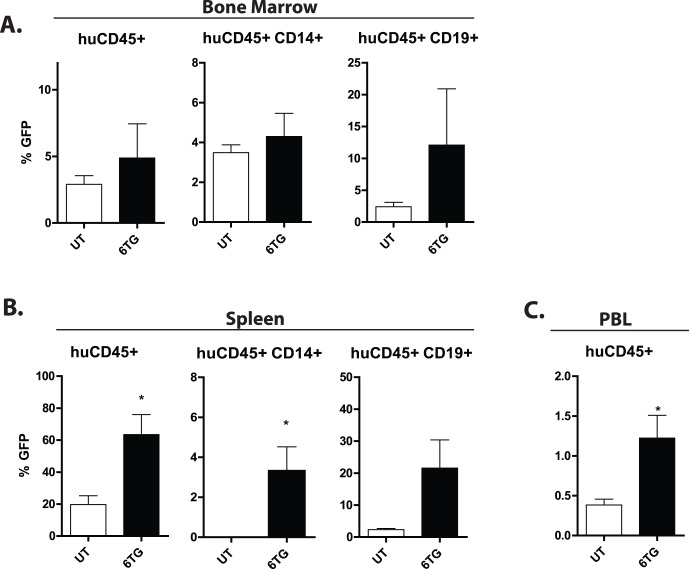
The inability to obtain sufficient numbers of transduced cells remains a limitation in gene therapy. One strategy to address this limitation is in vivo pharmacologic selection of transduced cells. We have previously shown that knockdown of HPRT using lentiviral delivered shRNA facilitates efficient selection of transduced murine hematopoietic progenitor cells (HPC) using 6-thioguanine (6TG). Herein, we now extend these studies to human HPC. We tested multiple shRNA constructs in human derived cell lines and identified the optimal shRNA sequence for knockdown of HPRT and 6TG resistance. We then tested this vector in human umbilical cord blood derived HPC in vitro and in NOD/SCID recipients. Knockdown of HPRT effectively provided resistance to 6TG in vitro. 6TG treatment of mice resulted in increased percentages of transduced human CD45(+) cells in the peripheral blood and in the spleen in particular, in both myeloid and lymphoid compartments. 6TG treatment of secondary recipients resulted in higher percentages of transduced human cells in the bone marrow, confirming selection from the progeny of long-term repopulating HPCs. However, the extent of selection of cells in the bone marrow at the doses of 6TG tested and the toxicity of higher doses, suggest that this strategy may be limited to selection of more committed progenitor cells. Together, these data suggest that human HPC can be programmed to be resistant to purine analogs, but that HPRT knockdown/6TG-based selection may not be robust enough for in vivo selection.
无法获得足够数量的转导细胞仍然是基因治疗的一个限制。解决这个限制的一种策略是体内药理学选择转导细胞。我们之前已经表明,使用慢病毒递送的 shRNA 敲低 HPRT 有助于使用 6-硫鸟嘌呤(6TG)有效地选择转导的鼠造血祖细胞(HPC)。在此,我们将这些研究扩展到人类 HPC。我们在人源细胞系中测试了多种 shRNA 构建体,并确定了用于敲低 HPRT 和 6TG 抗性的最佳 shRNA 序列。然后,我们在体外和 NOD/SCID 受体中测试了该载体在人脐带血来源的 HPC 中的作用。HPRT 的敲低有效地提供了对 6TG 的体外抗性。6TG 处理小鼠导致外周血中转导的人 CD45(+)细胞百分比增加,特别是在骨髓和脾脏中的骨髓和淋巴谱系中。6TG 处理二级受体导致骨髓中转导的人细胞百分比更高,证实了从长期重编程 HPC 的后代中进行选择。然而,在测试的 6TG 剂量下,骨髓中细胞的选择程度以及更高剂量的毒性表明,这种策略可能仅限于选择更具定向性的祖细胞。总之,这些数据表明,人类 HPC 可以被编程为对嘌呤类似物具有抗性,但 HPRT 敲低/6TG 为基础的选择可能不够强大,无法进行体内选择。