The Department of Internal Medicine (Division of Hypothalamic Research and Division of Endocrinology & Metabolism) and the Department of Psychiatry, The University of Texas Southwestern Medical Center, Dallas, TX, USA.
PLoS One. 2013;8(3):e60276. doi: 10.1371/journal.pone.0060276. Epub 2013 Mar 29.
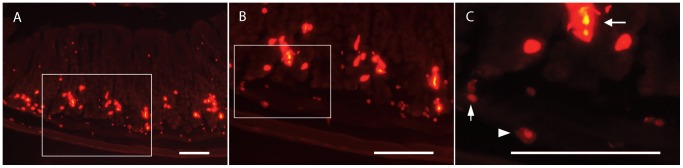
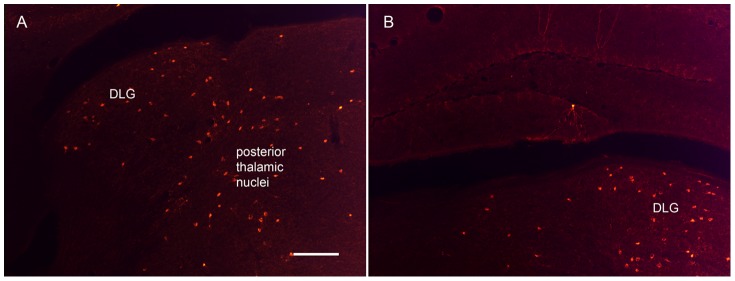
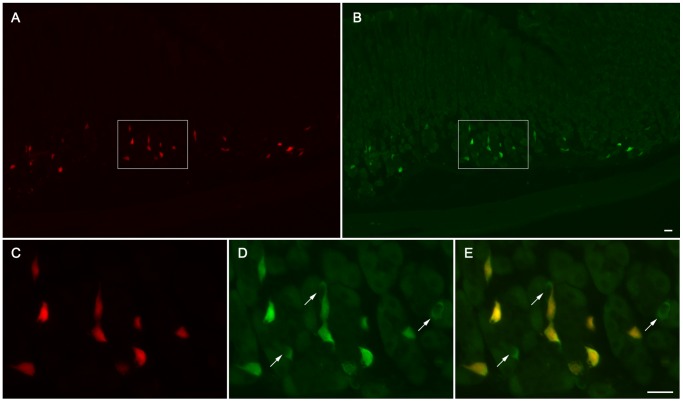
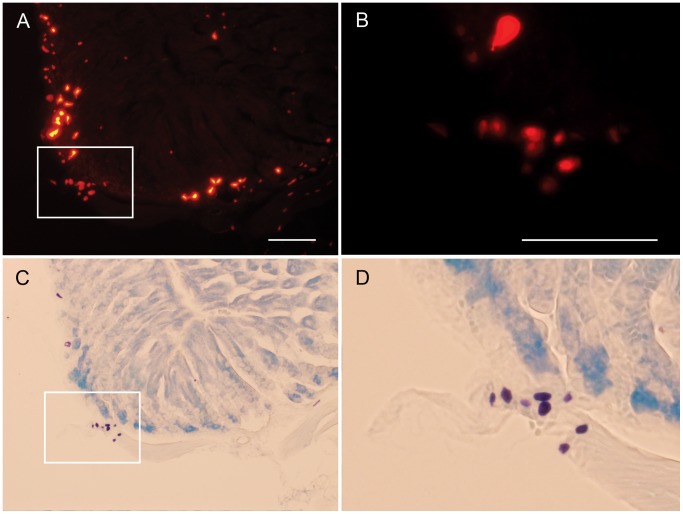
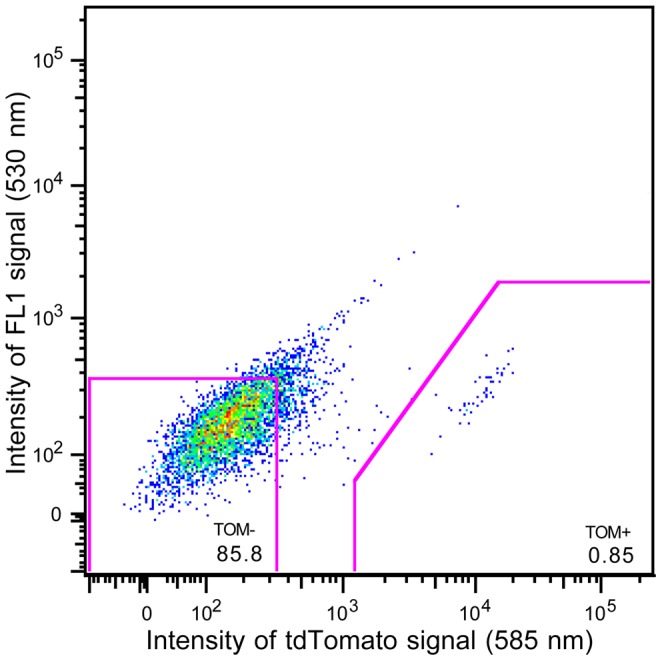
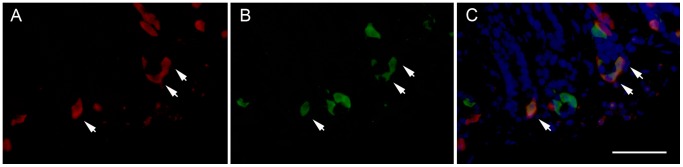
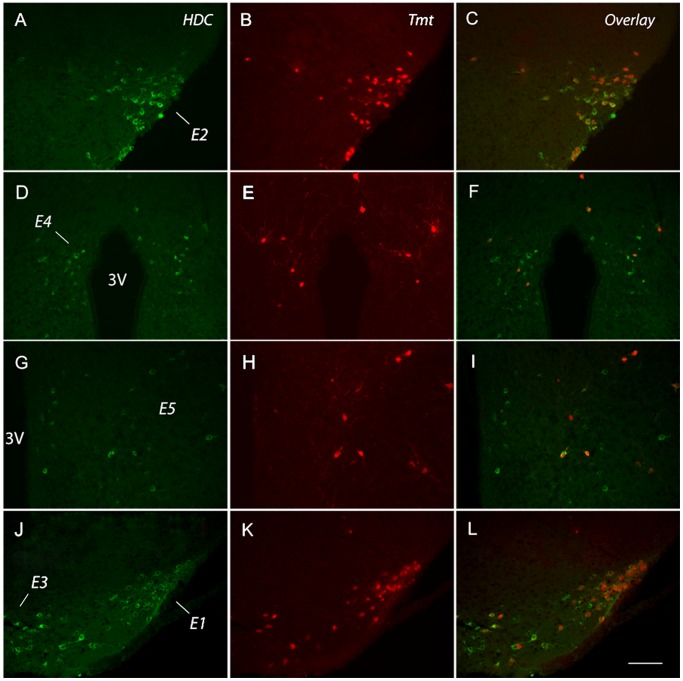
Histamine is a potent biogenic amine that mediates numerous physiological processes throughout the body, including digestion, sleep, and immunity. It is synthesized by gastric enterochromaffin-like cells, a specific set of hypothalamic neurons, as well as a subset of white blood cells, including mast cells. Much remains to be learned about these varied histamine-producing cell populations. Here, we report the validation of a transgenic mouse line in which Cre recombinase expression has been targeted to cells expressing histidine decarboxylase (HDC), which catalyzes the rate-limiting step in the synthesis of histamine. This was achieved by crossing the HDC-Cre mouse line with Rosa26-tdTomato reporter mice, thus resulting in the expression of the fluorescent Tomato (Tmt) signal in cells containing Cre recombinase activity. As expected, the Tmt signal co-localized with HDC-immunoreactivity within the gastric mucosa and gastric submucosa and also within the tuberomamillary nucleus of the brain. HDC expression within Tmt-positive gastric cells was further confirmed by quantitative PCR analysis of mRNA isolated from highly purified populations of Tmt-positive cells obtained by fluorescent activated cell sorting (FACS). HDC expression within these FACS-separated cells was found to coincide with other markers of both ECL cells and mast cells. Gastrin expression was co-localized with HDC expression in a subset of histaminergic gastric mucosal cells. We suggest that these transgenic mice will facilitate future studies aimed at investigating the function of histamine-producing cells.
组胺是一种有效的生物胺,可调节体内许多生理过程,包括消化、睡眠和免疫。它由胃嗜铬样细胞、特定的下丘脑神经元集以及包括肥大细胞在内的一部分白细胞合成。关于这些不同的组胺产生细胞群,还有很多需要了解。在这里,我们报告了一种转基因小鼠品系的验证,其中 Cre 重组酶的表达已针对表达组氨酸脱羧酶(HDC)的细胞进行了靶向,HDC 催化组胺合成的限速步骤。这是通过将 HDC-Cre 小鼠与 Rosa26-tdTomato 报告小鼠杂交来实现的,从而导致在含有 Cre 重组酶活性的细胞中表达荧光番茄(Tmt)信号。正如预期的那样,Tmt 信号与胃黏膜和胃黏膜下层中的 HDC 免疫反应性以及脑的结节乳头核内的 HDC 免疫反应性共定位。通过对从通过荧光激活细胞分选(FACS)获得的高度纯化的 Tmt 阳性细胞群体中分离的 mRNA 进行定量 PCR 分析,进一步证实了 Tmt 阳性胃细胞中的 HDC 表达。发现这些 FACS 分离的细胞中的 HDC 表达与 ECL 细胞和肥大细胞的其他标志物一致。胃泌素表达与胃黏膜中一组组胺能细胞中的 HDC 表达共定位。我们认为这些转基因小鼠将有助于未来研究组胺产生细胞的功能。