CURE: Digestive Diseases Research Center and Neurobiology of Stress, Digestive Diseases Division, David Geffen School of Medicine at University of California Los Angeles and Veterans Affairs Greater Los Angeles Healthcare System, Los Angeles, CA 90073, USA.
Peptides. 2010 Feb;31(2):357-69. doi: 10.1016/j.peptides.2009.11.019. Epub 2009 Nov 26.
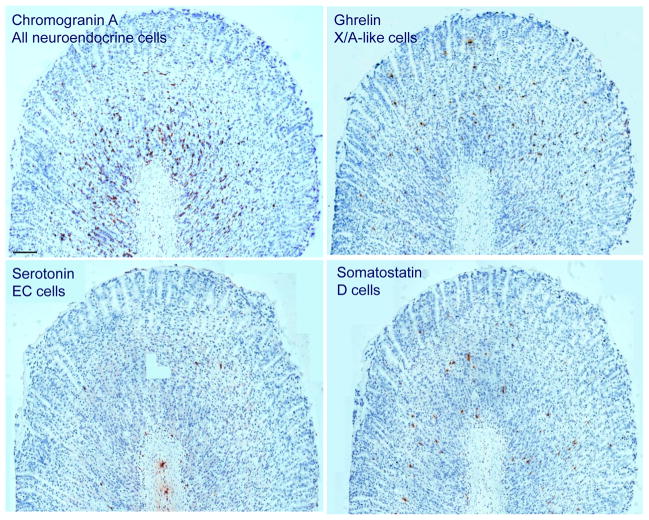
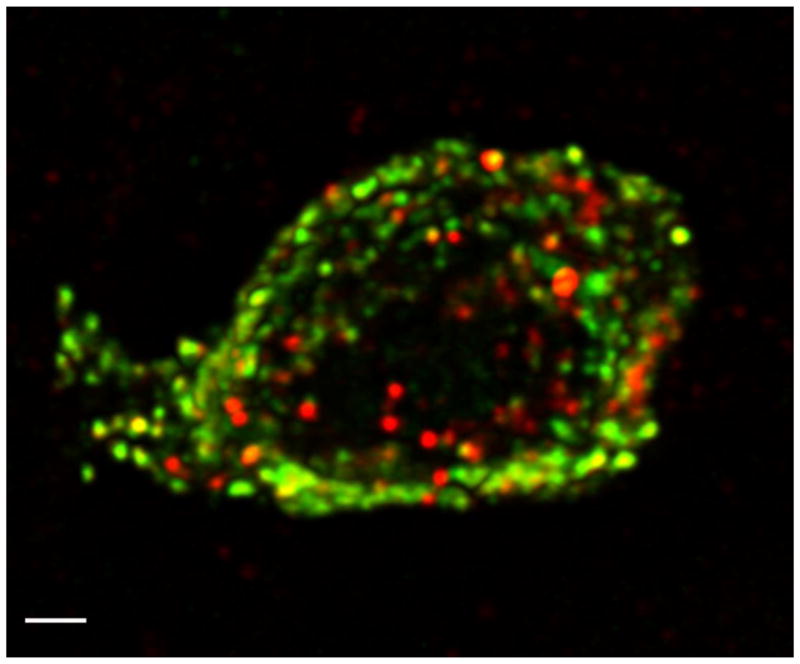
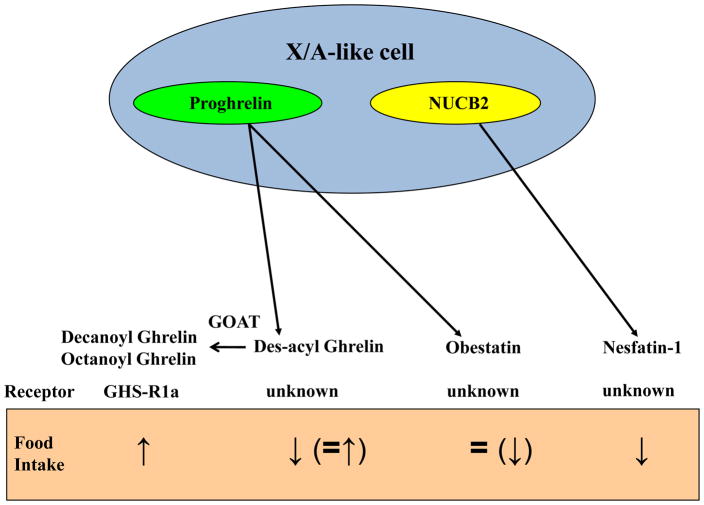
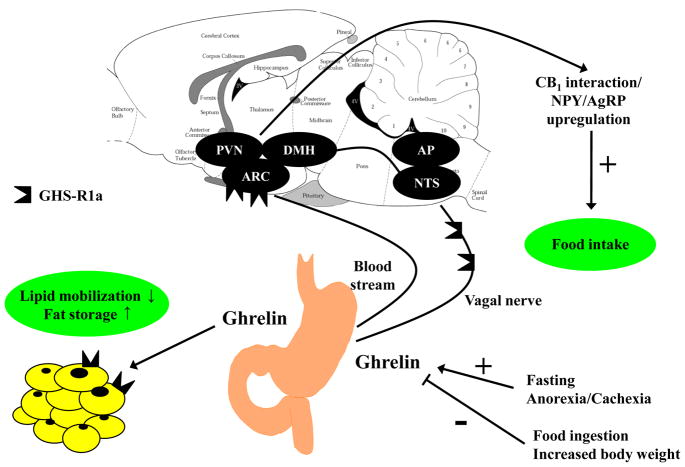
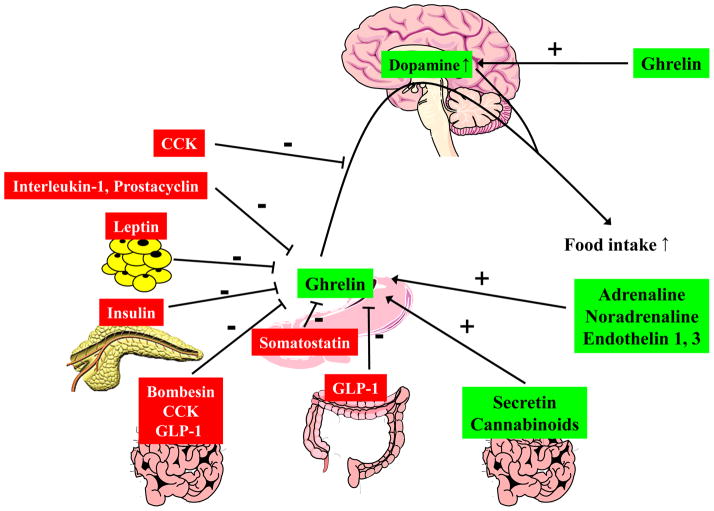
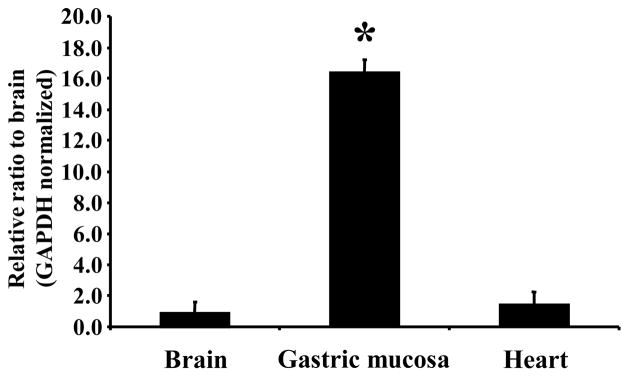
Numerous peptides released from endocrine cells in the intestinal mucosa were established early on to be involved in the physiological regulation of food intake with a prominent role in termination of food ingestion when nutrients pass along the intestinal tract. Recently, peptides released from X/A-like endocrine cells of the gastric oxyntic mucosa were recognized as additional key players in the regulation of feeding and energy expenditure. Gastric X/A-like cells release the octanoylated peptide, ghrelin, the only known peripherally produced hormone stimulating food intake through interaction with growth hormone secretagogue 1a receptor (GHS-R1a). Additionally, non-octanoylated (des-acyl) ghrelin present in the circulation at higher levels than ghrelin is currently discussed as potential modulator of food intake by opposing ghrelin's action independent from GHS-R1a although the functional significance remains to be established. Obestatin, a ghrelin-associated peptide was initially reported as anorexigenic modulator of ghrelin's orexigenic action. However, subsequent reports did not support this contention. Interesting is the recent identification of nesfatin-1, a peptide derived from the nucleobindin2 gene prominently expressed in gastric X/A-like cells in different vesicles than ghrelin. Circulating nesfatin-1 levels vary with metabolic state and peripheral or central injection inhibits dark phase feeding in rodents. Overall, these data point to an important role of gastric X/A-like cells in food intake regulation through the expression of the orexigenic peptide ghrelin along with des-acyl ghrelin and nesfatin-1 capable of reducing food intake upon exogenous injection although their mechanisms of action and functional significance remain to be established.
从肠黏膜内分泌细胞释放的许多肽类物质很早就被确定参与了食物摄入的生理调节,在营养物质沿肠道传递时,它们在终止摄食方面起着重要作用。最近,人们认识到胃底泌酸腺 X/A 样内分泌细胞释放的肽类物质也是调节摄食和能量消耗的关键因素。胃底泌酸腺 X/A 样细胞分泌的八酰化肽——胃饥饿素,是唯一已知的通过与生长激素促分泌素 1a 受体(GHS-R1a)相互作用刺激摄食的外周产生的激素。此外,循环中存在的非八酰化(去酰基)胃饥饿素水平高于胃饥饿素,目前被认为是通过与 GHS-R1a 无关的方式拮抗胃饥饿素的作用,从而潜在地调节摄食,尽管其功能意义尚待确定。肥胖抑制素是一种与胃饥饿素相关的肽类物质,最初被报道为胃饥饿素的厌食调节因子。然而,随后的报道并不支持这一观点。有趣的是,最近发现了 nesfatin-1,一种源自核结合蛋白 2 基因的肽类物质,它在胃底泌酸腺 X/A 样细胞中以不同于胃饥饿素的囊泡形式表达。循环 nesfatin-1 水平随代谢状态而变化,外周或中枢注射可抑制啮齿动物的暗期摄食。总的来说,这些数据表明,胃底泌酸腺 X/A 样细胞通过表达食欲肽胃饥饿素以及能够减少外源性注射时食物摄入的去酰基胃饥饿素和 nesfatin-1,在食物摄入调节中发挥着重要作用,尽管它们的作用机制和功能意义仍有待确定。