NPIS Edinburgh, Royal Infirmary of Edinburgh, Edinburgh, UK.
BMC Pharmacol Toxicol. 2013 Apr 4;14:20. doi: 10.1186/2050-6511-14-20.
Paracetamol (acetaminophen) poisoning remains the commonest cause of acute liver injury in Europe and North America. The intravenous (IV) N-acetylcysteine (NAC) regimen introduced in the 1970s has continued effectively unchanged. This involves 3 different infusion regimens (dose and time) lasting over 20 hours. The same weight-related dose of NAC is used irrespective of paracetamol dose. Complications include frequent nausea and vomiting, anaphylactoid reactions and dosing errors. We designed a randomised controlled study investigating the efficacy of antiemetic pre-treatment (ondansetron) using standard NAC and a modified, shorter, regimen.
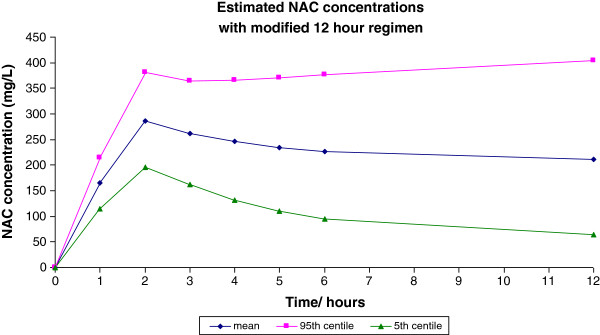
METHODS/DESIGN: We designed a double-blind trial using a 2 × 2 factorial design involving four parallel groups. Pre-treatment with ondansetron 4 mg IV was compared against placebo on nausea and vomiting following the standard (20.25 h) regimen, or a novel 12 h NAC regimen in paracetamol poisoning. Each delivered 300 mg/kg bodyweight NAC. Randomisation was stratified on: paracetamol dose, perceived risk factors, and time to presentation. The primary outcome was the incidence of nausea and vomiting following NAC. In addition the frequency of anaphylactoid reactions and end of treatment liver function documented. Where clinically necessary further doses of NAC were administered as per standard UK protocols at the end of the first antidote course.
This study is primarily designed to test the efficacy of prophylactic anti-emetic therapy with ondansetron, but is the first attempt to formally examine new methods of administering IV NAC in paracetamol overdose. We anticipate, from volunteer studies, that nausea and vomiting will be less frequent with the new NAC regimen. In addition as anaphylactoid response appears related to plasma concentrations of both NAC and paracetamol anaphylactoid reactions should be less likely. This study is not powered to assess the relative efficacy of the two NAC regimens, however it will give useful information to power future studies. As the first formal randomised clinical trial in this patient group in over 30 years this study will also provide information to support further studies in patients in paracetamol overdose, particularly, when linked with modern novel biomarkers of liver damage, patients at different toxicity risk.
EudraCT number 2009-017800-10, ClinicalTrials.gov IdentifierNCT01050270.
对乙酰氨基酚(扑热息痛)中毒仍然是欧洲和北美的最常见的急性肝损伤的原因。1970 年代推出的静脉内(IV)N-乙酰半胱氨酸(NAC)方案一直没有改变。这涉及 3 种不同的输注方案(剂量和时间),持续 20 小时以上。无论扑热息痛剂量如何,相同的体重相关剂量的 NAC 均被使用。并发症包括频繁的恶心和呕吐、过敏样反应和剂量错误。我们设计了一项随机对照研究,用标准 NAC 和改良的、更短的方案来研究止吐药预处理(昂丹司琼)的疗效。
方法/设计:我们设计了一项双盲试验,采用 2×2 析因设计,涉及 4 个平行组。在接受标准(20.25 小时)方案或新型 12 小时 NAC 方案治疗对乙酰氨基酚中毒后,用 4 毫克 IV 昂丹司琼静脉注射预处理,比较止吐药的疗效。两组均给予 300 毫克/公斤体重的 NAC。随机分层因素包括:对乙酰氨基酚剂量、感知危险因素和就诊时间。主要结局是 NAC 后恶心和呕吐的发生率。此外,还记录了过敏样反应的频率和治疗结束时的肝功能。在第一剂解毒剂疗程结束时,根据英国标准方案,如有必要,可给予进一步的 NAC 剂量。
本研究主要旨在测试昂丹司琼预防性止吐治疗的疗效,但也是首次尝试正式检查新的静脉内 NAC 给药方法在扑热息痛过量中的应用。我们从志愿者研究中预测,新的 NAC 方案会使恶心和呕吐的频率降低。此外,由于过敏样反应似乎与 NAC 和对乙酰氨基酚的血浆浓度有关,过敏样反应应该更少。本研究没有足够的能力评估两种 NAC 方案的相对疗效,但它将为未来的研究提供有用的信息。作为 30 多年来该患者群体的第一个正式随机临床试验,该研究还将提供信息,支持对乙酰氨基酚过量患者的进一步研究,特别是当与现代新型肝损伤生物标志物结合时,对不同毒性风险的患者。
EudraCT 编号 2009-017800-10,ClinicalTrials.gov 标识符 NCT01050270。