Department of Anaesthesiology and Reanimation, S.B. Istanbul Medeniyet University, Goztepe Training and Research Hospital, Istanbul, Turkey.
Korean J Anesthesiol. 2013 Mar;64(3):223-8. doi: 10.4097/kjae.2013.64.3.223. Epub 2013 Mar 19.
The aim of the study was to evaluate the comparative effects of propofol infusion versus sevoflurane for maintenance of anesthesia with respect to hemodynamics, recovery characteristics, nausea and vomiting in patients undergoing percutaneous nephrolithotomy.
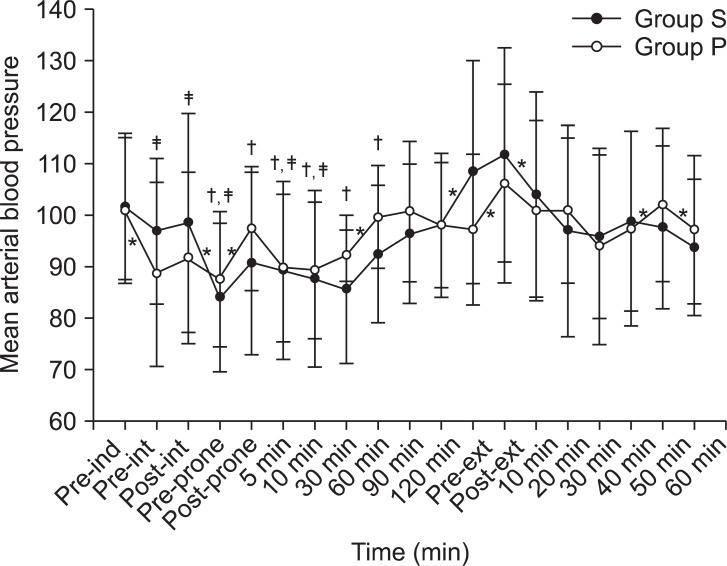
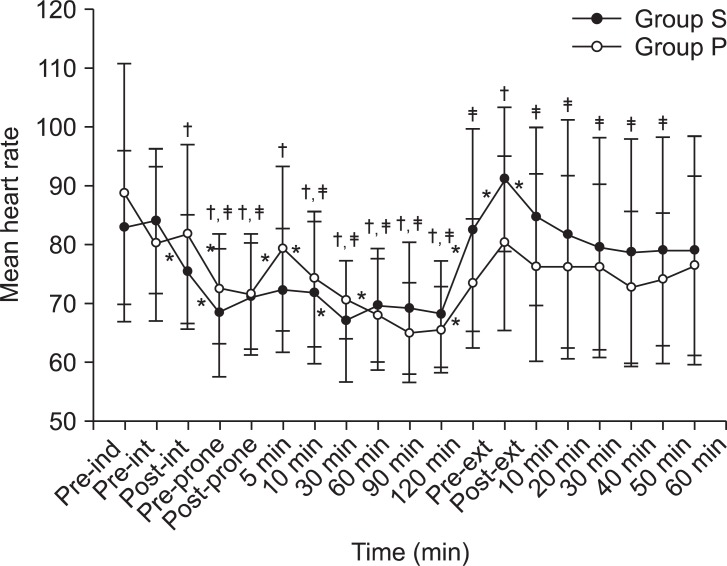
Forty American Society of Anesthesiologists physical status I-II patients, aged between 22 and 65 years were randomly divided to receive either intravenous anesthesia with propofol (group P) or sevoflurane (group S). Cardiovascular variables, peripheral oxygen saturation (SpO2), end-tidal carbon dioxide (ETCO2), bispectral index (BIS) and train-of-four (TOF) values were recorded at intervals throughout the procedure. Time to spontaneous respiration, eye opening, extubation, obey commands, hand squeezing, Aldrete Score > 9 and the incidence of postoperative nausea and vomiting were recorded.
Early recovery times [spontaneous respiration (P = 0.002), eye opening (P = 0.006), extubation (P = 0.013), obey commands (P < 0.05), hand squeezing (P = 0.005)] were significantly longer in group P. The incidence of vomiting was significantly higher in group S (P < 0.05). Hemodynamic parameters, levels of SpO2, ETCO2, and BIS and TOF values were not significantly different between the groups (P > 0.05).
The present study which adjusted sevoflurane concentration and propofol infusion rate according to BIS values revealed that maintenance of anesthesia with sevoflurane is associated with faster recovery than anesthesia with propofol. Propofol resulted in a significantly lower incidence of postoperative nausea and vomiting. Hemodynamic parameters and levels of SpO2 and ETCO2 were comparable between the groups during percutaneous nephrolithotomy.
本研究旨在评估异丙酚输注与七氟醚维持麻醉在经皮肾镜取石术中对血流动力学、恢复特征、恶心呕吐的比较效果。
40 例美国麻醉医师协会(ASA)I-II 级患者,年龄 22-65 岁,随机分为异丙酚静脉麻醉组(P 组)或七氟醚麻醉组(S 组)。记录整个手术过程中的心血管变量、外周血氧饱和度(SpO2)、呼气末二氧化碳(ETCO2)、脑电双频指数(BIS)和四个成串刺激(TOF)值。记录自主呼吸、睁眼、拔管、听从命令、手捏、Aldrete 评分>9 及术后恶心呕吐的发生时间。
P 组早期恢复时间[自主呼吸(P = 0.002)、睁眼(P = 0.006)、拔管(P = 0.013)、听从命令(P < 0.05)、手捏(P = 0.005)]明显延长。S 组呕吐发生率明显较高(P < 0.05)。两组间 SpO2、ETCO2、BIS 和 TOF 值及血流动力学参数无显著差异(P > 0.05)。
本研究根据 BIS 值调整七氟醚浓度和异丙酚输注率,结果表明七氟醚维持麻醉与异丙酚相比,苏醒更快。异丙酚术后恶心呕吐发生率明显较低。在经皮肾镜取石术中,两组间 SpO2 和 ETCO2 水平及血流动力学参数无显著差异。