Lee Woogul, Reeve Johnmarshall, Xue Yiqun, Xiong Jinhu
Department of Psychological and Quantitative Foundations, University of Iowa, Iowa City, IA 52242.
Neurosci Res. 2012 May;73(1):68-72. doi: 10.1016/j.neures.2012.02.010.
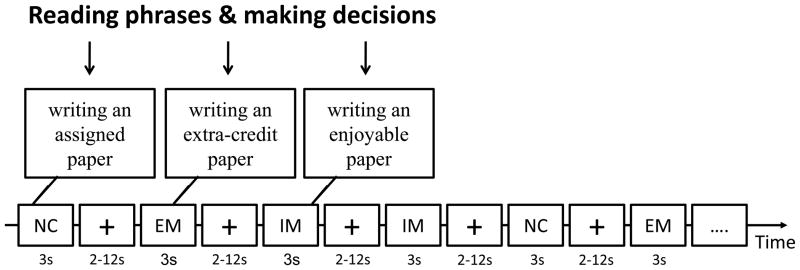
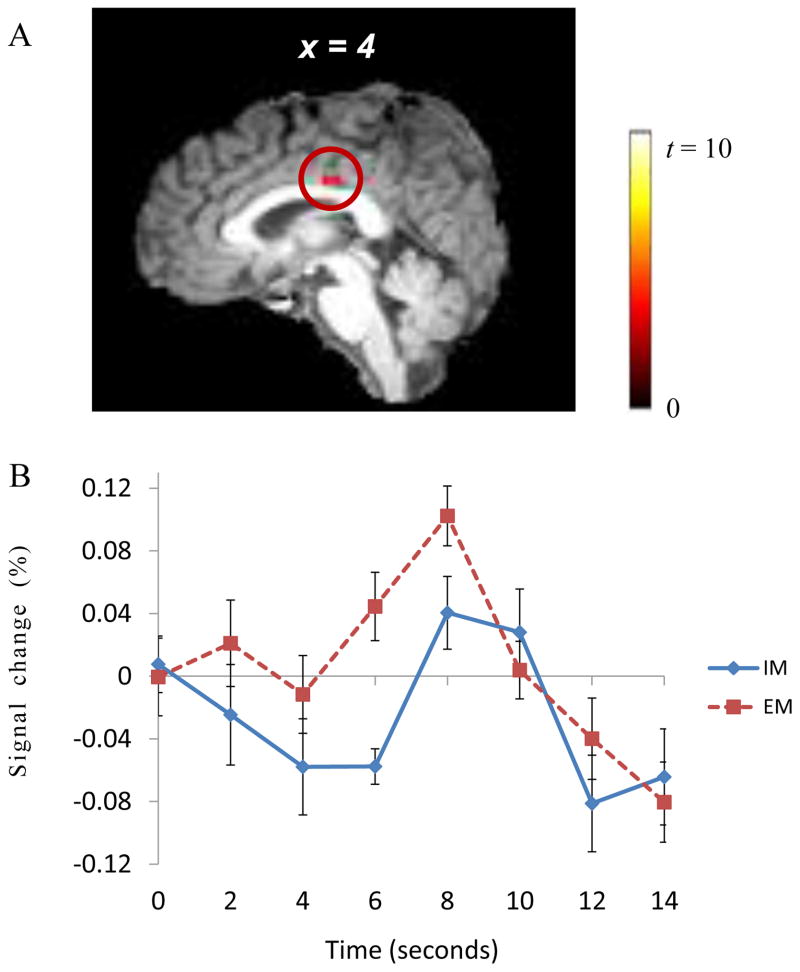
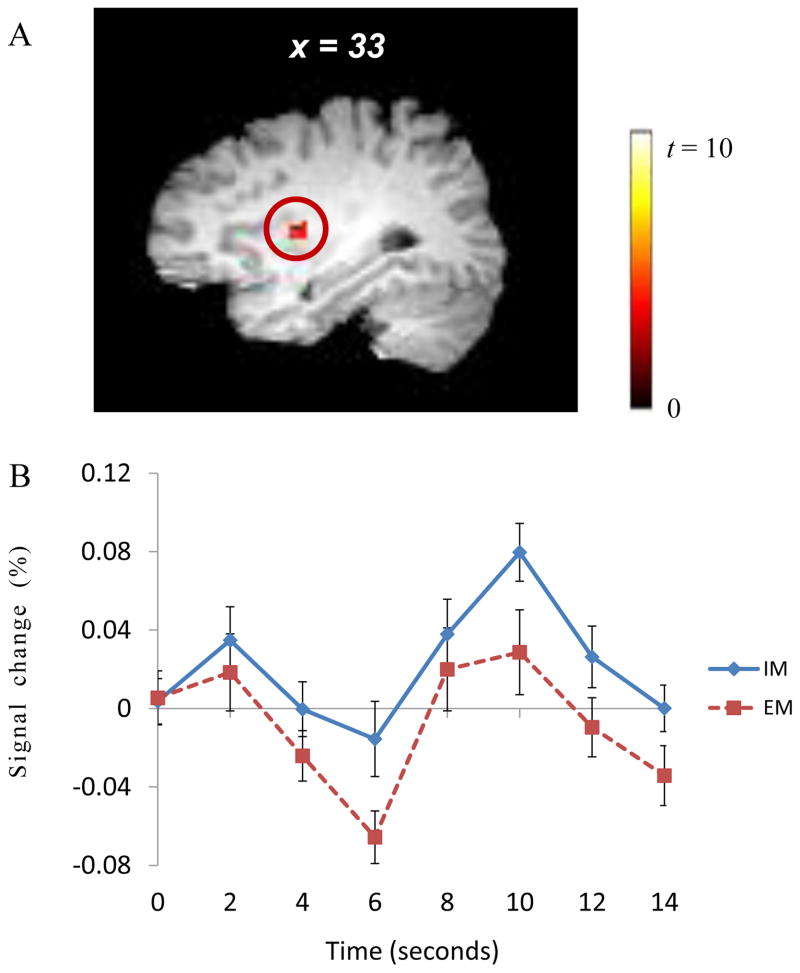
The contemporary neural understanding of motivation is based almost exclusively on the neural mechanisms of incentive motivation. Recognizing this as a limitation, we used event-related functional magnetic resonance imaging (fMRI) to pursue the viability of expanding the neural understanding of motivation by initiating a pioneering study of intrinsic motivation by scanning participants' neural activity when they decided to act for intrinsic reasons versus when they decided to act for extrinsic reasons. As expected, intrinsic reasons for acting more recruited insular cortex activity while extrinsic reasons for acting more recruited posterior cingulate cortex (PCC) activity. The results demonstrate that engagement decisions based on intrinsic motivation are more determined by weighing the presence of spontaneous self-satisfactions such as interest and enjoyment while engagement decisions based on extrinsic motivation are more determined by weighing socially-acquired stored values as to whether the environmental incentive is attractive enough to warrant action.
当代神经科学对动机的理解几乎完全基于激励动机的神经机制。认识到这是一个局限性,我们使用事件相关功能磁共振成像(fMRI),通过开展一项关于内在动机的开创性研究来探索扩展对动机的神经理解的可行性,即扫描参与者出于内在原因决定行动时与出于外在原因决定行动时的神经活动。正如预期的那样,出于内在原因行动更多地激活了脑岛皮质活动,而出于外在原因行动更多地激活了后扣带皮层(PCC)活动。结果表明,基于内在动机的参与决策更多地取决于权衡自发的自我满足感(如兴趣和享受)的存在,而基于外在动机的参与决策更多地取决于权衡社会习得的存储价值观,即环境激励是否足够有吸引力以保证采取行动。